

Note: This is a PDF for you to instantly download, print, and use again and again. Nothing will be mailed.
The best guide to help you figure out how to talk to your child about their eating disorder
Custom-created using concepts from motivational interviewing and interpersonal neurobiology.
A Printable Guide To Help You Talk To Your Child If You Suspect They Have An Eating Disorder
Also works if your child is in remission for an eating disorder
- How to have your first conversation about your suspicions (and all the ones that come afterwards!)
- How to respond when your child says they don’t have an eating disorder
- Resource sheets to support parents facing a child’s eating disorder
$29.95
$18.95
Parent-Friendly ❤️ Neurobiology ❤️ Attachment ❤️ Non-Diet ❤️ Health At Every Size®
What’s included in the printable guide to talk to your child if they have an eating disorder:
1. Guide to having difficult conversations about your child’s eating disorder
If you are concerned that your child has an eating disorder, you need to be thoughtful and intentional about how you talk about it with them. An eating disorder is a complex and nuanced disorder that requires professional treatment and ongoing support from family members. How you talk to your child about your concerns will make a significant difference in your child’s perception of your ability to cope with their eating disorder. You make a difference!

2. Helpful phrases, responses, and information to help you talk about your child’s eating disorder
Talking to your child about their eating disorder can be filled with landmines. These informational sheets help you prepare for common situations and increase your chances of success. Learn the helpful phrases as well as what not to say when your child has an eating disorder. Read answers to common questions about talking about eating disorders. Find out how you can support your child without getting into power struggles, and how to repair your relationship when things go badly.
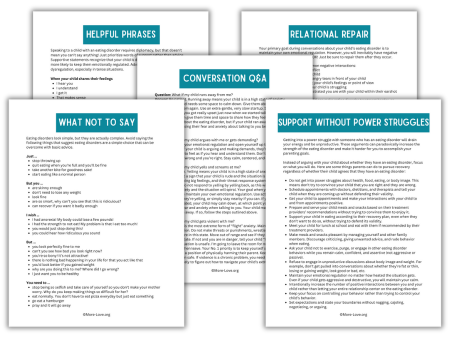
3. How to respond when your child says they don’t have an eating disorder
It is very common for someone with an eating disorder to be unaware that they have a problem. They are not faking it. Eating disorders are deeply misunderstood, and our society prescribes eating disorder behaviors like restricting and over-exercising as “healthy.” It may be surprising, but it’s a well-documented fact that many people with eating disorders don’t believe they have an eating disorder. Find out how you can respond in the most helpful and effective way.

4. Resource sheets to support parents facing a child’s eating disorder
Having a child with an eating disorder can seem overwhelming. There’s a lot to learn, and the learning curve can be steep. These sheets provide you with the basic information you need to be successful in parenting a child with an eating disorder.

A Printable Guide You Can Use Again And Again
- Learn how to approach difficult conversations about your child’s eating disorder
- Perfect for parents, grandparents, family members, and more
- Plus resources to help you navigate having a child with an eating disorder
- Printable format means you have instant access
FAQs About Printable Guide: How To Talk To Your Child About Their Eating Disorder
Can this guide help me talk to my child when I suspect they have an eating disorder?
This guide can help you have the first conversation with your child about their eating disorder as well as many more. Preparing yourself to talk to your child about their eating disorder is important, because a weak approach can lead to long-term challenges in motivating your child to take steps towards recovery.
I know my child is going to say they don’t have an eating disorder – what can I do about that?
Most people who have eating disorders are unaware of the problem. That’s OK! This guide will help you talk to your child about their eating disorder even if they don’t agree they have one. You’ll learn the essential strategies required to increase relational safety and improve your chances of motivating your child to recover from their eating disorder.
What am I supposed to do if I suspect my child has an eating disorder?
There’s a lot you can do if you suspect your child has an eating disorder. To start, learn everything you can about eating disorders and your child’s specific symptoms. Next, plan a strategic approach to having the difficult conversation with your child. When you talk to your child about their eating disorder there’s a good chance they will get upset, so you should be prepared to handle their responses without getting into a negative dynamic. You can support your child in getting treatment for their eating disorder even if they don’t agree that they have a problem, but it requires a strategic approach.
A Printable Guide To Help You Talk To Your Child If You Suspect They Have An Eating Disorder
What’s Included:
- Guide to having difficult conversations about your child’s eating disorder
- Helpful phrases, responses, and information to help you talk about your child’s eating disorder
- How to respond when your child says they don’t have an eating disorder
- Resource sheets to support parents facing a child’s eating disorder
What You Need: A printer (or use FedEX, UPS Store, Staples, etc.)
$29.95
$18.95
Note: This is a digital PDF for you to instantly download, print, and use again and again. Nothing will be mailed.
You can make as many copies for your own family as you want, but please respect our copyright and don’t distribute these to other people! Contact us if you want a professional license to use these with clients.
Created By Ginny Jones

Ginny Jones is the founder of More-Love.org, and a Parent Coach who helps parents who have kids with eating disorders.
Parent-Friendly ❤️ Neurobiology ❤️ Attachment ❤️ Non-Diet ❤️ Health At Every Size®
Featured In: