Posted on

My daughter had an eating disorder I’d never heard of

OSFED eating disorder mom

This is a first-person story written by a mom who discovered her daughter has OSFED, the most common but little-recognized eating disorder with serious repercussions. Learn how she navigated finding out her daughter had OSFED and how they handle eating disorder recovery as a family.

By Serena Menken

As I waited to pick up my fifteen-year-old daughter Ellie from a partial hospitalization program at an eating disorders treatment center, a thought struck me:

โ€œMy daughter doesnโ€™t look like the other teens here.โ€

The heavy, locked door swung open and a swarm of teens filed out to attach themselves to a parent. Most of the teens hid stick-thin legs in baggy sweats or pajama pants. I could see collarbones protruding and thin wrists peeking out of sleeves. The teens varied in height, in ethnicity, in gender. My daughter seemed like the only one who didnโ€™t fit the mold for an underweight body. But she was just as sick as the rest of them.
โญโญโญโญโญ

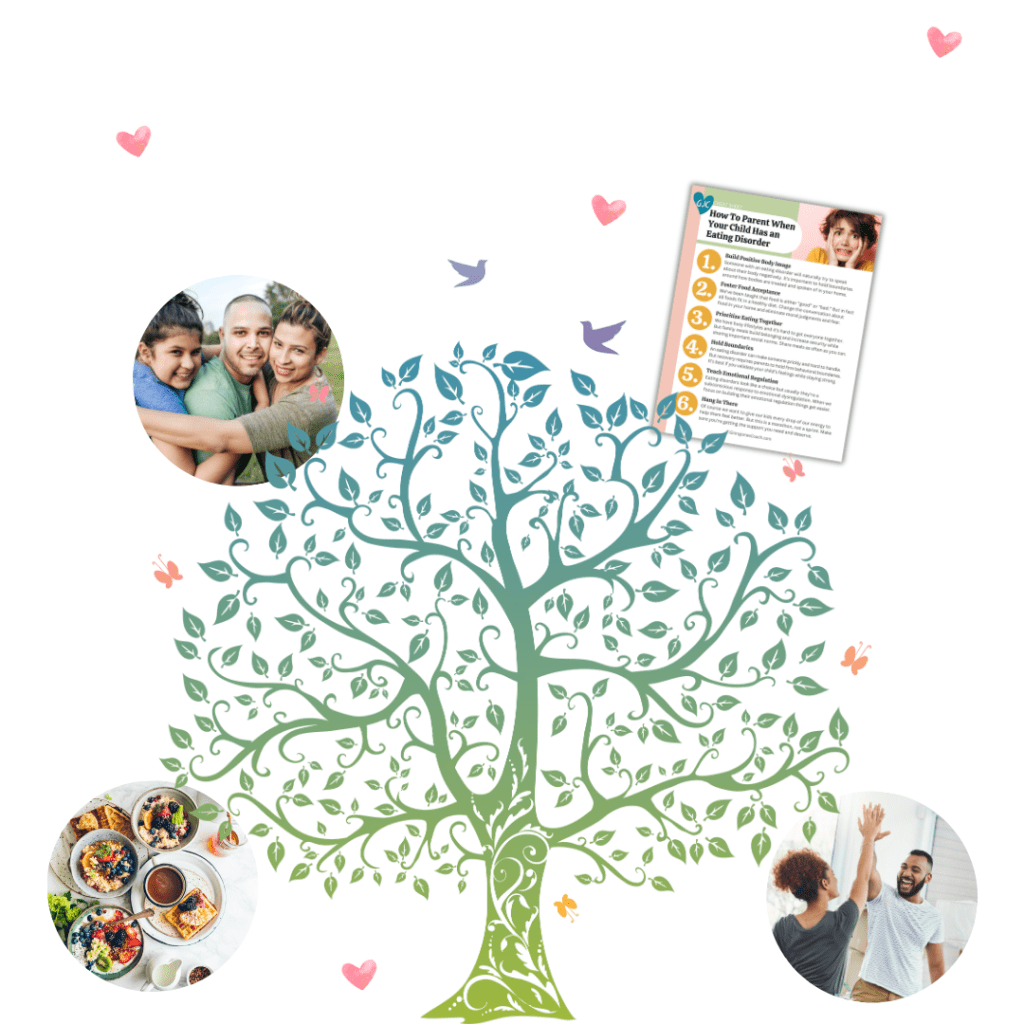
Free Guide: How Parents Can Help A Child With An Eating Disorder

Master the secrets to supporting a child with an eating disorder. Thousands of families like yours are stronger today because of these six vital lessons drawn from lived experience, best practices, andย extensive study.

Stumbling on evidence

For years, I had worried about Ellieโ€™s eating patterns. At times, she inhaled so much dessert at family dinner that she moaned in pain on the couch. Periodically, I would find bowls crusted with ice cream or the remains of frosting, hidden in her desk drawers or buried in her closet. When she was in fifth grade, we spent about six months living in other peopleโ€™s homes while we hunted for a house with our realtor.

I remember stumbling upon a large stash of candy wrappers under Ellieโ€™s bed, thinking, โ€œWeโ€™ve only been here for a month. How did you manage to eat that much candy already and where did you get it?โ€ As someone in long-term recovery from bulimia myself, I recognized the signs of compulsive overeating in my daughter. But I felt powerless to change her. 

Since toddlerhood, Ellie refused to eat certain foods, such as fruits and vegetables. The daycare provider blamed me: You pureed her food for too long. Even in junior high, Ellie had sensory issues around food. She loved meat but only if ketchup (the right ketchup) was available. Her two safe vegetables were canned pureed pumpkin, which my husband bought by the case, and spinach leaves dipped in ketchup. Her only fruit was applesauce. She hated the texture of all other produce.

I tried to expand her palate

I tried so many techniques to expand her palate: coaching, encouragement, bribery, putting hated foods on her plate, requiring her to take just one bite. None of it worked. I just thought she was a picky eater. I didnโ€™t know this was another form of an eating disorder called ARFID (Avoidant Restrictive Food Intake Disorder).

In seventh grade, Ellie stopped eating lunch at school. When I found uneaten sandwiches in her lunchbox, I asked her what happened. She brushed it away, saying that she wasnโ€™t hungry or her stomach hurt. She said that she felt anxious at school and preferred to eat at home.

When I called the pediatrician, he asked if she might have anorexic tendencies. What? I asked, dazed. No, Ellie doesnโ€™t restrict. I even asked her point-blank and she denied it with an easy smile. I believed her. My daughter wouldnโ€™t lie to me, right? Even when we took her to therapy, no one said that she had anything more than generalized anxiety disorder. 

Struggling and skipping meals

Fast forward to Ellieโ€™s sophomore year in high school in Fall 2020. Ellie seemed more withdrawn and that she barely changed her clothes or bathed. I chalked it up to the stress of the pandemic, which shut down our entire city (including school) and forced us into isolation.

But when I looked more closely, I saw the truth: Ellieโ€™s poor hygiene and isolation reflected the fact that she was struggling with depression. Ellie skipped family dinner more often than not, complaining of fatigue. Often, I woke up to find the kitchen covered in powdered sugar and cocoa powder, with a pan of brownies half-devoured on the stove. Something was going on with our daughter.

Thankfully, Ellie was ready to be honest. She shared with me that she was struggling with the desire to end her life. Months later, she admitted that she had an eating disorder. Iโ€™m thankful that we found a wise, supportive therapist who directed us, step by step, in Ellieโ€™s recovery journey. This therapist also knew when Ellie needed a higher level of care, which brought us to an eating disorders treatment center. Ellie spent the next seven months in various programs, such as partial hospitalization, residential, and intensive outpatient.

Getting a diagnosis

The treatment center diagnosed Ellie with โ€œOther-Specified Feeding or Eating Disorderโ€ (OSFED), which I had never heard of. But OSFED is actually the most common eating disorder diagnosis for adults as well as adolescents, affecting all genders. According to the National Eating Disorder Association, the OSFED diagnosis โ€œwas developed to encompass those individuals who did not meet strict diagnostic criteria for anorexia nervosa, bulimia nervosa, or binge eating disorder but still had a significant eating disorder.โ€

It is just as severe and life-threatening as other eating disorders. In Ellieโ€™s case, her eating disorder manifests in binging, purging and restricting, in various ways. But itโ€™s a more invisible disorder. Her body size doesnโ€™t reveal the chaos inside her soul.

Feeling like an outsider in eating disorder treatment

There were moments when Ellie felt like an outsider because of her OSFED diagnosis. When the treatment center celebrated teens who overcame their fear of gaining weight to taking a second helping of cake, Ellie felt dissonance, knowing that she struggled with the opposite problem.

When her nutritionist tried different methods to help her eat multiple portions of dessert, Ellie felt too shy to tell her that the binge voices in her head were getting louder, not quieter. When our insurance company threatened to stop approving residential treatment after ten days, because Ellieโ€™s weight was stable (although her disorder was anything but stable), she felt betrayed. 

Despite those moments of dissonance, the structure, support and tools of the treatment center were instrumental in helping Ellie recover. Because an eating disorder is an eating disorder.

Deception, hiding, and control

Eating disorders have similar characteristics, even when the behaviors look different. They specialize in deception, hiding and control. Eating disorders are often an attempt to conceal or manage deep pain. They result in self-hatred and shame.

It helped me to separate the eating disorder from my daughter.  I realized that in Ellieโ€™s darkest moments, the eating disorder was controlling her thoughts and behavior, which meant that she acted out in ways that shocked and disappointed me. I could have more compassion when I understood her illness better. I remembered how I had engaged in similar dark behaviors as a bulimic teenager. 

We found our way forward by asking for and receiving as much support as we could find. For patients, the treatment center community offered classes, group therapy, exposure therapy, nutritional support, monitored meals together and social learning.

Getting parenting support

For parents, the center offered parent classes, which I attended as much as possible, plus weekly sessions with the therapist and nutritionist to learn how to support our daughter.

With the nutritionistโ€™s coaching, I took on the role of supporting Ellieโ€™s meals at home, through the Family-Based Treatment (FBT) model. That meant that I followed her nutritionistโ€™s food plan to plate all meals, support Ellie in eating them (or offer liquid supplement when she refused) and supervised her post-meals to prevent purging.

Ellie both hated and needed this structure. She resented and resisted meals, so we battled it out. It took awhile for me to learn how to firmly stand up to my daughterโ€™s eating disorder when she refused to eat. Parenting my daughter through an eating disorder became a part-time, if not full-time job, in addition to the one that I was paid for. 

โญโญโญโญโญ

Free Guide: How Parents Can Help A Child With An Eating Disorder

Master the secrets to supporting a child with an eating disorder. Thousands of families like yours are stronger today because of these six vital lessons drawn from lived experience, best practices, andย extensive study.

Recovery was like a rollercoaster

Ellieโ€™s recovery journey was like a rollercoaster. She progressed, then paused, then progressed, and then relapsed into even more self-destructive tendencies. As she healed, her eating disorder fought harder. She missed an entire semester of school because she was fighting for her life in a treatment center.

Often, it felt like our lives revolved around Ellieโ€™s needs and appointments. My husband and I wrestled with how to support Ellieโ€™s siblings, as we worried about neglecting them in the midst of attending to the crises frequently surrounding their sister.

After seven months in a treatment center, with almost constant parental supervision (prescribed by Ellieโ€™s therapist) for at least three months, Ellie healed enough to discharge from treatment. In the past three years, we have made Ellieโ€™s recovery a priority in terms of our time, our finances, and our activities. Ellie still meets with an eating disorder therapist twice a week and a nutritionist weekly.

Ongoing support

My husband, Ellie and I meet regularly with a family therapist (who specializes in eating disorders) who guides us in supporting Ellie, working through conflict, and bringing challenges to the surface before they blow up. This family therapist supported us when Ellie relapsed and guided us into appropriate next steps. She helped us learn more about how to support our daughter as we uncovered other conditions like ADHD.

While Ellie still has her challenges, she knows that my husband and I are in this with her. She knows that she has a strong support team to walk her through anything that comes up. And Iโ€™m grateful that the days of binging, restricting and purging are in the rearview mirror, as Ellie keeps choosing the recovery path, one day at a time.


Serena Menken writes books and articles that capture the unique moments of gut-wrenching pain and heartfelt joy experienced by parents of teens with mental health concerns. She counts each day of her three decades of recovery from bulimia as a gift.  However, nurturing her oldest daughter through a similar disorder proved to be even more challenging and ultimately rewarding. When sheโ€™s not writing, Serena works full-time as a nonprofit leader, enjoys her three teenage children, and bikes through forest preserves with her husband. You can find Serena at her website and on Substack

See Our Collection of Eating Disorder Recovery Stories

Posted on Leave a comment

True (and painful) stories of complex trauma and eating disorders

True (and painful) stories of complex trauma and eating disorders

Complex trauma is trauma that happens over a long period of time, often beginning in early childhood, and itโ€™s strongly associated with eating disorders. Traumatic experiences range from physical and verbal abuse to less-obvious but still deeply damaging behavior like criticism, emotional neglect, weight teasing, food insecurity, and food shaming. 

Complex trauma can lead to a syndrome called C-PTSD or complex post traumatic stress syndrome. PTSD, which is more commonly discussed, is event-based. It shows up following events such as an accident, assault, or natural disaster. However, C-PTSD is layered into a childโ€™s life, sometimes from birth. 

How complex trauma leads to eating disorders

People who identify as having complex trauma are affected as much by what did happen, such as teasing, criticism, and physical violence, as what did not happen, such as unconditional positive regard, emotional caregiving, and support. 

All children need emotional caregiving from parents. However, many parents arenโ€™t raised in an emotionally nurturing household and therefore donโ€™t have the skills to provide it to their own children. Thus, complex trauma often happens even when parents have the very best intentions. Almost no parents intend to cause complex trauma, and yet its effects are devastating and can lead to eating disorders and other problems.

Both PTSD and C-PTSD have chronic symptoms, including flashbacks, depersonalization, and dissociation. A person with these symptoms will naturally reach for coping methods, which range from zoning out, avoiding events, people, and situations, and behaviors like eating disorders, substance use, and self-harm. 

Researchers say that โ€œthe eating disorder may function as a survival mechanism, and may have a protective function to avoid the emotional confrontation with the trauma experience.โ€ Here are a few true stories of complex trauma and eating disorders:

Jennโ€™s story

Jennโ€™s eating disorder started, as so many do, with a diet. Her mom took her to Weight Watchers starting at age 9. Today, at age 38, she is married and has a 3-year-old son, and she started serious treatment for her eating disorder last November. โ€œI see an eating disorder therapist and a dietitian, which is required by my therapist, twice per week,โ€ she says. โ€œThis takes the food out of therapy so we can focus on the trauma.โ€ 

Jenn believes that complex trauma was the catalyst for her 30-year eating disorder, which began at age 9, alongside those Weight Watchers meetings. Sheโ€™s now in recovery and is working on her PTSD. She didnโ€™t believe she had PTSD at first. โ€œMy therapist said โ€˜you have complex PTSD,โ€™โ€ says Jenn. โ€œAnd I said โ€˜thatโ€™s not a thing, I wasnโ€™t in a war!โ€ 

Yet after further work with her therapist and reading about C-PTSD all the symptoms lined up. โ€œGetting help consistently has been the best thing Iโ€™ve done,โ€ says Jenn. โ€œIโ€™m someone whoโ€™s experienced significant trauma and experiences intrusive thoughts all the time – all day, every day. I thought this was all part of my personality. Growing up I thought this is just who I am. Now I realize thereโ€™s so much more going on.โ€

Like so many adults with long-term eating disorders, Jenn is dealing with paying for treatment herself. โ€œMy therapist is extraordinary,โ€ says Jenn. โ€œIโ€™m paying for both her and my dietitian out of pocket, which isnโ€™t great, but it needs to happen. I have a son and itโ€™s really important for him to not have to worry about the things Iโ€™ve dealt with.โ€ 

Tinaโ€™s story

Tina remembers first restricting food at around 9 or 10 years old. โ€œWhen I did eat I had very few safe foods and I’d almost always eat alone,โ€ she says. Today, at age 37, she says sheโ€™s healing from both her eating disorder and complex trauma. โ€œI am 37 and I finally, for the first time in my life feel free of my eating disorder,โ€ she says. โ€œI don’t like ‘healed;’ that feels false. My anorexia and body image issues will likely always be with me in some way but I donโ€™t believe my anorexia-driven thoughts and feelings anymore.โ€ 

Tina sees her eating disorder as intrinsically linked to the complex trauma she experienced. โ€œGiven the situation at home, I was going to develop a coping mechanism,โ€ says Tina. โ€œMy eating disorder is how that manifested for me. My sister is a perfectionist who attempted suicide in high school. And my brother struggled with alcoholism and self-harm and died by suicide last year. My eating disorder may very well have saved my life.โ€

While this idea may surprise you, many people with complex trauma and an eating disorder see their disorder as the only way they could cope with their life. Tina describes her eating disorder as a way to โ€œnot knowโ€ about how bad things were for her and her siblings at home. โ€œThe not knowing made it tolerable,โ€ she says. โ€œIf I knew how love should feel I would have known I was starving in more than one way.โ€

Tina began healing from complex trauma and her eating disorder by reaching out to her sister. โ€œWe were able to hear and validate our experiences as children and as adults with our parents,โ€ she says. โ€œThis was invaluable. We sought out literature together and slowly learned about emotional neglect, abuse, and complex trauma. We are both in therapy now.โ€ 

โ€œHealing has felt emotionally what I assume waterboarding must feel like physically,โ€ she says. โ€œAt every turn I feel like l will surely die, that the pain is too great and then, I do not die. I learn I have more capacity than I knew and I can trust my body.โ€

Tina has found validation, meditation, breathwork, and finding ways to feel safe in her body most helpful. โ€œEmotional flashbacks are so difficult,โ€ she says. โ€œMeditation and being present in the moment, in my body, is my lifeline.โ€

How parents can help kids with complex trauma and eating disorders

If your child has both complex trauma and an eating disorder, you can make a big difference. Your child’s mental health and eating disorder recovery will depend on their ability to process their complex trauma. Keep the following ideas in mind as you help your child heal:

  • Do not debate the validity of your childโ€™s memories of their childhood. That will only hurt them more. 
  • Listen and be compassionate to their experience of their childhood.
  • Your job is not to correct your childโ€™s memories, but to compassionately witness their memories and hold them in ways you were unable to before.
  • If your child asks you to go to therapy with them, go.
  • Get yourself a therapist or coach who can work through your own trauma of supporting a child who has complex trauma. You deserve a safe space to work out your feelings about this. You will be better able to support them if you get support for yourself. 
  • Keep in mind that most children who have complex trauma have parents who have complex trauma. It tends to run in families. Have a lot of compassion for yourself in this process. It didnโ€™t start with you, and together you and your child can end the cycle of complex trauma.

This is hard for everyone, but never doubt the transformative potential of sitting with your child in their pain and grief. Your ability to do so is beyond powerful. And while you may not want to face this, doing this can result in a deeper, more meaningful relationship with your child.


Ginny Jones is the founder of More-Love.org, and a Parent Coach who helps parents who have kids with eating disorders.

See Our Collection of Eating Disorder Recovery Stories

Posted on 1 Comment

Eating disorders, orthorexia, and recovery

Eating disorders, orthorexia, and recovery, by Mimi Cole

by Mimi Cole

In this article, Mimi Cole tells us about eating disorders, orthorexia, and recovery. Mimi has lived experience with all three and is pursuing her Masters in Clinical Rehabilitation and Mental Health Counseling so she can help others recover from eating disorders.

Mostly when we talk about eating disorders, weโ€™re talking about underweight anorexia. This misses the vast majority of eating disorders, and I think itโ€™s time that everyone understands the other signs and symptoms. For example, here are some common signs and symptoms of an eating disorder that have nothing to do with weight: 

  • A new interest in clean eating or diets
  • Changes in eating patterns that result in cutting out a food group or switching to โ€œhealthierโ€ ingredients. 
  • Trying to get everyone around them on the same eating bandwagon, such as โ€œeating cleanโ€ or gluten-free
  • Focusing on a lot of niche or specialty items that narrow and specify dietary behavior
  • Asking permission to eat certain foods, i.e. โ€œAre you sure itโ€™s OK if I eat this?โ€
  • Reading labels, worrying about grams of fat, carbohydrates
  • Emotional distress after eating food that they believe is bad. 
  • Sharing exercise plans after eating
  • Fear of eating certain foods
  • Becoming hyper-focused on unattainable sports goals
  • They suddenly start doing something intensely every day like a new sport or exercise
  • Noticing a change in relationship with exercise (i.e. hates exercise and suddenly really into it)

It’s important to recognize orthorexia when we think about eating disorders and recovery.

When to seek support

If your child is showing any of these symptoms, itโ€™s a good idea to see a dietitian who understands all types of eating disorders. It may feel extreme to you, but itโ€™s really better to be safe than sorry. Orthorexia is a serious eating disorder that is focused on eating a certain way and exercising. It may or may not result in drastic weight loss, but the condition is still very serious.

A lot of parents think itโ€™s a good sign when a child suddenly becomes interested in โ€œhealthyโ€ eating and exercise, but a sudden and intense change in a personโ€™s relationship with food and their body is often a warning sign. Itโ€™s important for parents to seek support so they can understand how to parent through food and body issues. 

If youโ€™re seeing these signs in your child, then they may need some nutritional counseling. A lot of parents forget that they can begin with a dietitian. Many kids may be more willing to speak with a dietitian than they are a therapist, and as long as the dietitian is trained in eating disorders, they will know whether to recommend psychotherapy who can play a vital role in recovery from eating disorders. 

Just be sure you work with a dietitian who is qualified to identify eating disorders – most dietitians do not have this training. While these professionals mean well, they can miss symptoms and accidentally cause more harm.

Eating disorders, including orthorexia, often require varied treatment to bring about recovery.

Understanding diet culture

I wish that more parents understood diet culture and its dangers. There are so many misconceptions about the efficacy and importance of weight loss. Our culture perpetuates these through powerful authority figures, including doctors, teachers, and celebrities. Doctorsโ€™ recommendations to lose weight are based on racist and fatphobic roots, and it has a very negative impact on our health. I get really sad thinking about how many people think weight loss is a good recommendation, but itโ€™s actually very harmful. 

A common phenomenon throughout my lifetime is that parents become afraid when their kids gain weight. What they donโ€™t know is that it is very normal for kidsโ€™ bodies to change, and we need to normalize adolescents gaining weight. It shouldnโ€™t be something that is shamed. Intentional weight loss during adolescence has long-term consequences such as the development of disordered eating and eating disorders, a compensatory and restrictive minded relationship with food, and a fixation on the body. 

Parents should do their own body work and recognize the effects of diet culture on their own beliefs and behaviors. Negative comments about parentsโ€™ own bodies are easily and often picked up by kids. Itโ€™s important to be very conscious of how parentsโ€™ own beliefs affect their kidsโ€™ thoughts about food and their own bodies. 

Healthy doesnโ€™t mean weight loss

Unfortunately, diet culture has co-opted the word โ€œhealthy,โ€ and it no longer means what you think or want it to mean. Healthy has become an idea that you need to exercise and eat a restricted food diet: more fruits and vegetables, and less sugar. But health is not achieved by restricting your food groups. You can have a healthy diet that includes carbs, sugar, and fats. In fact, the more that you restrict those foods, the more you crave them. 

A classic example is telling your kids they canโ€™t have sugar because itโ€™s โ€œnot healthy.โ€ This only reinforces the idea that sugar is โ€œoff limitsโ€ and kids tend to want it even more. The foods we restrict gain power that they donโ€™t deserve. They become much more attractive because we restrict them. 

An โ€œall foods fitโ€ mentality works really well. Focus on building: an add, not subtract mentality. Add more fruits and vegetables, add more fiber, but donโ€™t take things away. We have this image in our minds that if we allow our kids access to sugary foods, they will only eat that food forever, but thatโ€™s just not true. 

I eat dessert almost every day. Itโ€™s okay to have dessert every day. I also eat vegetables every day. I incorporate a lot of different foods in my diet, and thatโ€™s actually healthy.

Forget the BMI

The BMI is an outdated, narrow tool that doesnโ€™t adequately measure for health. I really think it does a lot of harm for kids to be told they are โ€œoverweightโ€ for a number of reasons, including that the standards changed in 1998, so people who were โ€œnormalโ€ went to โ€œoverweightโ€ overnight. The BMI is not backed up by research. We know that health indicators and biomarkers like blood sugar levels are not determined by weight, but by health promoting behaviors. 

People in larger bodies can be healthier than people in smaller bodies. What changes the relationship between weight and health is usually weight stigma and discrimination, and this weight based treatment can lead to suboptimal health behaviors independent of weight. 

Also, we know that intentional weight loss stimulates your bodyโ€™s stress response leading to chronic inflammation: thatโ€™s definitely not healthy. And since almost nobody maintains intentional weight loss, itโ€™s an unnecessary stressor. 

Recommendations for parents

1. It is never appropriate to comment on the amount of calories in food (on or off the table). When you say something like โ€œI wonder how many calories are in thisโ€ it immediately causes others to think about their own food. A healthy relationship with food should never include calorie counting but joy, relationship, and satiation.

2. Eating disorders are frequently missed in marginalized bodies. Fat people, Black and Hispanic people, and transgender people get eating disorders, too. 

3. Recovery from eating disorders, including orthorexia, is possible. Yes, it really happens.

4. Recovery takes time, sometimes a long time of doing the right recovery things (e.g. sticking to a meal plan, eating fear foods, etc), to unlearn sometimes years of a chaotic relationship with food. It takes time to put space between anxiety and compulsions. Celebrate progress and the smaller moments throughout the recovery process.

5. Recovery typically includes gentle nutrition, intuitive movement, and body trust and intuition. Gentle nutrition means meeting nutrient needs for vegetables and fruit and fiber, while not getting stuck in a dieting / restrictive mentality. Intuitive movement means engaging in movement that makes you feel good and isnโ€™t forceful. Body trust and intuition mean knowing that our bodies are wise, and can be listened to and trusted. 

About Mimi Cole

Mimi Cole is a graduate student studying Clinical Rehabilitation and Mental Health Counseling at UNC Chapel Hill. She plans to specialize in the treatment of eating disorders and disordered eating. You can follow her on Instagram @the.lovelybecoming

See Our Collection of Eating Disorder Recovery Stories

Posted on Leave a comment

My story: perfectionism and eating disorders

My story_ perfectionism and eating disorders

In this personal story written by Emily Formea we learn about the link between perfectionism and eating disorders. She has some wonderful advice for parents facing similar challenges.

I struggled with an eating disorder for 10 years of my life! In fact, I suffered from multiple types throughout my decade-long war between me, my body, and my plate.

I was diagnosed with anorexia in the seventh grade. My eating disorder turned into the binge-restrict cycle as I entered college. Later, I became an obsessive dieter and restrictive eater. For as long as I can remember, I struggled with food, and for as long as I remember it was because of what it promised me.

I think thereโ€™s such a misconception around why people suffer from eating disorders. I always thought, โ€œI must have just made up these rules in my head.โ€ Or maybe I am wired differently for no apparent reason. But the truth was there was a very specific reason and personality profile that I possessed that kept me in my eating disorder for so long. It was perfectionism mixed with fake fairytales.

Perfectionism and eating disorders

I was a perfectionist to a tee. Organized, obsessive, and always controlling, I constantly tried to better myself, to achieve something, to feel worthy. Approval is something I sought in other people. My self-worth was based on earning straight Aโ€™s and achievements.

I was obsessed with trying to be โ€˜perfectโ€™ and when diet culture entered my sights, my body became the target of my perfectionism. I later learned that eating disorders and perfectionism often go hand-in-hand.

So many people saw me a gifted kid, such a blessing, such an outstanding example of a young adult, etc. But deep down, I didnโ€™t know how to calm down. I didnโ€™t know how to relax, how to focus on myself and my well-being, how to not try to always fix others or fix my parents. I needed to be told that I was enough just as I was, and it wasnโ€™t my job to always try to be perfect.

And this filtered into the way I struggled with food and my body image. I tried to โ€˜perfectโ€™ my diet and my weight. My belief was that if I was perfect in all areas of my life, my parents would give me the acceptance and recognition I craved.

From a young age, social media, celebrities, TV shows, commercials, magazine covers, and more, taught me that successful, beautiful, rich, adored people in this world are thin. They donโ€™t eat a lot and are always dieting or working out at the gym. They shoved this version of human value down my throat every second of every day. It’s so easy to fall into eating disorders when you suffer from perfectionism.

The fake fairytale of being thin

For me, perfectionism plus this fake fairytale in which success is measured by weight loss equaled eating disorders.

Eating disorders portray this false narrative where if you just lose some weight, all your problems will go right out the window! If you just lose 10 more pounds, then youโ€™ll never be sad or feel insecure again. If you just eat fewer carbs, then people will love you and youโ€™ll get a date to prom.

Itโ€™s this toxic mentality that got me deep into my disorder. I believed that if I was โ€˜perfectโ€™ enough with my food, I would have a โ€˜perfectโ€™ body and I would never feel sad. I would never feel lonely or anxious again.

This is the belief we must break to recover.

My parents were normal

My home life was normal! In fact, my dad hated diet foods or diet trends. He never let my brother or me count calories or fall into that mentality with food or body image. The only thing I believe that could have had a relationship to my food struggles and my home would have been that my mom was diabetic, so I think a small part of me always feared becoming diabetic. She was always counting her carbs or counting her sugars, and she needed to.

I donโ€™t blame my mom! However, I think a part of me was more hyper-aware of food, calories, carbs, etc. than other kids were just because I was around it when I was growing up. But overall, my dad always wanted us to be active, but healthy and enjoy food freely! My parents never had a scale in our home. With food and body image, my parents were very safe and supportive of my brother and me! 

What I wish my parents knew

My parents have asked, โ€œHow could we have helped you? How could we have stopped it?โ€ I think itโ€™s challenging because my parents always felt scared to approach the subject with me. They felt like they were letting me down, they had done something wrong, etc.

I remember my mom telling me she just didnโ€™t know what to do or how to help me when she knew I was hurting so much!

To parents, I always say, โ€œUnderstand that telling your child to just eat more or telling your child to stop dieting wonโ€™t solve any problem.โ€ I am the perfect example of that! My parents would comment on how I never ate enough or try to make me feel guilty for not having dessert with them.

I think they thought food was the core issue when in reality my core issue was my perfectionism and my low sense of self-worth or self-esteem. I wish my parents had not treated my disorder as something to whisper about or something that I was too silly to understand. Strangely, I think parents not only blame themselves, but they also donโ€™t believe that the child knows what is going on or can help themselves.

For me, I always felt watched by my parents. My parents knew I wasnโ€™t eating enough or was losing a lot of weight quickly, but they never came to me with that worry. They never brought up the subject with me. They never really asked me how I was doing or was I really hurting. It was more than just watching me to make sure I was eating enough, and if I wasnโ€™t, they would make me eat more. 

My parents did the best they could

I think my parents did the best that they could! There is so little information out there for parents who have kids with eating disorders. They didnโ€™t know how to help me or what was truly going on in my head. I would say to parents:

1. Donโ€™t treat your child like they donโ€™t know whatโ€™s going on. I knew I was struggling with an eating disorder. I just didnโ€™t know how to stop it.

2. Donโ€™t just keep pushing food into them. Try to find the root problem or pain that caused them to struggle with food in the first place.

3. Make them feel safe. That you donโ€™t blame them for having an eating disorder. Let them know that you trust them, love them, and want to help them.

4. Never make them feel watched. I know this one is hard, but this created a separation between my parents and me. It seemed like I was always being watched or talked about, but never talked to. I felt like my parents sometimes thought I was trying to trick them or bamboozle them by not eating instead of recognizing how much pain I was enduring and how I just didnโ€™t know how to help myself.

How I recovered

I finally recovered after battling a 10-year eating disorder in 2019 just after I graduated college. My parents were not involved in my treatment. Part of me wishes they were involved, but part of me does not. Let me explain:)

I think I would have gotten more frustrated had they been involved once I was an adult. When I recovered, it was because I wanted it for myself. I set my mind to it on my own. So I took control of my recovery. But I wish my parents had approached the subject sooner rather than me having to come to them with all this baggage from years and years!

I think just knowing that they loved me, that they were there, that they really had always tried their best, made me confident to seek treatment on my own.

What finally did help me was being open and honest with them and having them apologize for not fully understanding. It also helped that they renewed their trust in me. I know that I broke my parentsโ€™ trust by hiding food or lying about it. But when I started to recover, I needed to know that they supported me and trusted me!

I needed them to understand that I didnโ€™t want to not eat, I just needed time to heal.

Hereโ€™s what I think kids need from parents during recovery:

  • See them as trustworthy
  • Help your child feel safe and supported
  • Don’t act like your child brought this upon themselves
  • Give them time to heal
  • Don’t speak about eating disorder recovery as if itโ€™s really as simple as just eating more
  • Help them feel seen and heard
  • Listen with an open heart
  • Don’t get frustrated

My parents definitely did the best they could. And their support once I entered recovery was important! Iโ€™m so glad to be on the other side of my eating disorder now.


Emily Formea is the founder of Sincerely, XO Emily. She provides eating disorder recovery coaching specifically for people who identify as perfectionists. Her 6-week Food Freedom online course includes topics like food obsession, identity, perfectionism, and control. Her book, Gaining a Life, is her story of eating disorder recovery.

See Our Collection of Eating Disorder Recovery Stories

Posted on Leave a comment

Real stories about ARFID from parents who know

Real stories about ARFID from parents who know

Parents who have kids with avoidant/restrictive food intake disorder (ARFID) face challenges not just in feeding their kids and keeping them healthy, but also in accessing treatment.

ARFID is an eating disorder. Its symptoms include strong food aversions and food avoidance. These symptoms exist without the desire to lose weight or change the body size or shape.

ARFID is characterized by food fear and anxiety and can lead to malnutrition. Thus, it is a physically dangerous condition that is often misdiagnosed due to lack of awareness and understanding. ARFID frequently coexists with anxiety disorders and has been associated with autism spectrum disorder and attention deficit hyperactivity disorder (ADHD). Many times it is first observed when the child is very young.

Food Refusal & Picky Eating Printable Worksheets

Give your child the best tools to grow into a confident, calm, resilient eater!

In younger children, ARFID is often dismissed as “picky eating,” leading to under-treatment. In adolescents, ARFID is often misdiagnosed as anorexia, which can lead to inappropriate treatment.

We have gathered stories from parents who have a child who has ARFID. This is so that we can better understand this eating disorder from their perspective.

What is ARFID?

ARFID is characterized by an aversion to eating. People who have ARFID may avoid eating because they fear vomiting or choking. They may also be disgusted by certain food textures, colors, appearances, and smells. As a result, they tend to have a very limited diet. Here’s how parents who have kids who have ARFID describe their child’s symptoms:

โ€œShe began making proclamations about food that she used to eat but just said she didnโ€™t eat anymore. I donโ€™t eat chicken, I donโ€™t eat peas, broccoli, casserole. Her lunch box started to come home full every day. She stopped eating every other filling on her sandwich except tomato sauce or jam.โ€ โ€“ Anonymous mom of a daughter

โ€œHe had an extremely limited diet that progressively got worse year after year. It developed an inability to eat in social situations, with friends, school camps, etc. There are also high levels of anxiety around food and rigid food rules around color, shape, texture, and brands.โ€ โ€“ Kelly

โ€œHe refuses foods based on sensory characteristics. There’s also a fear of food, a hatred of food and food smells, and social anxiety around food. Sometimes he throws up if he experiences an unsafe taste or texture. He has a severely limited diet and is basically surviving on milk and baby biscuits/snacks.โ€ Issacโ€™s Mum

โ€œ[My child experienced] significant weight loss, malnutrition, fatigue, withdrawing from friends, extremely selective and rigidity in foods. It is not just a child being picky. Nor is it related to an obsession with body image, weight, etc.โ€ โ€“ Kristin

โ€œA lot of it doesnโ€™t make sense. You worry about them a lot. I despaired a lot in the beginning.โ€ โ€“ Anonymous

“My son has never opened his mouth to try new foods. We offer him whatever we are eating every meal but he refuses to even try it. The look in his eyes is fear. Before he could talk, he used to scream and cry the moment you put food near his mouth. Now he just politely says โ€œno.โ€ But if you keep encouraging he will scream and cry and turn his head away.” โ€“ Megan

โ€œWhen we heard about ARFID, we dismissed it. We thought it was people who have a fear of choking or some other fear surrounding the act of eating. Then we found out that it can include kids who only eat certain colors, textures, brands, etc. We realized that she fit into this mould. She was not simply a โ€œpicky eater that will grow out of it.โ€ โ€“ Brenda

Real stories of what ARFID looks like

People who have ARFID typically resist trying new foods. They worry extensively about getting sick as a result of eating particular foods. Here’s what parents who have kids who have ARFID have to say about what it looks like:

โ€œShe looks healthy and is growing โ€œnormally.โ€ But I worry about her future because her diet consists mainly of processed carbs. Also, food jagging is frustrating. Just when we think we have her eating something new, she eliminates the food sheโ€™s been eating forever. So when we think weโ€™re up to eight safe foods, we go back down to seven.โ€ โ€“ Krista

โ€œShe managed to stay normal on the growth chart through age 14, as she was eating limited yet high-calorie foods. Once she was in โ€œmalnutritionโ€, the only help we could find was for anorexia, which was FBT protocol. The eating disorder experts told us that the goal is to get the weight back on. And FBT is the only proven way to do that. FBT is not easy to adopt with ARFID kids. Its its goal is to take complete food control away from the kid (horribly impossible with ARFID) and to get them to โ€œnormal eatingโ€ again (ARFID kids were never normal eaters). We used some of FBT to get her out of the danger zone, then we stopped treatment as we were unable to implement what FBT requires long term.โ€ โ€“ Brenda

โ€œSince a child with ARFID cannot be bribed to eat food, you need to give them whatever they are willing to eat. You cannot starve them until they are hungry enough to eat. You do whatever it takes to get them to eat something.โ€ โ€“ Megan

โ€œNot all kids are underweight and can in fact be overweight due to high levels of carbs and sugar as preferred foods.โ€ โ€“ Kelly

Why ARFID is hard to treat

ARFID was only added to the Diagnostic and Statistical Manual of Mental Disorders (DSM-5) in 2013. It is poorly understood and there is little in terms of evidence-based treatment. Here’s what parents who have kids who have ARFID have to say about why it’s so hard to treat:

“We have enlisted a food therapist for three years, yet no new foods have been added. We have seen professionals who have made the situation worse as they have no knowledge of this disorder.โ€ Anonymous mom of a son

“I still have not managed to find a health professional in Brisbane who knows about ARFID to diagnose my son. Every time I speak to a doctor, they have never heard of ARFID and would tell me that I am self diagnosing and that my son is just a typical fussy toddler.” โ€“ Megan

โ€œTrying to find a therapist who knows ARFID is impossible. And we live in the Bay Area where Stanford and other medical facilities have many resources, but all we are finding is typical anorexia therapy.โ€ โ€“ Brenda

What it feels like to parent a child who has ARFID

All eating disorders are disruptive for the families. They are challenging and complex. ARFID can be particularly difficult due to the lack of awareness and understanding. Many parents report feelings of shame and despair. Here’s what parents who have kids who have ARFID have to say about what it feels like to have a child with this condition:

โ€œWhen they lose safe foods and you start to think they will literally starve to death, itโ€™s absolute panic mode. Which only makes things worse.โ€ Anonymous mom of a son

โ€œThere is a lot of judgment from other parents and people in general who do not understand or are not aware of ARFID. A lot of people think that the child is not eating because the parents are not strict enough or that you spoil them too much by giving into what they want. Others may even think that they donโ€™t eat because youโ€™re not a good cook. Itโ€™s really taken an emotional toll on me. The anxiety of having a child with ARFID is hard enough let alone the judgments from family and friends that come with it.โ€ โ€“ Megan

โ€œI have learned to focus on her strengths. I have learned to accept that we are having spinach pie, her No. 1 safe food, for the 3rd time this week.โ€ โ€“ Anonymous mom of daughter

Food Refusal & Picky Eating Printable Worksheets

Give your child the best tools to grow into a confident, calm, resilient eater!

It’s a family affair

ARFID, like all eating disorders, doesn’t only impact the person with the disorder. It impacts the whole family and peer relationships. It can be challenging to eat a family meal when one person resists food. It’s also very difficult to eat socially. Here’s what parents who have a child who has ARFID have to say about how it has impacted their family:

โ€œIt not only affects the child and the immediate family. It affects everyone in that childโ€™s life. We have to plan when going to visit relatives to make sure we have something on hand she can eat (I refuse to put that stress on others). I have to pull friendsโ€™ parents aside, when sheโ€™s having a playdate at their house or over for a party, to explain that her refusing to eat the pizza they ordered for everyone is normal and that they should not worry about it. (I either feed her beforehand or send a snack with her).โ€ โ€“ Krista

โ€œIt is destroying my family. I feel like nobody understands, as if everybody blames me for causing it. As if they are dismissing me as a manic parent. I have to find money to pay for private treatment as I need to do something. It’s hard seeing my little boy so sad and him telling me he hates life and doesnโ€™t want to be here anymore โ€“ all because of food.โ€ โ€“ Issacโ€™s Mum

โ€œ[This is causing tremendous] stress on the family. Screaming and crying at every meal is just insane to cope with. We need some rest but nobody will look after him at mealtimes. It sucks your soul. My son is super severe and I get that sometimes it is untreatable but itโ€™s heartbreaking to force-feed my son three times a day.โ€ โ€“ Claire

“You know that they won’t eat their aunt’s roast chicken or bread rolls with seeds on them and they have a meltdown in front of the whole family at the BBQ. There is nothing for them to eat and they are hungry and you didn’t bring anything because your brother said he will make sure there are plain rolls. But he doesn’t really understand what a few sesame seeds on the top of a bread roll mean to a kid with ARFID. My dear Dad drove back to the shops and bought a pack of plain rolls and a jar of peanut butter and a tub of cherry tomatoes so that she could eat something.” โ€“ Anonymous mom to daughter

What parents wish people knew about ARFID

One of the most important steps we can take to help parents who have kids who have ARFID is to understand their situation and have compassion. ARFID is tricky and there is rarely a quick fix. Here’s what parents who have a kid who has ARFID would like other people to know about it:

“I wish people knew that itโ€™s not just picky eating and itโ€™s difficult seeing your child have such significant anxiety. Also that itโ€™s not a result of poor parenting or entitled children.โ€ โ€“ Kelly

โ€œI wish there was more awareness around ARFID. The fact that it is a genuine eating disorder and that you really need to break all of the typical rules around feeding and eating when youโ€™re dealing with a child with ARFID.โ€ โ€“ Megan

โ€œI wish people would get it out of their heads that you can force a child to eat, or theyโ€™ll eat when theyโ€™re hungry. When youโ€™ve seen a child with ARFID interact with food, you see how difficult it is for them. Yes, everyone has certain foods they donโ€™t like. Some people even have foods they physically canโ€™t eat without gagging. But ARFID is extreme. โ€ โ€“ Krista

โ€œI wish people knew that itโ€™s not a junk food diet. That I have tried everything 10 times over. That it is hard and their judgment hurts โ€“ that yes I have tried this and that and a load of other stuff besides. That no you donโ€™t understand if you are not living it, and commenting on how hard being out socially for food with us is not helpful.โ€ โ€“ Isaacโ€™s Mum

โ€œI wish people understood that no, she wonโ€™t eat when sheโ€™s hungry. Sheโ€™ll feel hunger but still wonโ€™t eat even in a house full of a variety of great food. Even as a baby, the doctors told me she would eventually take the bottle from her dad when she got hungry. It didnโ€™t happen. She waited until I was accessible to nurse.โ€ โ€“ Brenda

Can you treat ARFID at home?

When you have a child with a less-common type of eating disorder it can be harder to get care. Luckily, inpatient treatment is not often required for ARFID, and it can be treated at home. The home treatment for ARFID involves increasing feeding structure, expanding comfort with food, and reducing stress around eating.

While there is little research on ARFID, we do know quite a lot about treating anxiety disorders, autism, and ADHD. And something we know about all of those is that they respond well to structure. A child who has anxiety, autism, and/or ADHD benefits when their parents are consistent and structured whenever possible. This is also true of ARFID and other eating disorders.

When it comes to food, this looks like serving regular meals and snacks, and keeping the eating environment consistent and as pleasant and stress-free as possible. You can serve food that your child will eat while also serving other foods so your child gets exposure, even if it’s just visual exposure, to other foods. To be clear, this isn’t “treating” the ARFID, but it is going to make it more likely that your child gets the nutrition they need, which can be a challenge.

Next, we know that emotional regulation is important for all kids, especially those who have anxiety, autism, ADHD and/or an eating disorder. So building emotional regulation skills for yourself, your family, and particularly your child who is struggling is very important. Again, this may not be a “cure,” but it can create a calmer environment for your child and therefore reduce symptoms and make it easier to eat.

Finally, there is a new treatment called SPACE (Supportive Parenting for Anxious Childhood Emotions) that has been found effective in treating kids with ARFID.


Ginny Jones is the founder of More-Love.org, and a Parent Coach who helps parents who have kids with eating disorders.


See Our Collection of Eating Disorder Recovery Stories

Posted on Leave a comment

A mother’s perspective: insights and experience gained in supporting my daughter in her recovery

A mother's perspective: insights and experience gained in supporting my daughter in her recovery

Eating disorders are not well understood, isolating, frustrating, and painful. And that goes for the person who has it as well as the people who love and support that person. When a child develops an eating disorder, parents can easily become overwhelmed by treatment, fear, and frustration. It can help to hear stories from other parents who have gone through the recovery process.

This eBook was written to provide a mother’s perspective of her daughter’s eating disorder recovery. This eBook is provided courtesy of Recovered Living, a recovery coaching service that, from this mother’s perspective, was a critical element of her daughter’s recovery from an eating disorder.

A mother's perspective - insights and experience gained in supporting my daughter in her recovery

Following are a few excerpts from the book, but it’s well worth reading in its entirety for more details and perspective.

What I learned about recovery

“(To me) owning recovery involves eating, feeling emotions, building relationships and participating in life – everything an ED denies.”

“My daughter was told that recovery is harder than she could imagine โ€ฆ and supporting her in her recovery has been so much harder than I imagined, too. I can see why those who recover can accomplish anything they choose in life because I think I could tackle most things now and I’m only the support person.”

“My daughter initially struggled until she found a recovery coach who stated outright that becoming fully recovered was possible. For her, the knowledge of being able to recover was the foundation to her decision to commit fully to recovery, but even then the pull of the ED was still very, very strong.”

“Learning to own recovery includes allowing feelings to be felt; good and bad.”

“Real recovery comes from being able to emotionally step back in life; a life the ED is accustomed to numbing them from.”

My own relationship with food & weight

“I previously thought I had a good relationship with food, but I was silently a watcher of my weight and a dieter, although I never openly dieted or talked about my weight. I hadn’t realized that my own self-esteem was tied to the size of my clothing.”

“โ€ฆ for me, addressing my own issues around food, body image, and weight has been crucial.”

“Eating what I want, doing what I want, and being me, without judgment based food eaten and what the bathroom scales say, is freedom – just like I want for my daughter.”

“I could never imagine going back to how I was before, which is how so many other mothers I know live. The sense of freedom is very liberating.”

Walking on eggshells

“I have never walked on so many eggshells in my life since an ED took up residence in our home!”

“โ€ฆ no one told me we did not need to walk on eggshells. Only after we found her recovery coach did I learn that this behavior was actually the ED exerting control over the whole family โ€ฆ”

“If an ED had its way, it would zip everyone’s lips. Talking can help draw my daughter our and temporarily away from her ED because she can’t withdraw and be present in a conversation at the same time.”

Siblings and friends

“It has been tough on (her brother) and early in her recovery he did ask a few times if he was ever going to get his sister back.”

“โ€ฆ there aren’t many teenage girls who have the fortitude, maturity or innate wisdom to stand by a friend when an ED is pushing them away.”

“โ€ฆ for my daughter, a big part of her second half of recovery has been about building new friendships and connecting with people who contribute to her growth and joy.”

What I learned about treatment

“Recovery involves learning and learning leads to growth. (This is) why having a recovery coach specialized in ED recovery has been vital for my daughter, as no one else could provide this type of expertise.”

“My experience shows a person in ED support needs to be specialized in the area, not dabble in it as part of their job description, because ED work is a career path that has chosen them and not the other way around. Having a recovery coach or therapist who has recovered themselves is also a prerequisite in my opinion โ€ฆ”

“I joined a Facebook group set up to help mothers navigate recovery, but within a couple of months I realized it was more harmful than helpful because the group embraced a victim and sympathy mentality which I likened to a “stagnant pond” environment where nothing positive could grow from.”

“Fortunately my daughter’s recovery coach offers her own online support group and this makes a real difference. It is free to attend and has been gold.”

See Our Collection of Eating Disorder Recovery Stories

Posted on 8 Comments

Our 13-year-old daughterโ€™s powerful anorexia story

Our 13-year-old daughterโ€™s powerful anorexia story

This is a story about a 13-year-old teenager who developed anorexia and how her family worked to overcome the eating disorder with Family Based Treatment, or FBT. This is an evidence-based treatment for anorexia that is both challenging and effective. Here’s one family’s story of how FBT helped their teenager recover from anorexia:

By Anonymous

My daughter had a brain tumor at age two. It caused morning vomiting through age 6.* She survived due to early intervention. This included craniotomies and physical therapy.

She was diagnosed with social anxiety at age 6. She refused to drink water at school because she did not want to use the bathroom at school. I remember her telling me about a teacher who commented negatively on her snack of a cupcake. She also had a paraeducator telling her that sugar is as addictive as cocaine.

These are some of the memories I have that help me make sense of the anorexia. It seemed to develop in a matter of weeks.

โญโญโญโญโญ

Free Guide: How Parents Can Help A Child With An Eating Disorder

Master the secrets to supporting a child with an eating disorder. Thousands of families like yours are stronger today because of these six vital lessons drawn from lived experience, best practices, andย extensive study.

We compiled a list for the doctor:

  • Changes in diet (wonโ€™t eat whipped cream, butter, regular cheese, ham)
  • Cooks, but doesnโ€™t eat what she makes
  • Eats really slowly and seems to play with food more than eat. After she eats, it looks like a mess (food all over the place)
  • Eats really small portions
  • Feels guilty after eating (cries)
  • Fascinated by cooking shows and recipes, but doesnโ€™t eat
  • Does jumping jacks after eating
  • Smells like fingernail polish remover
  • Moody and Emotional
  • Seems cold and wears big jackets all the time
  • Sleeps a lot
  • Wants me to take her to the gym all the time
  • When she takes off her big sweatshirt, Iโ€™m shocked because sheโ€™s very thin

My husband and I met with the doctor first. He asked us if we have a scale in the house. We do. He told us to take it out of the house. Once itโ€™s gone, she notices it is missing and I say itโ€™s broken. It has been โ€œbrokenโ€ ever since.

Visiting the doctor when your teen has anorexia

That night, I tell my daughter that we are going to see the doctor. When I check her phone I find that she has visited a website that tells her how to โ€œcheat the doctor.โ€ Iโ€™m devastated. Iโ€™m angry. She just got the phone a few weeks ago, and this is what sheโ€™s looking up? This is the moment I am certain that my daughter has an eating disorder.

The doctor meets with my daughter and evaluates her. He tells her she needs to gain weight. At home, she spends hours crying. He calls later and says she needs blood work and an EKG. He gets her admitted to the hospital. We feel relief. The childrenโ€™s hospital doctors tell me that my daughter is very ill. She must be hospitalized for at least 5 days, but maybe a few weeks. She is told she must eat or she will get an NG tube. There is no negotiating or pleading, this is just the way it is.

Our story of using family based treatment for our teen’s anorexia

Anorexia nervosa is a monster and it has a stronghold on my daughter. It also has a 20% mortality rate (often suicide). This is the highest for any mental illness, so Iโ€™m scared to death of it taking my daughterโ€™s life.

She’s 13. The best chance of recovery from anorexia is Family Based Treatment, or FBT. This includes intensive meal support, and we parents oversee three meals and three snacks daily. I check for hidden food (sleeves, cheeks, pockets, trash can, etc). I check that food is eaten and swallowed (mouth check before leaving the table).

After leaving the table, she has to sit with the family and play a game, watch TV or do homework. She is not allowed to use the bathroom (for fear of purging or flushing food she somehow hid). We can’t let her go to her room, because she does jumping jacks to compensate for the meal she just ate.

About FBT for a teen with anorexia

Family-based treatment (FBT), also referred to as the Maudsley method or Maudsley approach, is widely regarded as the preferred treatment for adolescents with anorexia. FBT is a structured outpatient therapy aimed at helping adolescents recover with the active involvement of their parents. The central objective of FBT is to facilitate weight restoration, making it a feasible alternative to residential treatment. Research shows that Family-based treatment (FBT) is an effective intervention for adolescents diagnosed with anorexia nervosa, but it requires strenuous action by parents and is best done with support from a trained therapist, RD, or coach.

So much sadness

Our daughter is suffering and there is a lot of crying and sadness.

We have to encourage her to eat at a decent pace (ideally less than 30 minutes). She wants to cut her food in tiny pieces. She’ll move it around her plate and let it fall to the floor. We make her eat it at a swift pace. She is not allowed to plate her food and must eat everything on her plate. In fact, everyone at the table has to clean their plate.

We band together as a family, my husband, myself and my 10 year old. We fight the monster (anorexia) that wants to starve my child. My child who has anorexia can not help with grocery shopping or food preparation. I black out the calorie content of any prepared package food I serve to her.

She tells me about low fat alternatives and wants to eat vegan. We do not allow this, but we allow her to choose 3 foods that she can refuse to eat. The food she chooses to reject are tomatoes, bananas and eggs.

Pulling together as a family

Every week, we attend family based therapy. At the beginning of each session my daughter is weighed. If she puts on 1-2 pounds, we parents are applauded, and my daughter cries the rest of the session. If she does not put on weight, she smiles and we work with the counselor to develop new strategies.

โญโญโญโญโญ

Free Guide: How Parents Can Help A Child With An Eating Disorder

Master the secrets to supporting a child with an eating disorder. Thousands of families like yours are stronger today because of these six vital lessons drawn from lived experience, best practices, andย extensive study.

I learn that is difficult for an adolescent to put on weight. So I buy high calorie snacks and nutritional drinks to help with the weight gain. The counselor tells us that we cannot only serve โ€œsafeโ€ foods (pop-chips, salad, whole wheat pasta with lean chicken). We must also serve โ€œfearโ€ foods (caramel, chocolate, soda pop and pizza). We give her fear foods when we are feeling strong enough to take on the monster. Sometimes I trembled after those meals.

The impact of family based treatment for anorexia

My younger daughter misses eating pizza and ice cream with her older sister. She seems sad as her older sisterโ€™s personality changes for the worse. At one time, my younger child told me she wished she could die. I realize it is really important to get her out of the house away from the disease. Trouble is, she doesnโ€™t want to leave. Perhaps she is scared of losing her sister?

Our 13-year-old daughterโ€™s powerful anorexia story

What I wish I knew before my teenager developed anorexia

The stress gets to me and I see a counselor for anxiety. I see a medical doctor for anxiety medication and an occupational therapist. I developed Irritable Bowel Syndrome and suffer from frequent back aches.

The only part of my life that is a break from the disease, my job, is something I felt forced to resign from. There were so many appointments (individual counseling, nutrition therapy, family counseling and medical). And my manager felt I wasnโ€™t pulling my share of the weight at work. FMLA would have protected my job during this period of intense caregiving. But before I knew of the illness, I switched jobs. I was still on probation when she was diagnosed.

After eight months of FBT, the family counselor thought it best for the me to send my daughter away for therapy full time. I felt some relief at the thought of a break, but my daughter started gaining weight after we talked about โ€œsending her awayโ€.

Sometimes I find moldy food hidden in slippers or spit in trash cans and I cry. Will the anorexia take my childโ€™s life?

We share very little about the disease with friends, for fear of adding to my daughterโ€™s stress. Our goal is to avoid exposing her to the potential stigma associated with mental illness. We feel very isolated.

โญโญโญโญโญ

Free Guide: How Parents Can Help A Child With An Eating Disorder

Master the secrets to supporting a child with an eating disorder. Thousands of families like yours are stronger today because of these six vital lessons drawn from lived experience, best practices, andย extensive study.

The story of recovery from anorexia for our teenager

We sign up to be volunteers at the local food bank. She enjoys volunteering and we make it a routine. She wants to play volleyball, go to the gym, or play softball. As she gains weight, she is allowed to practice softball for an hour a week. Hours are added back based on her recovery.

Eventually, 13 months in, she hits her fear weight and she doesnโ€™t cry. She asks us to buy her candy. The monster seems to be gone.

At a healthy weight

Now it is 17 months later and my daughter is much better. At her last medical visit she was a very healthy weight. Her fear foods are no longer and we donโ€™t supervise every meal. She can play softball everyday after school and she can participate in PE class.

She still has problems making and keeping friends. Recently, when she broke with a good friend, we caught her drinking from our hard alcohol. Now we lock our alcohol in a safe. We have made contact with a counselor at school who would love to help her. She is refusing further counseling, so we decide to limit her freedoms instead.

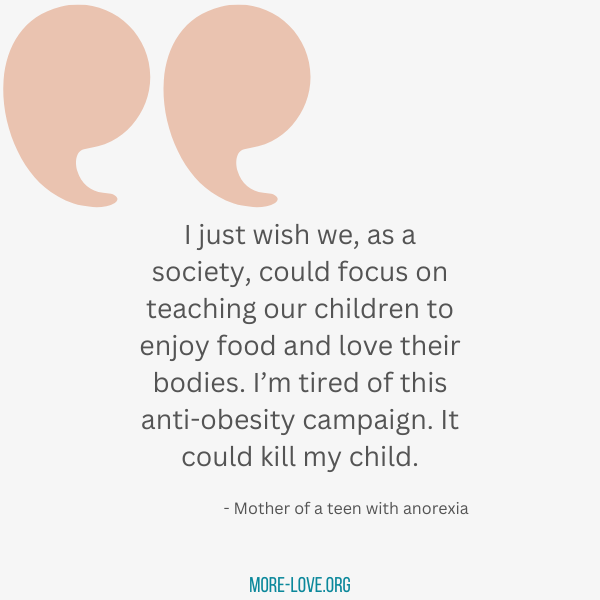
I cringe at every mention of โ€œcleanโ€ or โ€œhealthyโ€ food or trendy diets. I just wish we, as a society,  could focus on teaching our children to enjoy food and love their bodies. Iโ€™m tired of this anti-obesity campaign. It could kill my child.

References

* A recent study conducted by USC found that pediatric brain tumor patients face increased risk of interpersonal and emotional distress.

  • 25% of respondents reported that the patient had trouble making and keeping friends
  • 20% reported that the patient feels isolated and alone.

Interpersonal and emotional distress has been correlated with teenagers with eating disorders. So while this child’s childhood illness is not a stand-alone “cause,” it is an important part of this family’s anorexia story.


Ginny Jones is the founder of More-Love.org, and a Parent Coach who helps parents who have kids with eating disorders.

See Our Collection of Eating Disorder Recovery Stories

Posted on Leave a comment

My adult child hid her eating disorder for years

My adult child hid her eating disorder for years

by Anonymous

I thought I had a strong, well-adjusted child, until I found out that she hid an eating disorder from me for years. I’m still struggling with my guilt that I did not know. I did the best I could; I know this. She got the best care I was able to give. But the fact remains that she was hurting, and I can see that there are signs I missed and steps I could have taken to help her.

Today, I see more clearly the things I could have done differently for my daughter. When I found out about her eating disorder, I was faced with two choices: bury my guilt or examine my role. The funny thing is, burying my guilt, which I did for a while, was actually more painful than shining a bright light on my parenting and allowing my past mistakes to inform my behavior today. I’ve found peace in giving myself compassion even as I learn more about our past and intentionally build our future. I can’t say it’s easy, but I am much happier today than I was when I was trying to avoid looking at my role in my child’s eating disorder.

She was hurting, and I didn’t know what to do. I can say this with self-compassion and without shame because my daughter is still here. There is still time for me to be the parent she needs.

Here are the lessons I’ve learned in hindsight and the things I’m doing to help my adult daughter recover from her eating disorder.

1. Hold her closer

My daughter seemed happy and well-adjusted in elementary school. When she entered puberty, she changed. She seemed angry and secretive and started to pull back from me. The truth of the matter is that I had a lot going on at the time, and I was both hurt and relieved when she seemed to need less of me. I allowed myself to believe that all teenage daughters are “difficult,” which protected me from the hurt I felt every time she lashed out at me or ignored me.

Now I can see that my daughter desperately needed me to be an active parent, but I behaved like a hurt child. I’ve learned that my own parents set the stage for how I handled my daughter during adolescence, and it was with a 10 foot pole! My sweet girl needed me to hold her closer, but I sort of just held my breath, hoping we could emerge intact when she “got through” her teens.

Today my child is an adult, and we did get through her teens. But it came at a cost to her health and our relationship. I can’t go backward and re-do her adolescence or take away her eating disorder, but I am talking to her while she’s recovering, and I know that I can still help her. I’ll keep learning what I can, showing up, asking her questions, and reflecting on my behavior as she navigates eating disorder recovery. I look carefully at my automatic, defensive responses when something she says or does triggers me. And I do the best I can today with what I know now.

2. Listen, don’t lecture

When she was a teenager, my daughter was infuriating to me. She was sometimes sneaky and lied. I knew she was doing something “wrong,” but I didn’t really know what. I spent a lot of time lecturing her about morality and good behavior. She sat silently through my lectures with a smirk, which just enraged me further.

Now I know that my daughter was actually lying and sneaking around – with her eating disorder. Yes, there were other things she was doing, but her most fundamental “crime” as a child was her eating disorder, which she hid with great skill. I’ve learned that people who have eating disorders hide what they are doing, but that doesn’t mean they don’t want to be discovered, especially by their mothers. I didn’t realize this at the time, but by lecturing instead of listening I missed the opportunity to catch the hints she gave me along the way. My lectures just drove the eating disorder deeper into hiding. My child hid her eating disorder because she didn’t know what else to do.

Today I’m learning to listen. I’ll be honest – it’s hard. I feel compelled to give my daughter advice to help her navigate her recovery faster so that she can feel all better. I keep reading about eating disorders, and I really want to give her advice and information about what I’ve learned. But I’ve been practicing mindfulness, and instead of saying everything that comes to mind, I watch thoughts go through my mind and stick to listening instead of lecturing. I am not always successful, but I’ve noticed that the more I listen, the more my daughter relaxes with me, and the more she speaks up about how she feels. I know that her being able to speak to me about her feelings is an excellent sign that she is recovering from her eating disorder.

3. Learn about myself

When my daughter went into teenage rages or sulks, I often shut down emotionally. I just didn’t know how to handle the slamming doors, the tears, and the painful silences. In my family, my own mother ignored us when we “acted up,” and I learned quickly to never express how I felt, especially “bad” feelings like anger. I learned to hide how I felt when I was a child, and so when my own child “acted up,” I didn’t know what else to do than to shut myself down. Sometimes I would yell back or tell her that I didn’t like what she was doing, but more often, in the heat of the moment, I just disappeared inside of myself when she was doing something that made me emotionally uncomfortable. Now I can see that my child did the same thing to me when she hid her eating disorder.

I now know that a mother’s withdrawal from her child’s emotional expression is experienced by the child as abandonment. It feels brutal to me to think that my daughter felt I was abandoning her because of course, that’s not what I was trying to do. I was just doing the best I could and trying to get through the day. And yet, this emotional abandonment impacted her relationship with me and with herself.

Today I’m learning about my own emotional landscape. I’m learning that my defense mechanisms didn’t come out of nowhere, and they impacted my child, whose happiness drives my own happiness. Luckily our children always crave unconditional acceptance from their mothers, and so I still have a chance to be better and to give her what she needs. While she’s in recovery for her eating disorder, I frequently feel emotionally uncomfortable. I desperately want to withdraw and hide. But I’m staying with her, compassionately reminding myself that we can both tolerate feelings, no matter how big and terrifying they seem.

My adult daughter with an eating disorder has been in recovery for a while now, and I am enjoying the new aspects of her personality that are being uncovered. What I thought at first was just an “eating problem” I now see was a problem with her sense of self and her ability to express herself. I’m proud of her, and I’m also proud of myself for being able to face my own fears during this process.

Thank you for your anonymous submission. Keep going – you’re doing great! Sending Love … Ginny

See Our Collection of Eating Disorder Recovery Stories

Posted on Leave a comment

An eating disorder is more than a weight-based illness

by Therese Roeser

I was raised in a home where there seemed to exist a great deal of permission around food.  There was a large variety of food available in our pantry and refrigerator. Friends would flock to our house to eat โ€œsugaryโ€ cereal and โ€œjunkโ€ food.  In addition, appealing, balanced meals were served on a predictable schedule.

However, my mother was at times on a diet or โ€œwatching it.โ€  When she plated our dinners, she served herself noticeably less food than the rest of us. At lunch, she would sometimes eat โ€œdietโ€ food typical of the 80s: grapefruit, cottage cheese, canned tuna, rye krisp crackers and diet shakes.  One of my older sisters would also diet from time to time. It was not discouraged. My father ate pretty erratically and, after dinner, would spend a lot of time eating snacks while standing in front of our pantry. He had a larger body and believed strongly in fasting.

So there was this idea that young children had permission to be normal eaters and to just exist in their bodies but all bets were off for adults. They needed to control what they ate.

The summer before I began high school, I experienced my first episode of depression and, for the first time, experienced a significant loss of appetite. It felt like a funny blessing…this state, this apathy toward eating, that my family members had been trying to achieve just sort of fell into my lap.  So, I began to hone it by โ€œhealthying upโ€ my diet. At the same time, my depressive symptoms began to lift as I became more engrossed in my restriction.

As my weight changed, my size became an important part of my self-esteem. I was becoming a skinny girl! This was something new I could be good at!

My family was not overly concerned. I think that my parents normalized my restrictive behavior as a โ€œphase girls go throughโ€ or just normal initiation into womanhood. In my family, as in many, a slender body was admirable and preferred.

My body continued to noticeably change and it became my primary focus. It was apparent to the few friends I had that I was not just dieting. I became reluctant to socialize because I did not want to be pressured to eat or for my behaviors around food to be scrutinized. I grew more irritable and sensitive. I needed my behaviors; I relied on them to assure me of my attractiveness, likeability, and success, essentially my worth as a person. They defined me.

My days became a series of rigid eating and exercise rituals. My skills, passions, and dreams dwindled in favor of my behaviors. My parents vacillated between denial and alarm. My father insisted that I was merely โ€œathleticโ€ and had remarked that it was better for me โ€œto be underweight than the alternative.โ€  My mother, on the other hand, expressed genuine concern over my body, which was now โ€œclinicallyโ€ anorexic. She took me to the pediatrician who was dismissive.

On the one hand, I felt that I had safely slipped under the radar. Another part of me, however, desperately wanted someone else to take over and rescue me.

The August following my freshman year in high school, I reached my lowest weight. It was a number much lower than I had ever anticipated reaching. On the one hand, I felt a rush and, on the other, I was terrified by how far this had gone.

My sister confronted me about my behaviors as well as the state of my health. She comforted and reassured me, and she talked with my mom about my eating disorder since I was not ready to do so. Later that month, I began outpatient therapy and nutritional counseling.

Over the course of this initial recovery period, my mother accompanied me to a weekly eating disorders support and psycho-education group for several weeks.  She even took me to listen to a lecture by Joan Jacobs Brumberg.

My family always supported my eating during recovery. However, I wish my parents knew that fatphobia, which continued in our family, was a huge barrier to recovery.

During this recovery period, I began to binge. Biologically and psychologically, this made some real sense. My body and brain were starved. My family, therapist, and dietician were overjoyed that I was eating again. However, I was still trapped by my feelings about weight and food.

I wish my parents had known that an eating disorder was more than a weight-based illness.  After I reached my โ€œtarget weight,โ€ my treatment stopped. My underlying anxiety and depression were never recognized or treated.

For the next several years, my weight fluctuated greatly and much of my eating remained compulsive albeit at a less severe level. What remained constant and unresolved was the sense that I was deprived and could never get enough. The eating disorder served a larger purpose in my life and now there was a void.

While away at college, I yearned to be โ€œnormal.โ€ I hoped to recover the untainted relationships I once had with my body and food before the onset of my disorder. I started a recovery group, and we all believed the solution to our problems lay in being able to change how we viewed and used food or how we felt about our bodies. What we didnโ€™t consider was the why in the equation. Why did we maintain our behaviors? How did they serve us and what did they represent?

During my senior year of college, I sought the help of a therapist and a dietician again. I was no longer clinically ill but I still didnโ€™t exactly feel comfortable in my own skin and eating would, at times, cause me to feel guilt, shame or self-reproach. This period of therapy gave me more stability, and I went on to complete a Masters degree in Social Work.

My first year out of graduate school, I suffered from my second episode of depression. With the help of a psychiatrist over a period of several years, I started to understand more of the “why” in my eating disorder. I discovered that I used my behaviors to manage my depression, stress, and anxiety. When circumstances or emotions became seemingly unmanageable, my eating disorder provided constancy and refuge.

Through therapy, I slowly started to see myself as much more than a jumble of pathology and failures. I came to witness my strength, competence, and value as a human being. I started to trust myself again.

I stayed well through the pregnancies and births of my two children. When my son was diagnosed with autism, I felt terrified, powerless and as though I had failed in life. Once again, I slipped back into some of my old behaviors. I channeled all of my pain and exhaustion into destructive eating patterns. This went on for about 6 months when I began to see a psychologist and registered dietitian that specialized in eating disorders.  

They encouraged me to uncover my faulty thinking and challenge it. They helped me to find my voice again, to state my needs, to ask for help and establish my boundaries.  Mostly, they taught me the incredible value of self-care. I cannot nourish and nurture others if my own well is depleted.

I used to imagine how things might have been different for me if my family was different, if I werenโ€™t so driven or if I wasnโ€™t a woman.  As I began to understand myself more clearly, I accepted that the development of the eating disorder was part of my life history. It is a mental illness that I work to keep in remission. I donโ€™t blame myself for its having existed much like one would not blame oneself for having had cancer or asthma.

In the beginning, the function of the eating disorder was to comfort and soothe myself. It relieved a lot of the stress and anxiety in my life. For me, the eating disorder was a compass giving me direction while bypassing the difficulties of the present. It also gave me a false sense of success. My behaviors became my automatic โ€œgo-toโ€ anytime I experienced a difficult emotion and needed to retreat. They were coping mechanisms.

For a long time, I strove to be โ€œcuredโ€ because I was so ashamed of ever having had an eating disorder. Learning to see recovery as a process and treat myself more gently and less critically has helped me maintain forward momentum.

The loving support of my husband, my family, and my very closest friends truly help me to remain grounded.  My two children are my main reason to be well. I strive to have energy and a love of life that I can share with them. I have discovered joyful movement in a variety of way: walks, yoga, swimming, dancing and lifting weights. I do not abide by any exercise routine or schedule, though.  I fully embrace intuitive eating. I take medication to treat my mood disorder and I still see a psychiatrist and therapist in addition to my general practitioner. I also make a lot of irreverent and fun artwork.

As a parent, I feel itโ€™s important to eat with your children and enjoy the same foods together.  So my kids see me eating pizza, ice cream, hamburgers, etc. I follow the Ellyn Satter philosophy on eating: parents decide what is served at a meal and the time of the meal while the individual child determines what and how much of each food they will eat.  We also talk about how bodies change as we get older and we all grow at different rates and have unique bodies. One of my favorite books to read is โ€œAmandaโ€™s Big Dream.โ€

Recovery for me is about trying my best to stay truly engaged in life, all the while learning more about myself.


You can see Therese Roeser’s recovery artwork on her Instagram account, @healingcrayons

Screen Shot 2018-05-25 at 8.18.00 AM

See Our Collection of Eating Disorder Recovery Stories