
Posted on Leave a comment

Unlock Your Childโ€™s Eating Disorder Recovery With Parent Coaching

Parent coaching session supporting a child with an eating disorder at home

As a parent, watching your child struggle with an eating disorder can feel like standing on the sidelines of a game you desperately want to win, but you donโ€™t know the rules. You may feel frustrated, anxious, or even guilty, wondering if you could have done something differently. Many parents find themselves waiting for their child to get motivated for recovery or relying solely on professionals to implement treatment.

But hereโ€™s the truth: you are more powerful than you realize. Instead of waiting for your child to change, you can take an active role in their recovery. Parent coaching gives you the guidance, tools, and confidence to actively support your child at home, where change truly happens. By working with a parent coach who understands eating disorders and the parent-led treatment and recovery process, parents can create measurable steps for recovery rather than just hoping their child will want to get better.

One mother shared, โ€œBefore coaching, I felt frozen. Every mealtime felt like a minefield. Working with my coach helped me set clear, achievable goals that I could actually accomplish, like serving my daughter full portions of food rather than waiting for her to ask for more. It gave me clarity, purpose, and hope. Looking back, I wish I had started working with my parent coach earlier, because focusing on changing my own approach, rather than trying to change my daughter, made such a difference in her recovery.โ€

Parent calmly encouraging child to eat a balanced meal as part of eating disorder recovery

Why Parents Are the Most Important Part of Recovery

Parents spend more time with their kids than any therapist, nutritionist, or doctor. That consistent presence gives you unparalleled influence. Kids still need those professionals, but every small action you take, from sitting with your child at meals to checking in emotionally, also shapes their recovery.

One mother said, โ€œOnce I started working with a parent coach who understood eating disorders and the recovery process, I started setting measurable goals about what I was going to do, like active listening and feeding her meals and snacks. I could finally see progress. It was empowering to realize that my daily efforts mattered.โ€

Parent coaching equips you to confidently navigate this role, turning frustration into purposeful action.

Common Challenges Parents Face

Supporting a child with an eating disorder can trigger a whirlwind of emotions: fear, guilt, confusion, anger, and even isolation. Many parents experience:

  • Feeling helpless and unsure what to do
  • Worrying that their child is slipping further out of reach
  • Relying entirely on professionals or waiting for the child to โ€œwantโ€ change
  • Experiencing stress, guilt, or anxiety around meals and daily routines

A father shared, โ€œI was terrified of making things worse. Every mealtime felt like a battle, and we both often ended up yelling or in tears. Parent coaching helped me change that dynamic. I realized that even small, measurable goals about how I was approaching my child’s recovery create real change.โ€

Another parent reflected, โ€œI felt so alone. Learning the steps I could take at home made me feel as if I had the power to implement change rather than having to wait for her to want it. I realized that I didnโ€™t have to wait for my child to suddenly โ€˜wantโ€™ recovery; it could start with me.โ€

Parent coaching addresses these challenges by giving parents actionable strategies, confidence, and reassurance.

What Parent Coaching Offers

Parent coaching provides guidance, practical skills, and measurable strategies that empower parents to take action. These strategies are grounded in a deep understanding of how eating disorders work and, importantly, what it takes to recover from an eating disorder. With a parent coach, parents can turn abstract hope into tangible steps for recovery.

1. Education on Eating Disorders

Understanding your childโ€™s behaviors, triggers, and misconceptions reduces fear and uncertainty. One parent said, โ€œI used to think every food refusal meant I was failing. Learning the science behind eating disorders helped me separate my guilt from what was actually happening.โ€

Education also helps parents translate their childโ€™s behavior so they can respond differently, recognize early signs of recovery, patterns in emotional triggers, and ways to respond effectively without increasing eating disorder behaviors.

Parent and child having a 5-minute emotional check-in conversation at home

2. Practical Skills for Daily Support

Coaching teaches meal support techniques, communication strategies, and emotional regulation skills. Parents learn to set small, actionable goals that can be incorporated into daily life. 

For example, one goal might be an emotional check-in, where the parent engages in a five-minute conversation with their child every day, using open-ended questions to explore feelings. Another goal could empower parents to serve full meals and snacks without making changes based on the childโ€™s demands or refusals, helping create consistency and support around eating.

A mother shared, โ€œLearning to sit with my son without giving in or giving up, offering support instead of commands, and noticing small wins completely changed our evenings. It wasnโ€™t about perfect meals, it was about progress.โ€

3. Guidance on Setting Boundaries and Structure

Parents often struggle with supporting their child without enabling unhealthy behaviors. Coaching helps provide consistency and safety while encouraging independence. 

For instance, parents might set goals such as having the child independently select one snack from a pre-approved list each day, or establishing limits on screen time during mealtimes to support focus and engagement. These strategies create clear boundaries while promoting autonomy, helping the child build healthy habits in a structured, supportive environment.

โ€œI used to avoid conflict at all costs,โ€ said one parent. โ€œNow I can set boundaries with compassion, and my child respects them. It feels like a partnership instead of a battle.โ€

4. Building Confidence and Actionable Recovery Goals

Parent coaching breaks recovery into clear, measurable steps, helping parents see tangible progress. Many parents who are desperate to change their childโ€™s behavior are surprised to discover that the fastest way to do so is by changing their own. 

For example, a parent might stop demanding that their child finish a plate and instead support them with empathy and calm consistency. Rather than begging a child to eat breakfast, a parent can set a firm boundary, such as โ€œlife stops until you eat.โ€ Parents may also begin plating snacks and bringing them on a regular schedule, and approach emotional outbursts with curiosity instead of anger, seeking to understand and support rather than control. 

One parent reflected, โ€œHaving concrete steps to follow made me feel like I could actually help my daughter recover, rather than just waiting and worrying. Each small win gave both of us hope and momentum.โ€ Parent coaching reassures you that your actions matter, giving you the tools to feel capable, empowered, and effective in supporting your childโ€™s recovery.

Parent tracking recovery goals with child during eating disorder coaching

How Coaching Empowers Parents at Home

Parent coaching transforms feelings of helplessness into purposeful action. Rather than waiting or feeling isolated, parents learn to implement home-based strategies that support recovery every day, respond to behaviors with confidence instead of fear or uncertainty, and create an environment that fosters long-term positive change. 

Working with a parent coach also makes progress visible and achievable. As one father shared, โ€œI was so deep in the weeds that it was hard for me to see when we were making progress. Having my coach point out progress, which was often invisible to me, gave me confidence and hope, and kept me going when things seemed impossible. It was exactly when things got really hard that they started to turn around. I had to stay in the game to see that happen, and that wouldnโ€™t have been possible without our parent coach.โ€ย 

Coaching further helps parents navigate emotional challenges such as mealtime anxiety, marital tension, sibling dynamics, and guilt, making home life calmer, more structured, and supportive for the whole family.

Measuring Progress and Celebrating Wins

One of the most powerful aspects of parent coaching is having someone by your side to track progress and celebrate small wins. Working with a coach helps parents notice subtle improvements in behavior, mood, or family interactions, such as a child finishing a meal without conflict, asking for a food they havenโ€™t wanted in months or years, showing signs of confidence and security, expressing more affection, or demonstrating trust in their parents. 

Celebrating these wins with a trusted coach who knows how eating disorder recovery works reinforces effort and builds confidence for parents, helping them stay committed during the difficult recovery process. As one mother shared, โ€œRecognizing even one small victory each time I met with my parent coach made the recovery process feel hopeful and achievable. It reminded me that my efforts were making a difference, and that my investment in learning and growing was paying off.โ€

Who Can Benefit From Parent Coaching

Parent coaching is helpful for:

  • Parents of children at any stage of an eating disorder
  • Parents who feel stuck, overwhelmed, or unsure what to do
  • Parents seeking practical skills rather than theoretical advice

No matter your childโ€™s age or stage of recovery, parent coaching can give you the knowledge, tools, and confidence to actively support them at home. ๐Ÿ‘‰ Learn more about parent coaching for kids with eating disorders

Frequently Asked Questions

Can parent coaching really help with eating disorders?

Yes. Coaching equips parents with practical skills and confidence to create a supportive home environment, which is often more impactful than therapy alone.

What skills will I learn in parent coaching?

Parents learn evidence-based parent-led treatment, meal support techniques, effective communication strategies, emotional regulation skills, boundary-setting, and how to create actionable SMART goals.

How soon can I see results at home?

Results vary depending on your childโ€™s stage of recovery and your consistency, but parents often notice improved communication, reduced conflict, and measurable progress toward recovery goals within weeks.

Can parent coaching help if my child resists recovery?

Yes. Coaching teaches parents how to set achievable steps that focus on parental behavior and routines rather than waiting for their child’s motivation, making progress possible even when resistance is high.

How do I manage my own stress while supporting my child?

Parent coaching includes strategies for self-care, mindfulness, and maintaining balance, helping parents stay resilient and confident.

You’ve Got This!

Parent coaching empowers you to step into your most important role in your childโ€™s recovery. With a parent coach who understands eating disorders and recovery by your side, you can make a real difference at home, reducing stress and increasing confidence for both you and your child.

You are not alone. Many parents have been where you are now, feeling anxious, unsure, and overwhelmed. Parent coaching shows that change is possible, even when it feels out of reach. Your presence, your consistency, and your love are more powerful than you realize.


Ginny Jones is the founder of More-Love.org, and a Parent Coach who helps parents who have kids with eating disorders.


Posted on Leave a comment

How To Motivate When Your Child Doesnโ€™t Want to Recover

Parent sitting with teen on couch, offering support during eating disorder recovery

Angela still remembers the moment she realized how serious things had become.

Her 16-year-old daughter, Mia, had stopped joining family meals weeks ago. When Angela gently encouraged her to eat, Mia snapped, โ€œYou donโ€™t understand! Iโ€™m fine!โ€ and stormed off.

Angela stood frozen, unsure whether to push harder or back off. Sheโ€™d read about eating disorders and understood the risks, but every attempt to help seemed to make things worse. She felt trapped between fear and helplessness.

If youโ€™ve been in Angelaโ€™s shoes, you know how excruciating it feels when your child resists recovery. You see the danger, but you canโ€™t control their choices. You want to help, yet everything you try seems to backfire.

The good news? There are ways to motivate recovery that donโ€™t rely on control or confrontation. In fact, the most effective motivation comes from connection, empathy, and gentle collaboration.

Parent patiently sitting near teen who seems withdrawn, showing support

Why โ€œMotivationโ€ Works Differently in Eating Disorder Recovery

When we think of motivation, we often imagine pep talks, tough love, or setting firm consequences. But eating disorders arenโ€™t just about behavior, theyโ€™re rooted in deep emotional and neurobiological patterns. That means what looks like โ€œrefusalโ€ or โ€œstubbornnessโ€ is often fear and self-protection.

Food feels threatening. Gaining weight feels impossible. The eating disorder voice, the one whispering, โ€œYouโ€™re safer if you donโ€™t eat,โ€ can feel stronger than even the most loving, impassioned, rational speech from a parent. So when parents push too hard, the childโ€™s brain perceives it as danger, triggering more resistance and defiance. Recovery motivation isnโ€™t about forcing compliance. Itโ€™s about creating safety so your child can take courageous steps toward change.

Step 1: Understand Whatโ€™s Driving the Resistance

Itโ€™s natural to want to fix things quickly, especially when you see your child struggling. But the first step toward motivating recovery is slowing down to truly understand whatโ€™s behind their resistance. Instead of focusing on getting them to comply, start by wondering what might be fueling their fears. Ask yourself: What could my child be afraid of? What role might the eating disorder be playing in their life. Perhaps it’s providing a sense of control, safety, identity, or belonging?

When you approach your child from a place of curiosity rather than correction, everything begins to shift. Your childโ€™s defenses lower because they feel seen, not managed. The goal isnโ€™t to push them toward recovery, but to help them feel emotionally safe enough to take the next step on their own.

For example, when Rachelโ€™s son refused to follow his meal plan, she used to argue and plead with him to eat. Eventually, she tried something different. Instead of insisting, she said gently, โ€œCan you tell me what’s happening for you right now?โ€ To her surprise, he began to share small pieces of what he was feeling. That simple moment of curiosity opened the door to connection, and connection is the foundation of motivation.

Step 2: Shift from Control to Connection

Control can feel like safety for parents, especially when youโ€™re watching your childโ€™s health decline and feel powerless to stop it. Yet eating disorders thrive in power struggles; the harder a parent pushes, the harder the disorder pushes back. The alternative to control isnโ€™t permissiveness or ignoring medical needs, itโ€™s connection. This means reframing your role from enforcer to collaborator, showing your child that youโ€™re on their team rather than against them.

For example, instead of saying, โ€œYou have to eat or elseโ€ฆ,โ€ you might say, โ€œI know eating feels hard, and Iโ€™ll stay with you while you try.โ€ Or instead of, โ€œYouโ€™re not trying hard enough,โ€ you could offer, โ€œI can see how scared you are. Letโ€™s figure out what might make this step feel doable.โ€ These subtle shifts in language communicate safety rather than threat. And when a child feels safe, their motivation to recover begins to grow from within rather than being forced from the outside.

Step 3: Learn What True Motivation Looks Like

In recovery, motivation is rarely straightforward. Itโ€™s often ambivalent; a mix of โ€œI want to get betterโ€ and โ€œIโ€™m terrified to change.โ€ This back-and-forth is completely normal and doesnโ€™t mean your child isnโ€™t trying. It simply reflects the inner conflict between the desire for freedom and the fear of losing what feels safe or familiar.

Motivational Interviewing, a counseling approach, teaches that the goal isnโ€™t to convince someone to change, but to help them hear their own reasons for wanting change. As a parent, you can support this process by asking gentle, curiosity-based questions that invite your child to explore what recovery might mean for them.

Try asking things like, โ€œWhat do you miss about life before the eating disorder?โ€ or โ€œWhat would be different for you if you didnโ€™t have to think about food all the time?โ€ You might also ask, โ€œWhatโ€™s one small step that could make things feel a little easier this week?โ€ These kinds of questions, known as โ€œchange talk,โ€ help your child connect with their own inner motivation. Youโ€™re not trying to talk them into recovery; youโ€™re helping them own it.

Parent and teen embracing after difficult conversation, symbolizing repair and safety

Step 4: Repair the Relationship When Things Get Heated

No parent handles eating disorder recovery perfectly. There will be slammed doors, tears, and moments you wish you could take back. Recovery is messy and emotional for everyone involved. It brings out fear, frustration, and helplessness on both sides. The goal isnโ€™t to stay calm all the time; itโ€™s to know how to come back together afterward. The key isnโ€™t perfection; itโ€™s repair.

After a conflict, take a deep breath and acknowledge what happened with honesty and care. You might say, โ€œI know that conversation didnโ€™t go well. I got scared and probably sounded angry. I care about you, and I donโ€™t want us to feel so far apart. Can we try again?โ€ These words communicate accountability and love, showing your child that connection doesnโ€™t end when things get hard. Over time, this kind of repair helps rebuild emotional safety, which is the foundation every recovery needs.

Step 5: Focus on the Process, Not Just the Outcome

Itโ€™s easy for parents to measure success by external milestones: calories eaten, weight restored, or therapy attendance. Those markers certainly matter, but true motivation often grows in the smaller, invisible moments that are easy to overlook. It might be the day your child tolerates a difficult meal, admits that part of them wants help, or lets you sit nearby without an argument. These are quiet victories, but they signal movement in the right direction.

When you notice and celebrate these micro-moments, you reinforce progress rather than perfection. You show your child that recovery isnโ€™t about meeting expectations, itโ€™s about building courage one step at a time. One father I worked with used to keep a small notebook where he tracked his daughterโ€™s โ€œsmall wins,โ€ moments of openness, honesty, or bravery. Over time, those entries became stepping stones toward lasting recovery. His shift in focus from control to progress transformed not only his daughterโ€™s motivation but the emotional tone of their entire home.

Parent taking a moment to practice self-care during childโ€™s recovery

Step 6: Support Yourself Along the Way

Motivating your childโ€™s recovery isnโ€™t only about what you do for them, itโ€™s also about how you care for yourself. Parents often reach a point of burnout after months or years of living with fear, guilt, and exhaustion. Yet your steadiness, not your perfection, is one of the most powerful motivators your child has. To show up with empathy and patience, you need to be resourced yourself.

Start by building a support system that holds you, too, whether thatโ€™s a therapist, a parent coach, or a support group of others who understand this journey. Practice self-compassion by reminding yourself that it feels hard because you love your child so deeply. And remember, itโ€™s okay to take breaks from recovery talk. Moments of normalcy and connection like watching a movie together, going for a walk, or sharing a laugh, protect your relationship and remind both of you that life is more than the eating disorder.

Youโ€™re allowed to have your own feelings and needs. In fact, modeling self-care and emotional honesty shows your child that wellbeing is possible. The way you treat yourself becomes part of their recovery story, too.

Step 7: Use Evidence-Based Tools That Really Work

If youโ€™re ready for clear structure and communication tools you can actually use, my Parent Guide + Workbook: How to Motivate Eating Disorder Recovery walks you step-by-step through the process. Inside, youโ€™ll learn how to understand resistance, navigate conflict, and use practical scripts to stay calm and effective in the heat of the moment.

The workbook explores the psychology behind motivation, including why logic and reasoning alone often fall flat, and offers evidence-based strategies drawn from Motivational Interviewing and family systems approaches. Youโ€™ll find sample conversation scripts for moments of refusal or defiance, reflection exercises to deepen empathy and connection, and concrete guidance to help you respond rather than react.

This guide was created for real parents in real homes: no jargon, no judgment, just research-backed tools that bring calm, connection, and hope back into the recovery process.

When You Feel Hopeless, Remember This

If youโ€™re reading this, it means you care enough to keep trying, and thatโ€™s the foundation of change. Even when your child rejects help, rolls their eyes, or shuts you out, your calm presence still matters. Every moment of connection, every soft repair, every โ€œIโ€™m here when youโ€™re readyโ€ you say plants a seed of safety that can grow into recovery motivation.

You Donโ€™t Need To Have All The Answers.

You just need to keep showing up with love, curiosity, and patience.And you donโ€™t have to do it alone.

If you want step-by-step tools to help you stay grounded and motivate your child toward recovery, download my Parent Guide + Workbook: How to Motivate Eating Disorder Recovery today.

Youโ€™ll gain practical scripts, communication frameworks, and the confidence to guide your child โ€” without pushing them away.


Ginny Jones is the founder of More-Love.org, and a Parent Coach who helps parents who have kids with eating disorders.

Posted on 2 Comments

A helpful strengths-based approach to eating disorder recovery

strengths based eating disorder recovery

Gloria has been in recovery from an eating disorder for years, but she feels hopeless. โ€œItโ€™s just that I have all these personality traits that doom me to a life with this problem,โ€ she says. โ€œI donโ€™t see how I can possibly escape from my eating disorder because I’m such a perfectionist.โ€ 

I completely understand. Our personalities are a very important part of our identity. And itโ€™s true that certain personality traits are associated with eating disorders. Eating disorders are “biopsychosocial,” which means they have biological, psychological, and social causes. Personality traits are some of the psychological causes of eating disorders. The stronger a trait is, the more likely it will be considered a โ€œmaintaining factorโ€ in an eating disorder. In other words, a trait like perfectionism can drive an eating disorder to develop. And if it’s unmanaged it can also makes the eating disorder more likely to stick around. 

However, I think viewing personality traits as purely negative is both inaccurate and unhelpful. Many people like Gloria feel like being labeled โ€œperfectionisticโ€ is a life sentence. This does not help Gloria achieve recovery. And in fact, it keeps her focused on what she doesnโ€™t have rather than what she does have. A strengths-based approach to eating disorder recovery is much more hopeful and helpful.

Personality traits associated with eating disorders

There are several key personality traits associated with eating disorders: perfectionism, obsessive-compulsiveness, neuroticism, negative emotionality, anxiety avoidance, low self-directedness, low cooperativeness, high impulsivity, sensation seeking, and novelty seeking.

These personality traits are commonly perceived as negative and seen as weaknesses. But every personality trait contains both strengths and weaknesses. And continuing to focus on weaknesses keeps people stuck in endless loops of self-recrimination.

NOTE: self-recrimination does not help people recover from an eating disorder. 

A strengths-based approach to eating disorder recovery

Of course the so-called negative personality traits have downsides. But that’s because great strengths cast long shadows. Research shows that focusing on weaknesses is de-motivating. Conversely, focusing and building on strengths is motivating. It’s better to focus on what’s right with someone than what’s wrong with them.

strengths based eating disorder recovery

โ€œMany health systems have traditionally adopted a view of mental disorders based on pathologies and the risk individuals have towards mental disorders,โ€ says Huiting Xie. โ€œHowever, with this approach, mental disorders continue to cost billions a year for the healthcare system.โ€

The deficit-based approach to recovery damages recovery because it is inherently unmotivating. If Gloria believes she has a โ€œfatal flaw,โ€ sheโ€™s unlikely to embrace the resources available and fully engage in the recovery process. However, if she is confident that can apply her natural and intrinsic strengths to recovery, sheโ€™s more likely to embrace recovery. 

A strengths-based approach to eating disorder recovery doesnโ€™t pretend there arenโ€™t difficulties to be faced, but it mobilizes a personโ€™s strengths rather than focusing on what is wrong with them. Mental health issues like eating disorders can be seen as a normal part of human life that can be managed and overcome. This treatment approach focuses on a personโ€™s abilities rather than their shortcomings, symptoms, and difficulties. 

Here are four personality traits and examples of how we can take a strengths-based approach to eating disorder recovery:

1. Perfectionism

Perfectionism meaningfully and consistently predicts employees who are more motivated on the job, work longer hours, and can be more engaged at work. These strengths can clearly lead to eating disorder behaviors if they are focused on eating and body weight. However, they can become a driver of eating disorder recovery, too. For example, if a person with an eating disorder focuses on their strength of being highly motivated, they can become deeply engaged in recovery. 

Typically treatment focuses on the negative fact that a person has become overly-engaged in their eating disorder behaviors. A strengths-based approach means we focus on their ability to deeply and passionately engage in things that matter to them. If they become deeply and passionately engaged in recovery, they can do anything!

2. Obsessive-compulsiveness

People with obsessive-compulsive personality traits are often confident, warm, organized, and high-achieving. They have meticulous standards of behavior and high expectations that can benefit them in every area of life. When these standards are applied to eating and body weight, they can drive eating disorder behaviors. However, this person has a strong ability to organize and make strategic decisions. When this strength is harnessed, they can become strongly motivated to recover. 

This trait likely drives the people who โ€œspontaneously recoverโ€ from their eating disorders. This really happens! Some people wake up one day and decide they donโ€™t want to have an eating disorder anymore. Once an eating disorder no longer fits their rules of โ€œgood behavior,โ€ recovery can be easier for people with this trait.

3. Neuroticism

The word โ€œneuroticโ€ is one of the worst-sounding personality traits, but, like all personality traits, it has strengths. People who have a more โ€œneuroticโ€ personality tend to be intelligent and funny, have more realistic expectations, and have greater self-awareness. They are also highly creative thinkers and tend to possess more emotional depth. Their emotional depth is likely what makes people with neurotic personalities more susceptible to eating disorders. Because they are more sensitive, they are more likely to need coping strategies for their big emotions.

However, when their creativity and intelligence are applied to building healthy coping strategies to replace their eating disorder behaviors, they can find deep and meaningful recovery. Additionally, embracing their neurotic tendencies can provide tremendous freedom and allow them to embrace themselves as they truly are, rather than try to fit into a socially-acceptable version of themselves. Recovery requires a person to embrace their body as it is. And it also requires embracing their SELF as it is.

4. Negative emotionality

Most personality traits arise as a combination of nature and nurture. But negative emotionality is a personality trait that is usually hardwired in the brain. We are all born with brain structures that determine whether we have a generally negative or positive temperament. And we have no control over our natural tendency towards negativity. Assuming that a negative temperament is bad is harmful and inaccurate. Negative emotions are adaptive, normal, and necessary. They are also highly motivating. Negative emotions prompt us to take action and provide valuable information about the inner and outer environment. 

Someone with a more negative emotional state is better positioned to recognize when something is dangerous. Once danger is identified, they are motivated to build new skills and stop risking endangerment. But this is not a matter of โ€œscaring people straight.โ€ Adding more negativity to someone with negative emotionality will not support recovery. Rather, we need to support people in tuning into the messages their negative emotions are trying to send them. We can empower people to listen to their negative emotions with critical insight and use their intelligence and creative problem-solving abilities to embrace recovery.

Empowering recovery 

Seeing personality traits as negative when treating an eating disorder is unmotivating and unsuccessful. Instead, seeing personality traits as strengths can support recovery. They can help a person find greater motivation and success. 

Thatโ€™s what happened to Gloria. โ€œI found a new therapist who focused on my strengths and empowered me to claim recovery on my terms,” she says. “With her I found that my perfectionistic tendencies were actually exactly what I needed to recover.โ€ She is now engaged in the process of recovering. And Gloria feels more hopeful and optimistic now that sheโ€™s using a strengths-based approach. By embracing her personality rather than rejecting it, she’s embracing recovery.


Ginny Jones is the founder of More-Love.org, and a Parent Coach who helps parents who have kids with eating disorders.

See Our Eating Disorder Treatment Guide For Parents

Posted on Leave a comment

Think twice! Punishment, rewards, and boundaries for an eating disorder

How to use punishment, rewards, and boundaries for an eating disorder

Bridget and Tom are struggling to figure out how to support their child Lex without enabling her. โ€œWeโ€™ve tried punishment, rewards, and boundaries,โ€ says Bridget. โ€œBut nothing seems to be working. The eating disorder isnโ€™t budging. In fact itโ€™s getting worse, and weโ€™re getting so burned out. What can we do?โ€

I get it. When parents are using punishments and rewards, they’re trying to motivate a child to recover. But while punishment and rewards are commonly-used parenting techniques, they tend to fail with an eating disorder for various reasons. Many parents try to establish boundaries instead, but because they misunderstand what boundaries are (and what they are not!), this can backfire, too. 

Behaviorally based discipline methods such as consequences, bribes, punishment, time-outs, and shaming only fuel relational and eating issues.

Nourished: Connection, Food, and Caring for Our Kids (And Everyone Else We Love) by Deborah MacNamara PhD

The only way to motivate someone to recover from an eating disorder is to increase your connection with them and simultaneously build their autonomy and identity, and punishments and rewards directly interfere with that. Meanwhile, boundaries are how parents avoid enabling or accommodating eating disorder behaviors. But not all boundaries are the same and understanding what does and doesn’t work makes all the difference.

Using punishment to deter eating disorder behaviors

A large portion of parenting advice has historically been based on punishing the behavior we donโ€™t want our child to do. Since punishment feels pretty harsh to most of us, modern parents prefer the word โ€œconsequences.โ€ Whether you call it punishment or consequence, the idea is something like this: if you donโ€™t get off your phone, Iโ€™ll take it away for a week. Using punishments to teach a child makes perfect sense intuitively. After all, if you do something and receive negative feedback for it, shouldnโ€™t that mean you wonโ€™t do it again? 

But unfortunately we know with certainty that as much as this approach makes intuitive sense, it is not actually effective parenting. Punishment is strongly associated with defiance, opposition, rebellion, and giving up. 

Punishment does not motivate kids to do the things we want them to do. Instead, it teaches them to avoid getting caught doing it. That’s why punishment can backfire when it comes to an eating disorder. The last thing we want is for a child to take their eating disorder underground where it becomes invisible. If we canโ€™t see the eating disorder behaviors, we have almost no hope of motivating a child to change their behavior. 

There are a few limited situations in which you might use consequences/punishment for eating disorder behavior, but I would be very, very careful about this. Punishing a child for using a coping behavior (even one that is dangerous) is misguided at best, harmful at worst. And keep in mind that negative words, criticism, and judgment are just as punishing as physical consequences.

๐Ÿ”Ž Bottom line about using punishment with an eating disorder: be extremely cautious!

Using rewards to incentivize eating disorder recovery behaviors

The opposite of punishing negative behavior is rewarding positive behavior. This approach to parenting is also well-established. The idea is that rather than focusing on what you want your child to stop doing (e.g. restricting, binge eating, purging), you focus on what you want them to start doing (e.g. eating regular meals, going to therapy, etc.). And instead of punishing the behavior you want to stop, you reward the behavior you want to start. This is how most animal training works: when my dog sits, I give him a treat. 

This makes sense, and there is some good evidence for focusing on rewards rather than punishments. However, it can have unfortunate consequences in eating disorder treatment and recovery. Because while rewarding behavior makes intuitive sense, in humans it tends to reduce intrinsic motivation, or the desire to make behavior change for oneself vs. for external reasons. 

When parents reward a child for doing something, they can accidentally reduce their childโ€™s intrinsic motivation to keep doing it. Getting a reward for taking positive action can, unfortunately, reduce a personโ€™s perceived autonomy, or the idea that they are doing the action for themselves vs. someone else or exclusively to gain a reward.

This doesnโ€™t mean you canโ€™t ever reward your child for taking positive steps towards recovery. You just want to make sure youโ€™re keeping in mind that their autonomous drive can be negatively impacted by doing so. To motivate recovery, you want to reinforce their sense of independence and agency at all times. Just like punishment, when your child has an eating disorder you must use rewards intentionally and with forethought.

๐Ÿ”Ž Bottom line about using rewards with an eating disorder: be extremely cautious!

Setting boundaries when your child has an eating disorder

The difference between punishment, rewards, and boundaries is mainly about who is taking action. When you punish or reward your child for an action they took, itโ€™s about their behavior. When you set a boundary, itโ€™s about your own behavior. 

For example, you may be in a situation in which your child is often yelling at you, which upsets you. You could either punish a child who yells at you or reward a child who speaks calmly. But this keeps the focus entirely on their behavior. On the other hand, boundaries mean that you tell your child during a calm moment that you don’t like being yelled at and are going to change the way you respond when it happens. Then when you are being yelled at, you tell them that you donโ€™t like being yelled at. If they continue, you tell them that you donโ€™t like being yelled at and are going to walk away. Finally, you follow through and consistently act on your boundary every time you are yelled at.

The focus is all about you. “I don’t like being yelled at” is very different from “stop yelling at me.” And “I’m going to walk away” is very different from “Why do you always yell at me? You’re so mean!” A boundary does not ask your child to change anything, do anything, or feel anything. It doesn’t make the child responsible for how you feel. It focuses entirely on what you like, dislike, and will do for yourself.

Focus on boundaries

This is the area you want to focus on most when your child has an eating disorder. Because short of force-feeding a child, which is rarely but indeed sometimes medically necessary, you canโ€™t really control eating behavior. And even if you do, in the process you might damage your child’s sense of agency and their intrinsic motivation to recover. 

However, you can decide what you will do when your child refuses to eat, binge eats, or purges. How will you respond? What boundaries will you set about your own behavior? How will you make sure you aren’t enabling or accommodating the eating disorder? And to be clear, your boundaries should not feel like punishments or rewards. They should be clearly explained in advance and carried through without judgment or criticism. 

Clear boundaries about parental behavior is how parents can be supportive without enabling the eating disorder. Itโ€™s a tricky balance, but itโ€™s possible. 

๐Ÿ”Ž Bottom line about using boundaries with an eating disorder: a good idea, but get some training!


Articles to help you set boundaries


Checking in with Bridget and Tom

Bridget and Tom have agreed that punishments and rewards are not working to help Lex. And while they tried boundaries, they see now that their boundaries have actually been another form of punishment and reward. โ€œI didnโ€™t really see the difference between focusing on our behavior vs. focusing on what Lex is doing,โ€ says Bridget. โ€œIn hindsight, I can see that our boundaries didnโ€™t work because we were still trying to control her. Controlling myself, Iโ€™ve discovered, is actually even harder!โ€

I get it! When you switch the focus from changing your child to changing yourself, you realize how hard it is to build new patterns of behavior. Families all have patterns that unconsciously drive and support our behavior. Parenting a child with an eating disorder is about both supporting the child in getting treatment and also changing any parental behaviors that may be accommodating the eating disorder.

Bridget and Tom are working hard to disrupt their unconscious patterns and intentionally build parent-focused boundaries. “I’m already seeing a difference in how our household operates,” says Bridget. “And there are a lot of ways I can see we’ve been accommodating the eating disorder. Lex has resisted most of the changes we’ve made, but I’ve been surprised to notice that she ultimately accepts our boundaries. I think she feels more secure with our boundaries in place. I’m noticing small but important changes in her behavior now that we’re focusing on what we’re doing.”


Ginny Jones is the founder of More-Love.org, and a Parent Coach who helps parents who have kids with eating disorders.

For privacy, names and identifying details have been changed in this article.

See Our Guide To Parenting A Child With An Eating Disorder

Posted on Leave a comment

How to motivate recovery from an eating disorder

How to motivate recovery from an eating disorder

Rachel is beside herself. โ€œI know I need to wait for her to be motivated to recover, and I canโ€™t do it for her, but this is excruciating!โ€ Rachel had been watching her daughter Brooke struggle for over 12 months, and despite expert treatment for her eating disorder, there is little improvement. โ€œThis is impacting every aspect of our lives,โ€ says Rachel. โ€œI feel like a complete failure, but it doesnโ€™t seem like thereโ€™s anything I can do to help.โ€ 

Rachel is not alone. So many parents feel helpless when their children have an eating disorder. It is true that your child needs to embrace eating disorder recovery for themselves. But there are also many things you can do to motivate their recovery from an eating disorder. 

The good news is that motivation is an interpersonal experience. In other words, you can motivate recovery from an eating disorder, and unfortunately you can also have a demotivating impact on your child.

In this article Iโ€™ll review the principles of motivational interviewing, a well-known, scientifically validated method of behavior change. Itโ€™s supported by over 200 randomized controlled trials across a range of target populations and behaviors including substance use disorders, health-promotion behaviors, medical adherence, and mental health issues. And the good news is that it outperforms other common methods of treating a broad range of behavioral problems and diseases.

What is motivational interviewing?

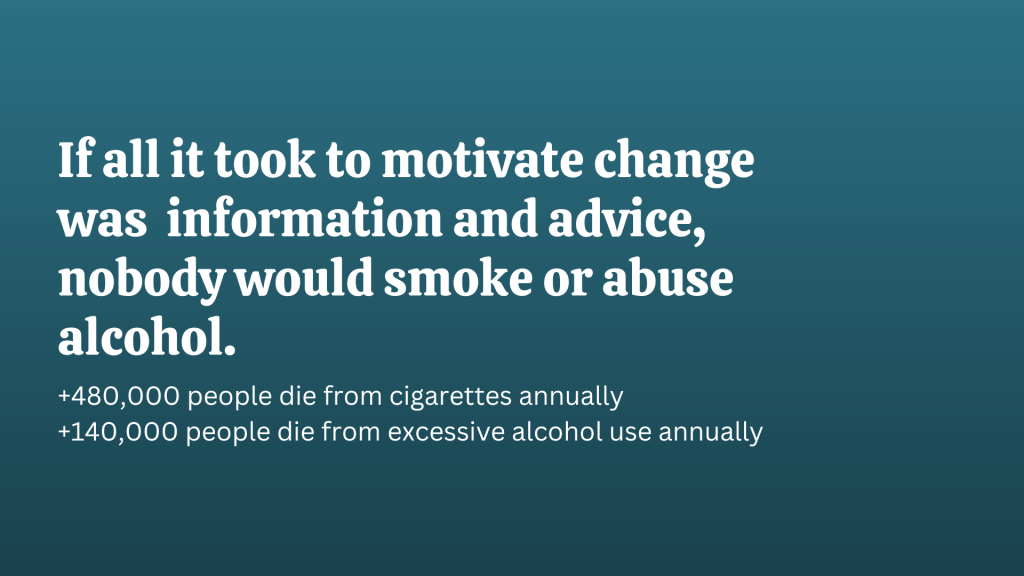
Motivational interviewing is a way to support change by building intrinsic motivation. It is widely recognized as far more effective than what most people do, which is to educate and advise someone when we want them to change. With motivational interviewing, you stop trying to directly change your child’s behavior and start building their inherent motivation to change. It is effective because the greatest changes come from within.

Motivational interviewing is also helpful because it allows you to have more realistic expectations of yourself and your child. Many people misunderstand motivation and don’t realize that it is interpersonal. That is, while motivation is an internal experience, it is heavily influenced by the outside environment. Your words and behaviors can either increase or decrease motivation.

And the good news is that parents who use motivational interviewing are more likely to succeed at increasing their child’s motivation. They’re also less likely to become frustrated by their childโ€™s resistance to change and relapses. This leads to significantly lower levels of parental burnout, which can negatively impact recovery.

How not to motivate someone

Most attempts to motivate other people to do things fail. But this doesnโ€™t mean people canโ€™t be motivated. It just means the traditional approach doesnโ€™t work. The traditional way that people try to motivate others is: 

  • Tell them what to do
  • Explain why they should do it
  • Give them health information and statistics
  • Attempt to persuade them
  • Negotiate with them
  • Confront them
  • Beg them
motivate child recover from eating disorder

Unfortunately, these traditional approaches have a predictable effect on the person you are trying to motivate. Most likely, when you try traditional approaches to motivating your child to recover from their eating disorder they will feel: 

  • Angry
  • Agitated
  • Oppositional
  • Defensive
  • Helpless
  • Overwhelmed
  • Ashamed
  • Trapped
  • Disengaged
  • Dissociated

How to help your child recover from an eating disorder with motivational interviewing

You can have a tremendous impact on your childโ€™s motivation to recover from their eating disorder if you use motivational interviewing techniques. First, you need to be clear about the fact that eating disorders are not educable disorders. In other words, all the education in the world will not motivate your child to recover. That doesnโ€™t mean you canโ€™t provide education. But it does mean that you should not mistake education for motivation. They are entirely different things. 

Second, it doesnโ€™t work to bully, convince, or beg a person to change. While some people will temporarily stop their eating disorder behaviors with this approach, it does not lead to lasting change because it is inherently not motivating. 

Third, keep the focus on you. Thatโ€™s right. You want to motivate your child to recover from an eating disorder, but the only person you can actually control is you. So make sure youโ€™re keeping your attention on what you are doing. Itโ€™s all too easy to focus on what your child is doing. Instead, think about your impact on your child. 

So what should you be doing? Motivational interviewing is more motivating than giving advice and education. It’s also something active that you can practice and work on while your child recovers from their eating disorder.

Motivational interviewing: the RULE acronym

Here are 4 principles of motivational interviewing. They spell the acronym โ€œRULE.โ€

R: RESIST telling them what to do

Avoid telling, directing, or convincing your child about the right path to good health. Use a collaborative process to motivate them. If you try to control your child you will shut down intrinsic motivation. Your child must maintain a sense of agency, the belief that they are in charge of their own body and life, in order to recover. This means parents need to focus on collaboration rather than coercion. Think in terms of dancing, not wrestling.ย You can still absolutely ask and expect your child to do things they don’t want to do, but don’t mistake that for motivation.

U: UNDERSTAND their motivation 

Your child needs to feel as if you understand how difficult it is to change and that you can tolerate their distress while they face this difficult change. Seek to understand their values, needs, abilities, motivations and potential barriers to changing their behavior. Try to understand what your child is communicating with their behavior. Donโ€™t rely only on words, or you will miss important feedback. Behavior is a sign of emotional and physiological distress. Understanding is essential to this process because compassion, empathy, and understanding are essential to motivating someone to change.

L: LISTEN with empathy

Show them that you care about who they are and what they think and say. Here are three ways to do this: 

  1. Ask open ended questions. Closed questions elicit a yes or no answer and will restrict the flow of the conversation. Open-ended questions allow them to tell their story and expand themselves. Examples of open-ended questions are โ€œWhat do you think of โ€ฆโ€ and โ€œHow shall we โ€ฆโ€
  2. Use affirmation and validation. Show your child you understand their point of view by validating what they have said. Highlight their key skills, strengths, goals, and competence. Examples of affirmation and validation are โ€œI can understand โ€ฆโ€ and โ€œI get it โ€ฆโ€ and โ€œIt makes sense that โ€ฆโ€
  3. Reflective listening and mirroring. Listen carefully and repeat back or rephrase in slightly different words. This creates a sense of safety. This is much more effective than asking questions. You can say things like โ€œWhat Iโ€™m hearing is โ€ฆ” or “Youโ€™re having a hard time with โ€ฆโ€ or โ€œIt feels as though โ€ฆโ€ or โ€œIt sounds like โ€ฆโ€ or โ€œIt seems as if what youโ€™re telling me is โ€ฆโ€ or โ€œWhat Iโ€™m hear you saying is โ€ฆโ€ or โ€œI get the sense that โ€ฆโ€

E: EMPOWER them

Work with your child to build agency and self-esteem by recognizing progress and strengths. Nobody can possibly be motivated if they feel disempowered, and yet this is so often what well-meaning parents and experts do when they give traditional forms of โ€œmotivationโ€ like advice and information. Instead, build the sensation that they are capable of change and growth. Help them feel OK about who they are and what they are dealing with. And talk about their success now and in the past. Use a Growth Mindset to empower the sense that they can recover from their eating disorder. 

Expect resistance and relapse

One part of motivational interviewing is to expect resistance and relapse and not be thrown off by it. Resistance and relapse are part of every recovery journey. So if parents become upset and dysregulated when it happens, that can be demotivating to your child. 

Common signs of resistance are:

  • Excuses
  • Hostile
  • Pessimistic
  • Reluctant to change
  • Argumentative
  • Challenging
  • Discounting progress or potential
  • Interrupting

Expect these to show up, and respond as if you are not surprised. Instead, maintain your own emotional regulation and confidence that while this is hard, your child can do hard things. Have faith in your childโ€™s ability to overcome resistance by themselves with your unwavering support. 

Likewise, parents should expect relapse into eating disorder behaviors that you thought were behind you. Relapse is not a sign of failure, but a part of progress. You are not going back to the beginning, you are already on your way. Stay confident and strong in your belief that your child can handle this. The goal is not to avoid relapse, but to manage it effectively.ย 

On the road to recovery

Rachel already feels better. โ€œI felt so helpless before, but now I can see ways that I have been unmotivating,โ€ she says. โ€œI totally fell into the habit of educating and advising. But I can see how thatโ€™s not motivating her or making her feel good. In fact, itโ€™s probably making her feel less powerful over this eating disorder.โ€ 

With this attitude, Rachel is well on her way to improving her ability to motivate Brooke into recovery from her eating disorder. Parenting a child with an eating disorder isn’t easy, but Rachel’s doing great!


Ginny Jones is the founder of More-Love.org, and a Parent Coach who helps parents who have kids with eating disorders.

For privacy, names and identifying details have been changed in this article.

See Our Guide To Parenting A Child With An Eating Disorder

Posted on Leave a comment

SMART Goals Parents Can Set In Eating Disorder Recovery

SMART goals parents can set when kids return to college after an eating disorder

Vicky is feeling really nervous because her 19-year-old Alex (they/them) wants to go back to college after eating disorder treatment. Alex is highly motivated to get back to school and manage their own life, but Vicky feels deeply unsure about exactly how that will work. 

โ€œI canโ€™t get over the memory of having to hospitalize them and put them in inpatient treatment last year,โ€ says Vicky. โ€œIt was traumatic for all of us, and right now I canโ€™t even imagine feeling good enough to send them back to school even though they say thatโ€™s whatโ€™s motivating them to recover right now.โ€

Vicky struggles to balance being a responsible mom with the freedom Alex wants. She wants to get clear about what Alex needs to do to show her that they are ready to go back to college.

I suggested coming up with some goals that will help Vicky feel better about sending Alex so far away again. I recommend using SMART goals for eating disorder recovery, since they are specific and attainable, and there can be no doubt as to whether they are achieved. Theyโ€™re also motivating because Alex will be able to see a pathway to freedom from parental oversight.

What are SMART goals? 

SMART goals are often used in business and education settings to help employees and students set and achieve measurable goals. The key to SMART goals is that they are very specific and work well when you have large goals that you want to break down into smaller steps. 

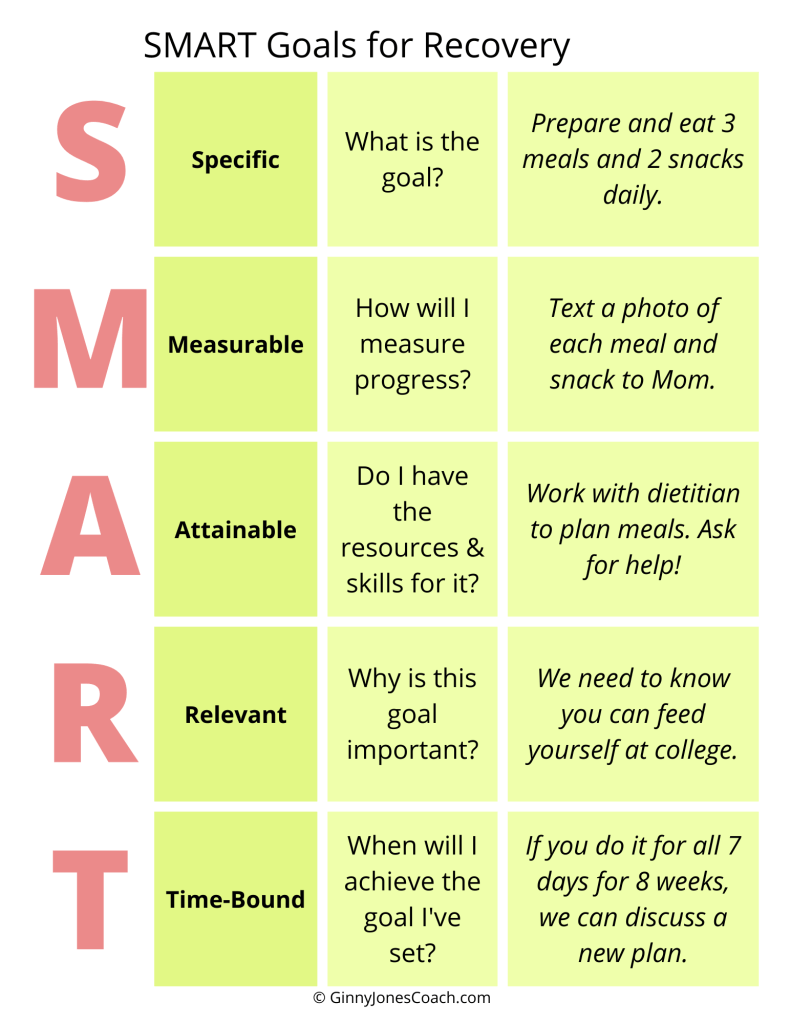
SMART is an acronym that stands for “specific,” “measurable,” “attainable,” “relevant,” and “time-bound.” Every SMART goal features these essential elements to ensure the goal can be reached to satisfy both the child who will take action towards the goal and the parent who wants to see the goal achieved.

โญโญโญโญโญ

Free Guide: How Parents Can Help A Child With An Eating Disorder

Master the secrets to supporting a child with an eating disorder. Thousands of families like yours are stronger today because of these six vital lessons drawn from lived experience, best practices, andย extensive study.

Specific: What is the goal? 

The goal should be well-defined, clear, and unambiguous. For example, itโ€™s not enough to say โ€œeat enough.โ€ If the goal is to eat, get specific, like โ€œeat 3 meals and 2 snacks every day.โ€

Measurable: How will I measure progress?

The goal should have specific criteria that measure progress. For example, if the goal is 3 meals and 2 snacks daily, the child could text a photo of each to their parent or dietitian.

Attainable: Do I have the resources & skills for it? 

The goal should be something that is attainable and not impossible. It should be within the childโ€™s capacity to do. In the eating example, the child needs access to food and a smartphone.

Relevant: Why is this goal important? 

The goal should be an important step toward self-management. It should matter to you and your child. In the eating example, maintaining regular meals and snacks is a major part of being a competent eater, and thus makes sense as a relevant goal.

Time-Bound: When will I achieve the goal I’ve set?

The goal should have a clearly defined timeline, including a start date and a target date. For example, if they send photos of all three meals and snacks every day for eight weeks, you may set a new SMART goal that gives them less oversight in the next stage.

Why are SMART goals important? 

SMART goals are important because they help parents:

  • Set clear intentions, not broad or vague goals
  • Feel confident about the childโ€™s path to self-management
  • Focus on the specific behaviors that support recovery
  • Measure progress with specific benchmarks
  • Provide sensible objectives that are realistic and achievable
  • Avoid the distraction of a long list of goals that is hard to manage
  • Be clear about the timeline and next steps if goals are met

SMART goals increase your childโ€™s pursuit of self-management by making your expectations really clear and unambiguous. Your college-age child wants to get out from under parental control, so setting SMART goals gives them a clear path to doing that. These goals communicate that you believe your child can succeed but also gives you the confidence to let them go away to college.

How can SMART goals help with eating disorder recovery?

SMART goals can help with eating disorder recovery, especially for college students, because they help both the child and the parents get what they need. The child wants autonomy and to return to their life back at college. But the parents want assurance that the eating disorder is not active and putting their child in danger.

Vicky was really excited about using SMART goals for Alex. โ€œI feel like this is going to really help us put together a plan that feels good for all of us,โ€ she says. โ€œAlex would much prefer zero controls, and I get that, but I need something to make sure Iโ€™m not being reckless or thoughtless when sending them back to school.โ€

Working on SMART goals

Vicky worked on three SMART goals that she felt were important. Since they are in family therapy and Vicky was unsure how Alex would respond, she brought up the idea during a family therapy session. The therapist was encouraging and supportive of the idea, and Alex didn’t hate it. So the next week Vicky brought in the SMART goals worksheet. Together they worked with the therapist and Alex to make adjustments that felt good for everyone. 

โ€œA big deal for Alex was the time-bound aspect, of course,โ€ says Vicky. โ€œAlex just wants to see a path out of being monitored all the time, and I feel like these SMART goals give us all the confidence to move forward. I want Alex to feel independent and free โ€ฆ and I want to be free of the eating disorder, too! This has absolutely taken over our lives, and I canโ€™t wait to move into the next stage and reduce our monitoring.โ€ 

This steady and clear approach to eating disorder recovery adds a lot of confidence and security for parents while also showing kids the steps they need to take to reclaim the independence they crave.

SMART goals eating disorder

SMART goal template & examples

SMART goals for recovery example: eating

SMART goals eating disorder

PLEASE NOTE: this is not intended as or delivered as medical advice. Please donโ€™t make choices about your childโ€™s recovery without consulting their treatment team. Make sure your SMART goals are appropriate and make sense in the context of your childโ€™s eating disorder recovery.

SMART goals for recovery example: therapy

SMART goals eating disorder

Free Template
Click here for a free editable SMART goal template

How to make a SMART goal for eating disorder recovery

Like Vicky, you may be excited about SMART goals and want to dive right in. I get it! I love SMART goals! Please just remember that while Vicky drafted some SMART goals, she checked with her family therapist before introducing them to her child. Depending on your childโ€™s eating disorder recovery status, SMART goals may not be the right approach right now. Check with your childโ€™s eating disorder treatment team before presenting your child with SMART goals.

To make a SMART goal, begin by thinking of your big goal, then breaking it down into behaviors that will get you closer to the goal. With eating disorders, the big goal is โ€œrecovery,โ€ but thatโ€™s hard to measure and itโ€™s a state of being, not a behavior with measurable steps. If we make recovery the goal, we will struggle to measure and monitor it. Instead, break it down into attainable, measurable, and observable behaviors like:

  • Eating regular meals and snacks
  • Checking vital signs of health such as heart rate, blood pressure, etc.
  • Going to therapy and nutrition appointments
  • Getting blind-weighed if appropriate/necessary

Next, write down a few SMART goals that are “specific,” “measurable,” “attainable,” “relevant,” and “time-bound.” If the goal is eating regular meals and snacks, detail how many meals and snacks, and how the goal will be measured. The most common mistake is not being very specific about the goal. The more specific and measurable the goal, the greater your chances of success.

Examples of SMART goals for eating disorder recovery

Vague GoalsSpecific Goals
Eat regularlyText photos of 3 meals and 2 snacks every day
Donโ€™t lose weightGet blind-weighed once every two weeks*
Stay healthyGet your vital signs checked once every two weeks*
Take care of yourselfAttend weekly therapy and nutrition sessions

*the frequency will vary based on your childโ€™s current medical status and is here as an example only. Please consult your child’s treatment team to set goals that make sense for their individual recovery path.

Measuring success

The most motivating eating disorder goals are those that provide a pathway out of being monitored. Show your child the path to self-management by setting multi-stage SMART goals. 

For example, if the first goal is for them to attend therapy weekly for 8 weeks, that doesnโ€™t mean you stop all therapy if they reach that goal. Maybe the next goal is that they switch to every 2 weeks for 8 weeks after that, then monthly. A stepped approach will provide the safest structure for recovery

SMART goals should never feel punitive or shameful. The value of providing time-bound goals is so your child knows what will happen when they meet the goal. But you should not say you are disappointed if your child does not achieve the goal by a certain date. Thatโ€™s why I suggest using consecutive weeks rather than a specific date. Just count the weeks that they do accomplish the goal. If they skip a week, then you start again at 0. Once they do it every week in a row for the number of weeks specified you can celebrate and set a new goal. 

โญโญโญโญโญ

Free Guide: How Parents Can Help A Child With An Eating Disorder

Master the secrets to supporting a child with an eating disorder. Thousands of families like yours are stronger today because of these six vital lessons drawn from lived experience, best practices, andย extensive study.

Setting the clock

For example, Alex might text photos of their meals every day for two weeks in a row, then skip a few days during the third week. Alex is not bad for doing this. Itโ€™s understandable. However, that resets the clock back to 0. Once Alex texts all meals/snacks for 7 days, that puts the clock at 1. If the goal is 8 weeks, then Alex must text all meals/snacks for 7 days in a row for 8 weeks in a row to meet the goal. 

Avoid being flexible or changing the goal, because it will show your child that the goals are open for negotiation and debate. This is a slippery slope that eating disorders love to take advantage of. Instead, maintain clear, compassionate boundaries. It sucks for all of you to start at 0 again. But thatโ€™s how you make sure you arenโ€™t accidentally accommodating the eating disorder.

Celebrating success

I checked in with Vicky after Alex had been back at college for a semester. She had been both hopeful and terrified of the return to college. And Iโ€™m pretty sure Alex felt many of the same feelings! 

Alex struggled a little bit with the transition back to school, which we expected and had prepared for. But after 4 weeks of being inconsistent with their progress, Alex stayed on track and they are almost ready to set new SMART goals that give Alex more freedom and autonomy. 

Vicky says that having SMART goals is a huge relief for her. โ€œI just feel like I have some level of insight into whatโ€™s going on for them at college. Now I can keep an eye on their health and safety when theyโ€™re so far away from me.โ€

FAQs: SMART goals for eating disorder recovery

Which goal is appropriate when treating anorexia nervosa?

Setting goals when treating anorexia nervosa tend to focus on eating enough food regularly throughout the day, limiting exercise unless safe, and weight restoration. These goals are ideally set with a treatment provider like a therapist, physician, or Registered Dietitian (RD).

What are realistic eating disorder recovery goals?

Setting realistic eating disorder recovery goals is an important part of treatment, and is best done in consultation with an experienced professional. Each eating disorder is different, and circumstances vary greatly. In general, recovery goals should be challenging enough to feel energizing but not so challenging that they feel hopeless or unattainable. Finding the right balance is the key to setting realistic eating disorder recovery goals.

Can SMART goals help with eating disorder recovery?

SMART goals can help with eating disorder recovery because they support appropriate targets without being vague or pushing too hard. Finding the right level of difficulty is key to successful SMART goals in eating disorder recovery.


Ginny Jones is the founder of More-Love.org, and a Parent Coach who helps parents who have kids with eating disorders.

For privacy, names and identifying details have been changed in this article.

See Our Eating Disorder Treatment Guide For Parents

Posted on 2 Comments

How to handle it when your child refuses to get eating disorder treatment

How to handle it when your child refuses to get eating disorder treatment

Few things are more frightening than knowing your child has an eating disorder and watching them refuse the help they desperately need. Denial, fear of weight gain, or a deep sense of shame can make treatment feel unbearable for them, even when their health is at serious risk.

As a parent, itโ€™s gut-wrenching to feel powerless while your child resists the very thing that could save their life. In this article, weโ€™ll explore why kids and teens often reject eating disorder treatment, whatโ€™s really going on beneath the surface, and how you can respond with empathy, firmness, and hope.

Eating disorder treatment refusal

It seems obvious that when a child has an eating disorder they should get treatment, and yet many parents have a kid who refuses to go. You may find yourself in frustrating arguments, going around and around, trying to convince your child to do something that seems so incredibly necessary. You’re desperate to make a change, but forcing treatment on your child is simply not working. What’s going on?

First, many people who have eating disorders don’t think it’s a serious problem. In fact, a symptom of the disorder is a distorted view of what “healthy” is. Therefore, it can be hard for them to actually see that what they are doing is a problem. Trying to convince someone with an eating disorder that their eating disorder is “bad enough” to deserve treatment can be an uphill battle.

Next, eating disorders are coping mechanisms that your child has discovered make them feel better. Even though it may seem terrible to you, the eating disorder is serving a purpose in your child’s life, and they may not be able to tolerate living without it right now. Trying to force a child to give up their coping mechanism without giving them new ones can be counterproductive.

โญโญโญโญโญ

Free Guide: How Parents Can Help A Child With An Eating Disorder

Master the secrets to supporting a child with an eating disorder. Thousands of families like yours are stronger today because of these six vital lessons drawn from lived experience, best practices, andย extensive study.

Finally, you may have accidentally gotten into a power struggle over eating disorder treatment. In a desperate attempt to take good care of their kids, many parents find themselves trapped in power struggles that feel impossible to overcome. You haven’t done anything wrong, but if your child refuses eating disorder treatment, then understanding the power dynamics at play can help you succeed.

Here are seven things parents can do when a child refuses treatment for their eating disorder:

1. Get professional support

Someone with an eating disorder needs support to recover. But of course if your child refuses treatment for their eating disorder, that’s meaningless advice. Keep in mind that a child who refuses treatment for an eating disorder is saying they won’t do it right now, but circumstances change all the time. This isn’t hopeless, and you can make a difference!

The first thing to know is that even if it feels like there is, the truth is that there’s no silver bullet of eating disorder recovery. Each person has a unique recovery story. We’re never stuck with just one option.

If your child absolutely refuses professional support, you can still make progress by getting help for yourself. Parents are essential to and can actually lead eating disorder recovery. That said, most parents need professional support to do this.

If your child won’t go to therapy, you can go to therapy or get coaching to find out what you can do to help them. When a child won’t see a dietitian, you can see a dietitian and get advice about how and what to feed your child with an eating disorder. In other words, even if your child refuses eating disorder treatment right now, that doesn’t mean you’re powerless. Take the action you can right now. It will add up.

2. Set mini-goals

Most parents are anxious for their child to achieve full recovery from an eating disorder. Of course that’s what we want! But often this dream gets in the way of the day-to-day struggle of recovery. Breaking your big goal down into mini-goals will help you maintain motivation and support your child through the ups and downs of treatment.

The biggest benefit of having small goals is that your child might refuse a big idea like TREATMENT but they’re willing to go to a therapy appointment this afternoon. They might refuse a big idea like EAT ALL YOUR FOOD but they’re willing to try one more bite right now.

โญโญโญโญโญ

Free Guide: How Parents Can Help A Child With An Eating Disorder

Master the secrets to supporting a child with an eating disorder. Thousands of families like yours are stronger today because of these six vital lessons drawn from lived experience, best practices, andย extensive study.

In other words, rather than trying to commit your child to a big goal, work with them on getting to small yesses minute by minute, day by day. Eventually, these small yesses will add up and you’ll find yourself surprised by all the progress you’ve made.

Whenever possible, make your goals SMART, an acronym that stands for โ€œspecific,โ€ โ€œmeasurable,โ€ โ€œattainable,โ€ โ€œrelevant,โ€ and โ€œtime-bound.โ€ SMART goals can help you maintain motivation throughout treatment.

Read more: SMART goals parents can set in eating disorder recovery

3. Don’t engage in debates or power plays

Power struggles are really common when your child has an eating disorder. It’s natural and understandable if you’re desperate to make your child see that they have a problem and accept treatment. However, even when your motivation makes perfect sense, power struggles are counterproductive in eating disorder treatment.

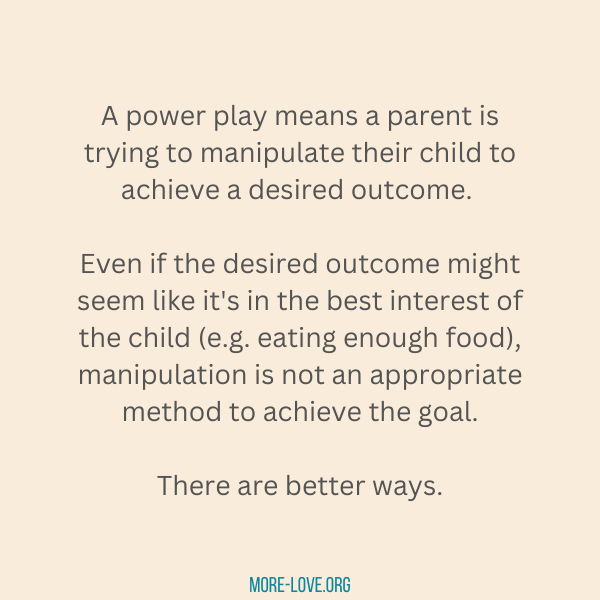
Usually power struggles mean a parent is using methods like dominance, control, negotiation, and manipulation to achieve their goals. Unfortunately, power struggles are counterproductive because they increase disconnection and resistance between you and your child. Kids whose parents use power plays feel powerlessness, inadequate, and frustrated, all of which increase eating disorder symptoms.

Instead of power plays, seek to influence, motivate, and collaborate with your child while holding firm boundaries about what you will and will not do. For example, you can serve food consistently, refuse to change the content, structure, and plan for meals, and consistently show up with a calm, confident approach to feeding your child. This approach is extremely effective, much more so than power plays.

Read More: How to stop nagging and negotiating with your kid who has an eating disorder and How to motivate recovery from an eating disorder

How to handle it when your teen refuses to get eating disorder treatment

4. Set clear expectations

Most parents think theyโ€™re being crystal clear when setting expectations with their kids. However, many of us get stuck in unhelpful power struggles because weโ€™re not communicating our expectations effectively. 

Setting good expectations with our kids involves four things: 

  1. Clarity: we must clearly state exactly the behavior weโ€™re asking our child to do. For example, “Please be in the car at 4:30 p.m. on Tuesday to go to your doctorโ€™s appointment.”
  2. Repetition: we must repeat our expectations and remind our kids that we have them. For example, on Tuesday morning you will remind your child that you expect them in the car at 4:30 p.m. for their doctorโ€™s appointment. Then at 4 p.m. you will give them another reminder. You’ll keep your repeated requests simple, polite and respectful, which will minimize (but not eliminate) pushback.
  3. Avoid Arguments: avoid arguing about and defending your expectations. For example, imagine itโ€™s 4:30 and your child isnโ€™t in the car. Donโ€™t fall for it when they want to debate whether 4:30 is a reasonable time to leave. Simply repeat your expectation, โ€œI understand you have a different opinion, but I asked you to be in the car at 4:30, and I’d like to get going now.โ€ Remember, keep it simple, polite, and respectful. Your child can’t be more emotionally regulated than you are.
  4. Review: when our expectations arenโ€™t met, many of us feel disrespected and throw up our hands in despair. Instead, take time to review your behavior. Were you clear? Did you repeat your requests respectfully? Did you avoid arguments? If not, make adjustments in your own behavior next time. If you did all these things, then review the situation with your child simply, respectfully, and non-defensively. โ€œBuddy, Iโ€™m curious why it was so hard to get in the car at 4:30 as planned. What can we do next time to make this easier for both of us?โ€ Remember: donโ€™t debate your opinion. Just listen respectfully to your childโ€™s opinions and seek to find a solution you can both agree to.

Setting clear, consistent behavioral expectations with a child in eating disorder recovery is essential and will make a big difference.

Read More: Emotional Regulation And Eating Disorders

5. Hold boundaries around what you will do

Instead of engaging in power plays, set boundaries around your own behavior. Your own beliefs and behavior are within your control. On the other hand, your child’s beliefs and behavior are not within your control. You want to hold your own boundaries while respecting that your child disagrees. Your child doesn’t have to agree with you for you to succeed.

For example, let’s say your child is refusing to go to therapy. She says that therapy is a waste of time and tells you that she will not talk if she goes and it’s a waste of money for you to take her. In response, you argue with her about the value of therapy. Maybe you present evidence that therapy is good and necessary to eating disorder treatment. You might insist that she go to therapy and talk to the therapist if she wants to keep her phone privileges.

While this approach makes perfect common sense, it gets you into power play territory because you’re trying to control your child’s beliefs and behavior in therapy. When you’re dealing with an eating disorder, common sense can backfire dramatically.

Instead, if you believe therapy is necessary and helpful, you simply hold your belief while listening to her say stuff that’s intended to pull you back into a power play. Instead of engaging in arguments, you simply say what you will do.

Imagine it’s the morning before a therapy appointment and she says “Therapy’s stupid. You’re wasting your money.”

You take a deep breath and say “I get it. You don’t like going to therapy. Your appointment today is at 2, and I’ll pick you up from school at 1:30.”

I know, this is completely different from anything you’ve done before. You’re switching from a power play to holding your own boundaries.

Her eyes will spark, because she’s used to the power play dynamic. She wants to have an argument about therapy because sometimes it means she doesn’t have to go. Your daughter feels powerful when she gets to debate you about the value of therapy. She will poke and prod and attempt you to go back to the familiar dance of arguing with her.

But instead you hold steady with your boundary. She gets to have her thoughts and feelings about therapy, and you get to have yours. You will hold your ground and be at school at 1:30, then take her to therapy. That’s what is within your control. Convincing her to like it is not.

You might be thinking this will not work, but science shows this does in fact work. They key is that you are consistent and follow through. Once you set a boundary, you must hold onto it. It may take a few repetitions, but it will work.

Read more: How to set healthy boundaries when your child has an eating disorder

6. Attend family therapy

Your child is the one with an eating disorder, but usually family dynamics are involved in maintaining an eating disorder. It’s nobody’s fault; it’s just how humans work. Understanding how family dynamics affect your child with an eating disorder is one of the most powerful things parents can do to support recovery.

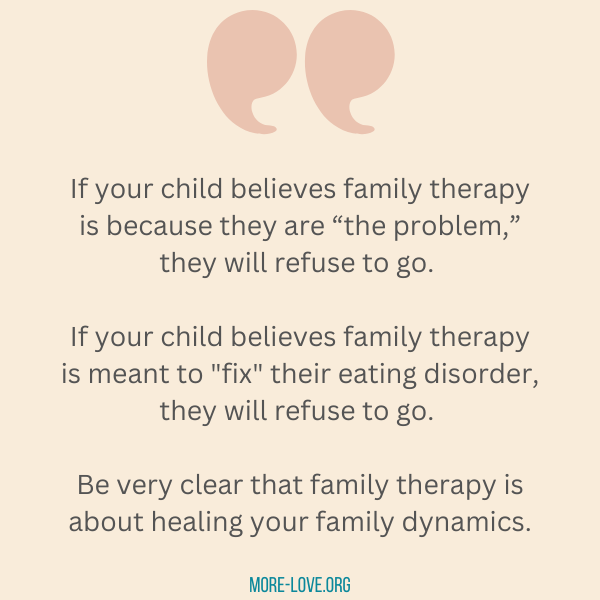
While it’s tempting to approach family therapy with the goal of getting your child to embrace recovery, that can backfire. If your child believes the family therapy is because you think they’re the problem, they will refuse to go. If your child believes the family therapy is meant to “fix” their eating disorder, they will refuse to go. So be very clear that family therapy is about improving your family dynamics. It’s for everyone.

How to handle it when your teen refuses to get eating disorder treatment

The purpose of family therapy is for you to build a stronger connection with your child, to gain some parenting skills, and to help them express themselves fully to you in a safe space. You will learn new communication skills and work on expressing yourself authoritatively and compassionately while unconditionally accepting your child exactly as they are.

Read more: Family therapy when your child has an eating disorder

7. Enjoy your child

You may think that enjoying time with your child while they refuse to get eating disorder treatment is enabling the eating disorder. But that’s simply not true. Eating disorders are complex, and they take time and patience to treat. While that’s happening, make sure you’re enjoying your child.

Our kids see themselves reflected in our eyes. If all we can see is a problem we need to solve, they feel worse about themselves. A good rule of thumb is that you should balance every negative interaction with your child with five positives. Does that sound like a lot? Well science shows that a 5:1 ratio is the minimum we need to maintain positive relationships. I know this is so hard right now, but keep sight of the fact that your child needs to feel as if you to love and accept them exactly as they are right now.

Most people who have eating disorders can and do recover. Taking the steps outlined above, embracing your potential to change, and improving your parenting techniques will help make that happen. The happy side effect of all of these steps is that your family will become more bonded and stronger in every way. And hopefully, your improved relationship will help your child accept eating disorder treatment.


Ginny Jones is the founder of More-Love.org, and a Parent Coach who helps parents who have kids with eating disorders.

See Our Eating Disorder Treatment Guide For Parents