Posted on 4 Comments

How to talk to someone with an eating disorder without being toxic

How to talk to someone with an eating disorder without being toxic

Talking to someone with an eating disorder can feel overwhelming, especially if you worry about saying the wrong thing. Most of us donโ€™t know what to say; eating disorders are common but deeply misunderstood. Many people havenโ€™t thought deeply about them, which makes it easy to accidentally say the wrong thing.

The truth is that one in nine people has or had an eating disorder. Yet we rarely talk openly about them. Most people assume eating disorders โ€œlookโ€ a certain way, that they make a person appear “skeletal.” In reality, 94% of people with eating disorders do not โ€œlookโ€ sick, and their struggles often go undetected.

These misunderstandings and unconscious biases lead to shockingly harmful comments. Nobody intends to cause harm, but itโ€™s so common that many people with eating disorders expect it. In fact, treatment often includes learning how to handle well-meaning but deeply painful remarks from loved ones.

When people say the wrong thing, itโ€™s rarely meant to be hurtful, but it hurts nonetheless. Iโ€™ve interviewed thousands of people who have or had eating disorders to discover which phrases cut the deepest.

In this guide, weโ€™ll share the top three most toxic things to say to someone with an eating disorder, plus a full list of 32 harmful phrases to avoid. With this knowledge, you can communicate with care, respect, and compassion, truly supporting your loved oneโ€™s healing journey.

What not to say to someone with an eating disorder

The three most damaging comments go something like this:

  1. Just stop doing it: the idea that recovery is simple misses the depth and complexity of eating disorders. They are intensely personal and deeply challenging disorders that impact the mind and body. Recovery is rarely simple and requires comprehensive treatment.
  2. But you look great: while it’s true that an obsession with appearance is a symptom of an eating disorder, that is not all that it’s is about. And no amount of reassurance about appearance and weight will ever budge an eating disorder. They require specialized treatment and care.
  3. I wish I had an eating disorder: an eating disorder is a life-threatening disorder that can impact a person’s body and mind for life. Usually what people mean when they say this is that they wish they could lose weight. This is deeply damaging and hurtful for someone in the depths of a mental disorder. It also perpetuates weight stigma and diet culture, the major social drivers of eating disorders.

If you’re not sure what to say to someone who has an eating disorder, then stick with compassion and support. Avoid making suggestions or comments that expose your own fear of fat or belief that an eating disorder is a choice.
โญโญโญโญโญ

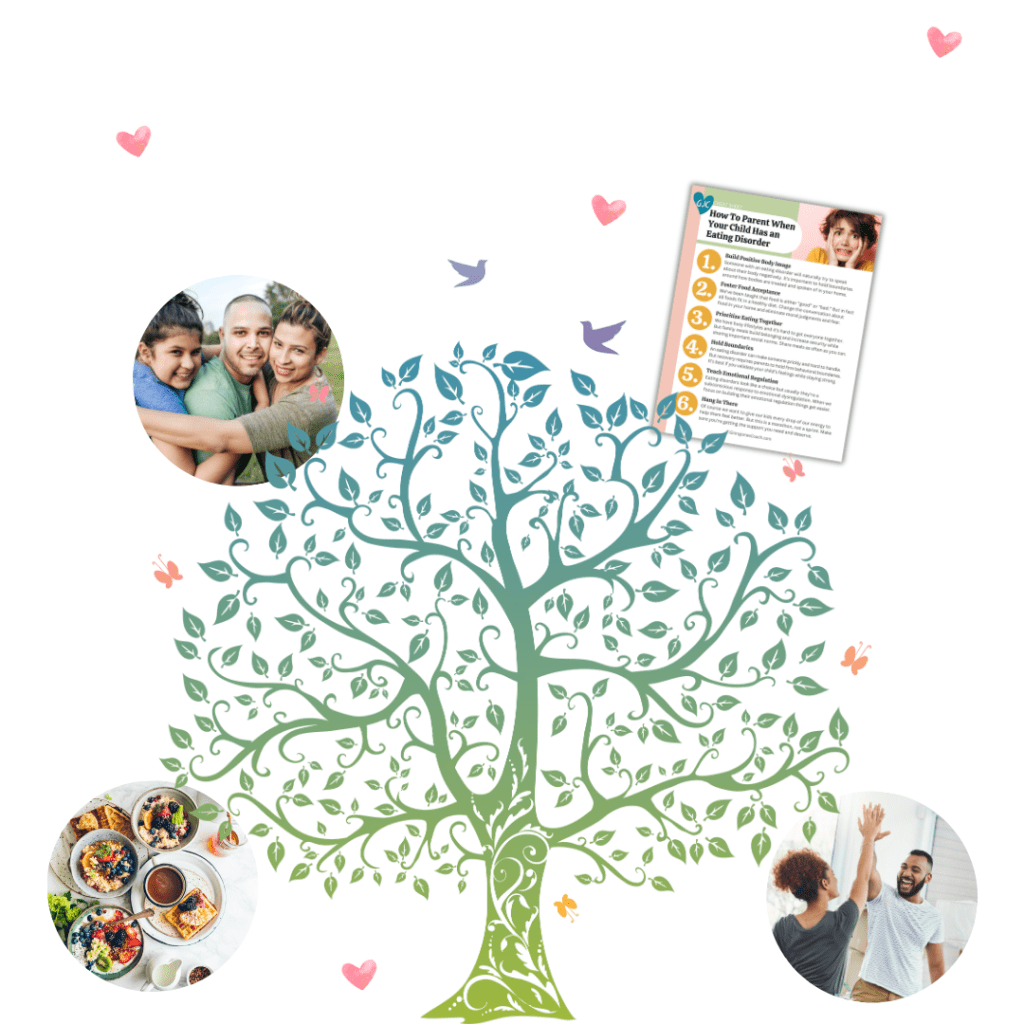
Free Guide: How Parents Can Help A Child With An Eating Disorder

Master the secrets to supporting a child with an eating disorder. Thousands of families like yours are stronger today because of these six vital lessons drawn from lived experience, best practices, andย extensive study.

32 of the worst things people say to people who have eating disorders

Just โ€ฆ

  • stop throwing up
  • eat a hamburger
  • put the fork down
  • start eating regularly, it’ll fix itself
  • let yourself become one with God. And when you realize that you are in Godโ€™s love, your anxieties will go away

Statements that begin with the word “just” suggest that eating disorders are simple. Eating disorders are absolutely not simple. They are complex biopsychosocial mental health conditions. That means they stem from a combination of biological, psychological, and social conditions. All of these conditions combine to create a situation in which eating disorders thrive.

When people start a statement about eating disorders with the word “just” It shows a lack of understanding of the complexity of the situation. This suggests they don’t understand how serious and challenging it is to recover from an eating disorder.

Any sort of advice that begins with a version of “you just need to” may be well-intended, but it is harmful.

But you โ€ฆ

  • are skinny, so you can’t be anorexic
  • aren’t skinny, so you can’t be anorexic
  • look fine
  • donโ€™t look like you have an eating disorder
  • are so smart, why can’t you see that this is ridiculous?
  • aren’t really bulimic. You don’t throw up, do you?
  • can recover if you want it badly enough

When a comment begins with “But you” the next thing that comes out is going to hurt. This is because it suggests that a person shouldn’t have an eating disorder. The word “but” means “you shouldn’t.” Phrases that begin this way suggest that a person with an eating disorder is making an active choice to have an eating disorder rather than struggling with a mental health condition. A simplification of the problem will not make the eating disorder go away because it misses the point.

Also, the idea that eating disorders have a certain look is deeply damaging. The vast majority (~94%) of eating disorders are invisible.

While advice that starts with a version of “but you” probably reflects your curiosity and surprise, it also reflects ignorance of the disorder. Please be careful!

โญโญโญโญโญ

Free Guide: How Parents Can Help A Child With An Eating Disorder

Master the secrets to supporting a child with an eating disorder. Thousands of families like yours are stronger today because of these six vital lessons drawn from lived experience, best practices, andย extensive study.

I wish โ€ฆ

  • I had anorexia! My body could lose a few pounds!
  • I had the strength to not eat! My problem is that I eat too much!
  • you would just stop doing this!
  • you could hear how ridiculous you sound

“I wish” statements are often followed by the idea that you wish you had some eating disorder symptoms. In doing this, you’re perpetuating diet culture, which is one of the contributing factors in eating disorders. These statements suggest that an eating disorder is a healthy diet with a positive outcome rather than a deadly condition. There is no upside to an eating disorder.

Another option is “I wish you would just stop!” This suggests that you think recovery is easy or magical. As you’ve probably picked up by now, eating disorder recovery is not easy. Making a wish will never make an eating disorder go away.

It’s not that hard โ€ฆ

  • focus on eating healthy and get some light exercise!
  • stop caring what people think!
  • run. If you run, youโ€™ll be hungry. AND it cured my depression
  • itโ€™s just about willpower!
  • just eat normally and then lightly exercise
  • if you’re unhappy with your weight just diet and lose it!
  • if you’re unhappy with how you look then eat better and workout more

It’s dismissive and hurtful to suggest that “it’s not that hard” to recover from an eating disorder. Of course it’s hard! If it weren’t, then nobody would have an eating disorder.

We live in a culture that has a poor understanding of mental health, but here’s a really simple rule of thumb. Any time you want to say it’s not hard to be mentally healthy, consider whether you would say the same thing to someone who broke a leg. Would you suggest that they could heal by simply “getting over it?” Or adding some light exercise? No!

And you definitely wouldn’t suggest that the way to heal a broken leg is to heal it by themselves. That’s essentially what happens when someone suggests that a person who has an eating disorder should eat, not eat, or exercise their way out of their eating disorder. That’s just not how it works.

But โ€ฆ

  • you look perfectly fine to me
  • can’t you see how bad you look right now?
  • you’re so bony! It’s not attractive!
  • there is nothing bad happening in your life for that you act like that
  • doesn’t everyone have an eating disorder?
  • you’d look better if you gained weight

When a response begins with “but,” this suggests that eating disorders are simple and/or ridiculous. We’ve covered the fact that eating disorders are not simple. Eating disorders are also not ridiculous. They are coping behaviors that are rooted in a web of biology, psychology, and societal forces.

โญโญโญโญโญ

Free Guide: How Parents Can Help A Child With An Eating Disorder

Master the secrets to supporting a child with an eating disorder. Thousands of families like yours are stronger today because of these six vital lessons drawn from lived experience, best practices, andย extensive study.

You need to โ€ฆ

  • stop being so selfish and take care of yourself so you donโ€™t make your mother worry. Why do you keep making things so difficult for her?
  • eat normally. You donโ€™t have to eat pizza everyday but just eat something
  • go eat a hamburger
  • pray and Jesus will make it go away

It’s almost never helpful to tell someone who has an eating disorder what they need to do. Leave that up to the professionals who are working with the person who has the eating disorder. They alone are qualified to provide any guidance on this topic.

What to say instead

Parenting a child with an eating disorder doesn’t mean you can’t say anything! Just say words of compassion rather than advice. Compassionate statements recognize that the person is doing their very best. They also demonstrate that you trust the person to make the right choices for their recovery. Here are some ideas:

  • I’m so sorry that you’re hurting right now
  • It sounds as if you’re working really hard
  • I’m here to support you
  • It sounds like this is really challenging
  • I love you

If you are responsible for feeding your child in recovery and have specific instructions to prompt your child to eat, you can say things like:

  • I understand you don’t feel like eating, but please keep going
  • I hear you; this is not what you want right now, but I think you can handle it
  • I get it; eating feels hard right now but I’m 100% sure that what I’ve served you is what you need to eat

These phrases do two things: validate your child’s experience and also set expectations and boundaries around expected behavior.


Articles to help you set boundaries


I know it’s hard to learn these guidelines. Most people genuinely want to be helpful, they just don’t know enough to avoid causing harm. Hopefully, this has given you some ideas about why these statements can be hurtful and what to say instead.


Ginny Jones is the founder of More-Love.org, and a Parent Coach who helps parents who have kids with eating disorders.

See Our Guide To Parenting A Child With An Eating Disorder

Posted on 6 Comments

The Truth Behind Your Tween Daughter Calling Herself Fat + Powerful Ways to Help Her Build Confidence

The Truth Behind Your Tween Daughter Calling Herself Fat + Powerful Ways to Help Her Build Confidence

Hearing your tween daughter call herself โ€œfatโ€ can be heartbreaking and confusing. Itโ€™s a sign that sheโ€™s struggling with negative body image, something many young girls face as they navigate changing bodies and social pressures.

But thereโ€™s hope. Understanding why she feels this way is the first step toward helping her build lasting confidence and self-love. In this guide, weโ€™ll explore the truth behind these feelings and share powerful, practical ways you can support your daughter on her journey to a positive body image.

Tween body image starts early

Are you shocked because you didn’t expect her to think that about herself at such a young age? It’s sadly common. One study found that nearly half of girls aged 3-6 years old are afraid of being fat. This is a startling indication of the level of weight stigma and fatphobia we have achieved in our society.

There are two types of girls who worry they are “too fat.” First, there are girls who are in larger bodies according to their body weight. In other words, they are larger than many of their peers. These girls are given lectures at doctors’ appointments and have trouble finding clothing that fits them well in stores. Second, there are girls who are technically in smaller bodies. These girls are automatically assumed to be “healthy” based on their weight and have no trouble finding clothing in stores.

There’s a difference

It’s important to recognize the difference in these girls. We must understand that our girls know that in our society, being fat is considered a terrible thing. Societal messages constantly reinforce the idea that being thin is the path to health, happiness, and success. Thus it shouldn’t be surprising that tweens use the word “fat” as a slur. But also, when a tween girl feels bad about herself she will call herself “fat” as a stand in for feeling sad, bad, or lonely.

When a larger girl calls herself fat it is very likely she is experiencing discrimination, or fatphobia in the world. She must be supported in recognizing that fatphobia is wrong and harmful and accepting her body as it is. When a smaller girl calls herself fat she is perpetuating fatphobia. She has picked up on messages that fat is bad, and needs to be taught that it’s not OK to use fat as a slur against herself or others.

5 rules about the word “fat”

Maybe you’re surprised that I”m using the word fat. If so, here are some ground rules so you understand exactly how and why I use it.

  1. Fat should never be used as a slur or a way to criticize bodies.
  2. If you are not fat then in general you should not use the word fat unless you have been educated and truly understand appropriate uses.
  3. Fat can be used as a neutral descriptor. You have fat in different places on your body just like you have hair in different parts of your body. You can be fat just as you can be blonde or tall. But you should not use these words unless you sure it is both neutral and true.
  4. Fat is a feature, not a feeling. It should not be used as a stand-in for feelings like scared, sad, or lonely.
  5. If someone is large and uses the word fat as a way to describe their body, do not correct them. Fat people get to claim the word “fat” for themselves if they want to.

Now let’s explore how you can respond to your tween daughter when she calls herself fat.

Guidelines for parents who have larger kids:

A tween girl who is actually considered “fat” is going to face discrimination. She will be criticized for her weight and will have trouble finding clothes. This is terrible, and it’s also true. Parents need to recognize that if their child is physically larger, she’ll need extra support in accepting her body.

1. Don’t tell her that it’s just baby fat/she’s not fat, etc.

Don’t say that she will grow out of it. And don’t demand that she is not fat, she’s beautiful. All of these things can make her feel even more ashamed of her body. They all suggest that fat is bad, and something to get over and/or be ashamed of. Instead, talk to her about what it means to live in a larger body in our society. Help her understand that we are more than bodies.

2. Tell her it’s not OK

It’s never OK for your child to be criticized, teased, or marginalized for her body size. Bodies are a social justice issue. They are assaulted by racism, sexism, and other forms of discrimination. Parents who have larger kids need to become social justice warriors who are willing to fight back against our culture. We can build a kinder world for our children (and everyone), but it’s not going to happen without work. Read More: Weight stigma and your child

3. Work on your own food and body issues

Our kids are finely attuned to how we feel about them. If you have food and body issues, there is a good chance that you are struggling to accept your child’s body. Invest time and energy into understanding body politics and fatphobia so that you can help your child. Read More: Get off the diet cycle and raise healthier kids

4. Teach her to accept her body (and never diet)

Trying to change our body size and shape doesn’t work, and it leads to eating disorders, so our main goal as parents of children living in larger bodies is to help them never, ever diet, which means we need to help them accept their weight, whatever it is. Read More: The science to support a non-diet, weight-neutral approach

5. Find out her feelings about the word “fat”

Fat can be a neutral descriptor, but it can also be a way to be cruel to ourselves. It’s not OK for her to call herself derogatory names. Often when she calls herself โ€œfatโ€ in a negative way, it means that sheโ€™s struggling with other feelings. Ask her questions. Find out what “fat” means to her. Read More: A letter to a tween daughter who called herself fat

6. Peers may tease her because of her body

It sucks, but she will likely experience discrimination because of her body. It’s not fair, but don’t make it worse by ignoring it or pretending it doesn’t happen. Teach her to be confident and assertive in these situations. Give her some tools to respond to bullying. But also be prepared to speak with your school’s administration if she becomes a target for bullies. Read More: Help your child deal with body shaming

7. Healthcare providers, teachers, and well-meaning adults will tell her to “watch” her weight and “eat healthy”

She knows this is code for “your body is unacceptable.” Teach her that their beliefs are not true and their behavior is not OK. Learn about Health at Every Sizeยฎ and teach her that just because our society is fatphobic does not mean there is something wrong with her. Empower her to politely but assertively respond to these people. Allow her to opt out of school weigh-ins and doctor’s weigh-ins when possible.

8. Work harder to find age-appropriate, cute clothing

Work a little harder to help her have fun with fashion. Do your research and make sure that stores carry her size before taking her shopping. Remind her that the problem is never her body, it’s the sizeist fashion industry. And help her blame the clothes, not herself, when things don’t fit. Read More: How to shop for clothes when your daughter wears plus size.

Guidelines for parents who have daughters in smaller bodies:

If your tween girl is not actually fat, you need to educate her about being a good citizen and not be fatphobic. This will help her be healthier as well as make her a better friend, family member, and community member.

1. Teach her about appropriate and inappropriate ways to use the word fat.

In other words, teach her that unless the word fat accurately describes her body, she may not use it. She should never use the word as a slur about anyone’s body. And teach her to use feeling words for feelings. Fat is not a feeling.

2. Teach her about body politics and fatphobia

Body fat is a social justice issue. Parents need to teach kids of all sizes to be social justice warriors who are willing to fight back against our culture. We can build a kinder world for our children (and everyone), but it’s not going to happen without work. Read More: Social Justice, Fatphobia, and Eating Disorders

3. Teach her that body size is not a joke or something to be taken lightly

In our current climate, it may help to align body size with race. Just like she should not make jokes about, criticize or tease someone for their skin color, she should not make jokes about, criticize or tease someone for their weight.

4. Help her understand that calling herself fat in front of friends who are larger will make them feel bad

Smaller people rarely notice the impact of their comments on friends and peers who are larger. Teach your daughter that when she calls herself fat, it makes everyone feel bad about themselves.

5. Let her know that weight is not equal to health

Your child can be an ally to kids who are in larger bodies by intentionally disconnecting the association between weight and health. The idea that weight = health is problematic on every level, not least of which because it’s just plain wrong. But it also increases the chances of your child thinking it’s OK to criticize people for their bodies. The weight = health bias is bigoted and unhelpful.

6. Teach her not to diet, ever

Dieting is completely unhelpful. 95% of people who intentionally lose weight regain the weight, often plus more. That’s because weight is not a matter of willpower; it’s a matter of biology and environment. Also, about 20% of teens who go on a diet will progress to an eating disorder. Those are not good odds.

But what about health?

Fatphobia has been neatly shrouded in the belief that people can criticize other people’s weight if they are concerned about that person’s health. Headlines abound regarding the “obesity epidemic,” and the many dangers of fat. But in fact, there is no proven link between obesity causing an earlier age of death, and in many cases, people who carry more weight actually live longer.

You need to know that many of the studies and information that we hear is funded and promoted by the diet industry, a $72 billion monster that can only survive when its market (us) is convinced that they need to lose weight to achieve success and happiness. This is the core goal of marketing: to create a market by creating a problem they can solve. The diet industry is genius because it has convinced most people that its product works even though it fails 95% of the time. How do they do this? By telling us that failure is a weak-willpower problem, not a problem with their product. Genius!

We have known the truth for decades: Diets don’t work, they lead to eating disorders, and they actually result in weight gain. I can say with confidence that it is healthier to raise your daughter to accept her weight and not be fatphobic than to judge her own or anyone’s health and worth based on the scale.

The biggest danger to her health is the belief that there is something wrong with gaining weight or living at a higher weight.

Teach body acceptance to all girls (of any size)

Learning body acceptance is not easy, but it is the single greatest step we can take as parents to help our children be truly healthy in body and mind. Body acceptance is the best way to help your tween daughter who calls herself fat.

Body acceptance simply the act of accepting the body as it is, with no assumption that it needs to change. Weight loss is about controlling food and exercise in order to reduce the body. Body acceptance is about enjoying food and exercise, and living a healthy, active lifestyle, with no expectation of reducing body size.

Body acceptance comes with time – it is not something that happens overnight. It will require consistent conversation with your child to convince her that her body truly is OK. Here are some tips:

1. Donโ€™t diet or control your weight

Children learn from parents, and parents who diet are more likely to raise kids who diet. Accept your own body, and your children are more likely to accept theirs.

2. Avoid fashion/lifestyle/celebrity magazines

Avoid magazines and reading materials into the house if they promote any form of dieting or focus on weight loss. Remember that most magazines are not talking about diets openly – they are hiding them under the guise of “health,” but if the goal is weight loss, it is, in fact, promoting a diet.

3. Avoid purchasing any foods that are considered “diet” food

This includes diet soda and anything sugar-free, fat-free, carb-free, etc. Only use gluten-free products if someone in your family has Celiac disease or is otherwise instructed not to eat gluten free by a board-certified physician. Stay away from food fads that are being promoted on Instagram as “clean.”

4. Turn off or at least clap-back at television shows that promote dieting or weight loss

The same goes for TV shows that glorify thinness or feature unusually thin people. Avoid shows in which the characters make fun of people who are fat, discuss dieting, weight loss or a need to change their body size or shape.

5. Seek media materials that are inclusive

This means they feature a variety of characters of different sizes, shapes and skin color. Normalizing normal bodies is a very important part of body acceptance. It’s hard to find entertainment that is truly inclusive, but try! And when you are consuming non-inclusive media, talk about the lack of diversity.

6. Eliminate all #fitspo, #bodygoals and similar “health” accounts from social media

Monitor your child’s Instagram, TikTok, and other social media accounts to protect her from dangerous messages about reducing and controlling body size. Instagram, in particular, has been shown to be deeply damaging to girls’ self-esteem and body acceptance, in part because it has become a marketing platform for coaches and trainers who are selling their programs, diet shakes, diet teas, etc. The diet industry teaches their salespeople to use Instagram as a sales platform.


There is nothing we can do as parents to completely protect our children from the fatphobic culture in which we live. But if our tween daughter calls herself fat, we can help. We can teach her to navigate our fatphobic culture without shame, control our home environment, and talk to her openly and often about accepting her body.


Ginny Jones is the founder of More-Love.org, and a Parent Coach who helps parents who have kids with eating disorders.

Posted on Leave a comment

Why Emotional Repression Is The Silent Gateway To Eating Disorders

Why Emotional Repression Is The Silent Gateway To Eating Disorders

Emotions are a natural and essential part of being human, yet many people learn early on to push feelings aside instead of expressing them openly. This habit of emotional repression, bottling up or ignoring difficult emotions, can quietly set the stage for serious struggles, including eating disorders.

When emotions go unaddressed, they often find other ways to surface, and for some, disordered eating becomes a way to cope or regain control. Understanding this silent gateway is a crucial step toward healing and prevention, helping both parents and individuals recognize the deeper emotional roots behind eating disorders.

For the first time in history, our kids are experiencing higher levels of stress and anxiety than we as parents did. They worry about everything, from their bodies and school performance to social standing, politics, and climate change.

This constant anxiety is hurting their ability to feel good about themselves, impacting their health in profound ways. In this parent guide, weโ€™ll explore why emotional repression acts as a silent gateway to eating disorders and share practical ways parents can help their children learn to process, not repress, their emotions. Understanding this connection is a crucial step toward supporting your childโ€™s emotional well-being and preventing eating disorders before they take hold.

Cortisol and chronic stress

Cortisol, known as the stress hormone, is linked to many health issues, but the good news is that understanding how stress affects our kids can help us support their long-term well-being. While many of us focus on whether our children are eating enough fruits and vegetables, itโ€™s often cortisol, caused by chronic stress and unprocessed anxiety, that has the biggest impact on their future health.

Rather than worrying about weight, focusing on managing stress and anxiety can truly make a difference in their longevity and overall wellness because it leads to lower levels of cortisol. One of the main sources of ongoing stress is repressed emotions. Interestingly, holding in emotions actually takes more energy than feeling and processing them as they arise.

Imagine trying to keep a beach ball submerged underwater while swimmingโ€”it requires constant effort. But if you simply let the beach ball float alongside you, swimming becomes much easier and more natural. By helping children learn to acknowledge and express their feelings, we can lighten their emotional load and empower them to navigate life with greater ease and resilience.

How most parents respond to negative emotions

Most of us were raised to repress and downplay our emotions. We did this especially with negative emotions like anger, fear, and hurt. If we are female, we were taught by well-meaning parents, teachers, peers, and religious leaders that girls should be sweet, kind, and easygoing. We were taught in ways explicit and implicit that being loud, angry, and fearful is unattractive. And we learned that being attractive is essential to being a good girl. If we are male, we were taught that being sad and afraid is unacceptable.

As a result of this thorough training, most of us unconsciously train our own children in the same way. When she cries, we wipe her tears and tell her everything is fine. We shush her and tell her to quiet down and come back when she can control herself. When she tells us she is afraid, we dismiss her fears as irrational and tell her there’s nothing to worry about.

Almost none of us know that what we can and should actually do is allow our children to have all of their emotions, feelings and anxieties. What almost none of us know how to do is accept our kids’ emotions gracefully and without fear.

It’s not just parents – our society hates emotions

It should be said that most of us are not great at processing emotions. This is through no fault of our own – it’s hard to feel feelings when you have been taught to repress them your whole life.

But even if a parent is an excellent emotional processor who fully accepts their child’s emotions, our kids still live in a society that discourages negative emotions.

Even if we do everything to the best of our ability, our society will still teach our kids to play a closely defined gender role when it comes to emotions. Those who rebel and refuse to meet the standards of emotional repression are often ostracized and bullied.

Emotional repression and eating disorders

It’s no surprise, nor is it debatable that human beings of any gender are born with the ability and the freedom to fully express and process their emotions. It’s also not a secret that over time, because they are driven to pursue parental and societal love and acceptance, our kids learn to feel guilt and shame every time they feel a negative emotion. They learn to believe that negative emotions much be repressed because they are “not allowed” or “not appropriate.”

This is a very bad thing, because emotions are physical as much as mental. They never fail to exist – they only go underground, where, trapped, they wreak havoc on our bodies and minds.

Think of the beach ball that you’re trying to keep underwater. It takes tremendous energy to keep it down, and inevitably, every once in a while it explodes out of the water, and then we must scramble to get it back down again. The process is exhausting and endless, because no matter how hard we try, the ball will never stay underwater peacefully. It will fight for freedom.

Emotional repression is the perfect gateway for eating disorders. Keeping our emotions underground becomes easier if we find ways to numb and disconnect from our emotions. One of the best ways to do this is through coping mechanisms like eating disorders, self-harm, and addiction.

Eating disorders feel good

Something few parents who have kids who have eating disorders realize is that eating disorders feel good!

Eating disorders may look dangerous, but the person who has an eating disorder may find it to be an effective way to find peace from the emotional turmoil that is always roiling beneath the surface. Eating disorders are the way some people manage live in a world that requires us to repress our emotions.

Even if they know intellectually that eating disorders are unhealthy, and even if they feel shame over them because they believe they are “stupid” or “disgusting,” a person’s eating disorder still makes them feel better in the short term. Eating disorders may look like monsters, but they feel like the ultimate caregiver.

The path to healing from an eating disorder

Emotional repression can contribute to eating disorders. This is why the path to healing from an eating disorder is an emotional one. Most people who have eating disorders must relearn what it means to feel emotions. They have hidden and repressed them for so long that they must slowly, gradually, rebuild our connection with their emotions.

The path to full emotional health requires us to actually feel. Sometimes for the first time in years or even decades. Feeling for the first time after an eating disorder is excruciating. Many people reach for their eating disorder behaviors again and again. Not because they want to. But because of the terror of facing their negative emotions without their preferred numbing agent.

When we have repressed our emotions and used our eating disorders to avoid feeling feelings, recovery means feeling again. And this unleashes physical sensations of panic similar to what we would feel if we were being chased by a tiger. I am not exaggerating. It’s really, really scary. Feeling feelings after an eating disorder is terrifying. But it is necessary in order to heal.

Over time, it gets easier. Once we learn to feel our emotions in a healthy, regular way, we no longer need to numb them away. We start to realize that trying to keep the beach ball underwater was an unnecessary use of our time, energy, and intellect. When we start swimming alongside the beach ball, we free up space, and the eating disorder is no longer necessary.

How parents can help

Parents can help their children recover from an eating disorder by first learning to better process their own emotions. Emotional regulation is something few of us learned in childhood, and almost all parents need more of it. Also, our kids develop healthy emotional regulation when they first co-regulate with their parents’ calm, confident nervous system.

The best and fastest way to do this is to work with a qualified therapist or coach. They can help you learn to regulate yourself and co-regulate with your child.

Next, parents can help their kids recover by accepting and allowing their kids to experience all emotions in eating disorder recovery. Learn emotional first aid. When your kids’ fear, anxiety, anger, and other negative emotions arise, let them. Don’t try to stop them. Be there, as steady as a rock. Allow your child’s emotions to surround you without fear of being swept away. It’s exhausting to do this work for your child. And it takes practice, but there is nobody who can do it better than you. It is, quite possibly, the greatest gift any of us can give to our children.


Ginny Jones is the founder of More-Love.org, and a Parent Coach who helps parents who have kids with eating disorders.

See Our Guide to Emotions And Eating Disorders

Posted on Leave a comment

Unconditional love and an eating disorder

Unconditional love and an eating disorder

by Verena Radlingmayr

Unconditional love when your child has an eating disorder may seem confusing. But remember that first time you held this precious, tiny little wonder in your arms? Remember the feelings you had? Before you were wondering if you could be a good parent, there was this feeling of love, wonder, and so much love. It flowed freely, unconditionally. Your child didnโ€™t have to do anything to deserve this love. It was enough s/he was there.

Years later, you are facing an eating disorder, and you find yourself researching solutions to a problem that may lead to your childโ€™s death. And you are faced with powerful emotions that swirl around your insides. When a child struggles with eating, parents feel shame and guilt and wonder what they did wrong to make their child to suffer so greatly. What caused this tiny precious thing to grow into a child determined to destroy herself?

There is nothing you could have done differently. Yet there is something you need to learn. But before you can learn something it is necessary to forgive yourself. Forgiveness is powerful. And while we easily forgive others, we sometimes fail to grant the same kindness to ourselves. Forgive yourself. You didnโ€™t set out to hurt your child.

You are now open to make the adjustments and amends supporting your childโ€™s healing process.

Why is it your child has these issues in the first place? In my experience there is a connection between a childโ€™s universal rights and eating disorders.

Children’s rights and unconditional love

Children’s rights are universal. They include unconditional love, being accepted wholly, and being supported and defended. First and foremost is the right to be loved unconditionally.

Unconditional love means a child has the right to truly be as they are, without forcing themselves to be or do things that don’t fit in order to be socially acceptable. While years ago unconditional love was a luxury for a few, it is now a basic requirement, especially for a child with an eating disorder.

When your child has an eating disorder, they suffer from a distorted picture of themselves and lose the utter trust in and faith of being worthy of unconditional love. In their disorders, they believe that love is conditional and that they must look and behave according to what they believe will make them lovable. They believe that gaining the love they need to survive is conditional based on external measurements of appearance and behavior. The child feels abandoned and torn apart. 

Parents can sometimes accidentally perpetuate these beliefs because they donโ€™t know better. They, too, have been taught that love is conditional. They, too, believe they must appear and behave a certain way to gain love. And so they donโ€™t realize that their conditional love for their child is painful. 
 
An eating disorder often is way of finding a solution to an impossible task – to gain love. Itโ€™s a way to right what’s wrong and get what they need most: their caregiversโ€™ love. 

When a child become assured they will receive unconditional love without any adjustments in appearance or behavior, the eating disorder symptoms are no longer necessary to make the child feel safe in pursuing love because they know they have love unconditionally.

We often think that growing up requires you to toughen up, that you need to play the game. Research shows that in babies born around 2000 and after, new brain areas have developed, and they affect the way we perceive ourselves and make us more perceptive of our environment. While we, the parents, were brought up to understand that love is conditional and based upon social acceptance, our kids’ brains can’t cope with the same conditions.

For example, it might not be socially accepted that your child gets angry, but if it is who she is, and as parents we must love her with (not in spite of) her anger. Donโ€™t say things like โ€œToday is my birthday, so if I had one wish it would be for you to behave and not have one of your outbursts.โ€ That would be hurtful, and a condition of your love. It causes your child to feel unloved. As children we are hardwired to have our caregivers love – our survival depends on it. Can you remember the fear and despair you felt when you sensed that your own parents required you to ignore your own needs in order to gain their love?

You have rights, too!

This is so important to know: unconditional love is your right, too. You deserve to be loved with all the flaws and faults and little eccentricities that make you the very special human miracle you are. Thatโ€™s why you are allowed to forgive yourself. Because you were doing what you thought best and didnโ€™t know about the importance to follow your heart and your instincts.

As a parting gift I want you to have this tool to help you and your child along the way: close your eyes and remember the day your child was born. Let your system be flooded with the joy and love you felt. Stay in the moment until you feel the love in your heart, and from the tips of your hair all the way down to the tips of your toes. Then open your eyes and you will see. See the next step and then the next.

Parenting a child with an eating disorder is hard. By making the decisions from the viewpoint of love, you will be the support and guidance your child needs. Feel the emotions you had this very first moment you held your child and tap into them again and again. You are brave to follow your heart and you are exactly what your child needs.


undefined

Dr. Verena Radlingmayr is an author for children and guide for the inner strength. She assists you in gaining the confidence, the security or clarity you need to thrive. Her law background and knowledge of holistic healing combined brought forth the very idea of universal rights and their connectedness to prosperity, health, and inner sanctum. To set things straight and shine a light on the infringing acts of unknowing persecutors is Verenaโ€™s idea of leading a successful professional life. Her books speak to the inner core and the heart and heal weaving a net of supporting words and explanations. The first English title is Schilda, the fortune turtle, available as ebook. Website

See Our Guide To Parenting A Child With An Eating Disorder

Posted on Leave a comment

My Daughter is Overweight and Struggling with Food Addiction. How Can I Help Her Break Free?

My Daughter Overweight and Struggling with Food Addiction. How Can I Help Her Break Free?

Watching your daughter struggle with food and her body can feel overwhelming, but the most important thing is to approach her with kindness, patience, and understanding. True healing comes from focusing on her overall well-being, physically, emotionally, and mentally, rather than just the number on a scale. In this column, I’ll respond to a worried mom and offer practical ways to help a daughter by nurturing her self-worth and creating a supportive environment where she can thrive just as she is.

Dear Ginny,

My daughter is almost 10 years old and overweight. I think she is also addicted to food.

While I like the ideas on your website, I’m still concerned about her weight and how she eats. We have a great relationship, and I feel like it’s time to address this with her directly before it gets out of control.

At the same time, I’m afraid that talking about her weight will impact her mental health. I’m also afraid that if I don’t do something about her weight it will impact her physical health.

She often overeats. She sneaks food. She loves high-fat, sugar, and carbs. I think she may be addicted – her world revolves around food. A lot of your advice is to let her body do its own thing, but what if her weight is to the point of being harmful. What should I do?

Signed, Worried Mom


Dear Worried Mom,

Iโ€™m so glad that you reached out! I totally understand how challenging this is for parents to navigate. I want to thank you for thinking so carefully about your daughterโ€™s health and for doing research that runs counter to everything weโ€™ve been taught. Our cultural narratives about “overweight” and “food addiction” might come from a good place, but unfortunately, they can cause tremendous harm for our kids, including body hate, disordered eating, and eating disorders.

First, let’s address the weight issue.

We have been told two things: 1) “too much” weight is bad; and 2) we can and should reduce our body weight. Both of these are incorrect and harmful for many reasons, but here I’ll give you the highlights.

1) The concepts of “overweight” and “obesity” are based on BMI measurements, which have been shown to be inaccurate measures of individual health. Every body is different, and a higher BMI does not correlate with worse health. In fact, people who are in the “overweight” category according to BMI are slightly healthier than those at lower weights. This is shocking but true. You can find tons of data to support this in our resource library and throughout this website.

2) As hard as we try, the human body does not want us to lose weight or maintain a weight lower than what it (the body) wants to be. There is not a single scientific study showing that any weight loss efforts last, and each time we lose weight, we regain it plus more. This has a surprising impact on our lifetime body weight: those of us who diet and control our weight even once in our lives are heavier than we would be if we never lost weight intentionally.

There are tons of resources on this site to further demonstrate why your concerns about your daughter’s weight, while perfectly understandable, are unnecessary. Furthermore, if you can find a way to stop worrying about her weight, you will help her achieve the healthiest weight for her individual body.

Next, let’s talk about eating

Our society has given eating a bad rap, and everyone, our kids included, is afraid of eating to their appetite or responding to hunger with adequate food. Our kids (just like adults) get bombarded with messages about what they โ€œshouldโ€ and โ€œshouldnโ€™tโ€ eat, and they internalize those messages and (understandably) become very confused with what they should actually do to nourish their bodies.

Most kids who sneak food and โ€œovereatโ€ are typically restricting food or being restricted by parents in some way. Sneak eating and binge eating are a natural response to under-eating. Once we start to feed out kids the food their bodies need (and each body needs a different amount of food), most sneak eating issues disappear unless there is a full-blown eating disorder and additional treatment is needed.

This may seem strange since most people assume we need to control and restrict food, but in fact, what we really need is to be free from restrictive food thoughts and behaviors.

When all foods are allowed, and our body is nourished and allowed to exist without being policed, we eat and grow according to our own biological patterns. This may mean that we grow into a larger body than we want (based on societal “beauty” standards), but we actually donโ€™t have a choice – our bodies will find a way to weigh what they want to weigh!

Think about it this way: if your daughter were growing really tall, would you worry about what she is eating, or would you just assume thatโ€™s what her body is supposed to do?

Height and weight are both largely pre-programmed, so itโ€™s not crazy to compare these two.

Please consider reading Your Child’s Weight: Helping Without Harming, by Ellyn Satter, which I think will answer a lot of your questions about how to proceed. It may help to reach out to a non-diet dietitian for at least one meeting to discuss your child’s eating.

I know that you can help your daughter regain body trust and grow according to how her body is supposed to. I understand this is not easy advice, and I send you so much love as you pursue this journey with her. 

Sending Love โ€ฆ Ginny


Ginny Jones is the founder of More-Love.org, and a Parent Coach who helps parents who have kids with eating disorders.

See Our Guide For Parenting a Young Child With An Eating Disorder


Posted on Leave a comment

A mother’s perspective: insights and experience gained in supporting my daughter in her recovery

A mother's perspective: insights and experience gained in supporting my daughter in her recovery

Eating disorders are not well understood, isolating, frustrating, and painful. And that goes for the person who has it as well as the people who love and support that person. When a child develops an eating disorder, parents can easily become overwhelmed by treatment, fear, and frustration. It can help to hear stories from other parents who have gone through the recovery process.

This eBook was written to provide a mother’s perspective of her daughter’s eating disorder recovery. This eBook is provided courtesy of Recovered Living, a recovery coaching service that, from this mother’s perspective, was a critical element of her daughter’s recovery from an eating disorder.

A mother's perspective - insights and experience gained in supporting my daughter in her recovery

Following are a few excerpts from the book, but it’s well worth reading in its entirety for more details and perspective.

What I learned about recovery

“(To me) owning recovery involves eating, feeling emotions, building relationships and participating in life – everything an ED denies.”

“My daughter was told that recovery is harder than she could imagine โ€ฆ and supporting her in her recovery has been so much harder than I imagined, too. I can see why those who recover can accomplish anything they choose in life because I think I could tackle most things now and I’m only the support person.”

“My daughter initially struggled until she found a recovery coach who stated outright that becoming fully recovered was possible. For her, the knowledge of being able to recover was the foundation to her decision to commit fully to recovery, but even then the pull of the ED was still very, very strong.”

“Learning to own recovery includes allowing feelings to be felt; good and bad.”

“Real recovery comes from being able to emotionally step back in life; a life the ED is accustomed to numbing them from.”

My own relationship with food & weight

“I previously thought I had a good relationship with food, but I was silently a watcher of my weight and a dieter, although I never openly dieted or talked about my weight. I hadn’t realized that my own self-esteem was tied to the size of my clothing.”

“โ€ฆ for me, addressing my own issues around food, body image, and weight has been crucial.”

“Eating what I want, doing what I want, and being me, without judgment based food eaten and what the bathroom scales say, is freedom – just like I want for my daughter.”

“I could never imagine going back to how I was before, which is how so many other mothers I know live. The sense of freedom is very liberating.”

Walking on eggshells

“I have never walked on so many eggshells in my life since an ED took up residence in our home!”

“โ€ฆ no one told me we did not need to walk on eggshells. Only after we found her recovery coach did I learn that this behavior was actually the ED exerting control over the whole family โ€ฆ”

“If an ED had its way, it would zip everyone’s lips. Talking can help draw my daughter our and temporarily away from her ED because she can’t withdraw and be present in a conversation at the same time.”

Siblings and friends

“It has been tough on (her brother) and early in her recovery he did ask a few times if he was ever going to get his sister back.”

“โ€ฆ there aren’t many teenage girls who have the fortitude, maturity or innate wisdom to stand by a friend when an ED is pushing them away.”

“โ€ฆ for my daughter, a big part of her second half of recovery has been about building new friendships and connecting with people who contribute to her growth and joy.”

What I learned about treatment

“Recovery involves learning and learning leads to growth. (This is) why having a recovery coach specialized in ED recovery has been vital for my daughter, as no one else could provide this type of expertise.”

“My experience shows a person in ED support needs to be specialized in the area, not dabble in it as part of their job description, because ED work is a career path that has chosen them and not the other way around. Having a recovery coach or therapist who has recovered themselves is also a prerequisite in my opinion โ€ฆ”

“I joined a Facebook group set up to help mothers navigate recovery, but within a couple of months I realized it was more harmful than helpful because the group embraced a victim and sympathy mentality which I likened to a “stagnant pond” environment where nothing positive could grow from.”

“Fortunately my daughter’s recovery coach offers her own online support group and this makes a real difference. It is free to attend and has been gold.”

See Our Collection of Eating Disorder Recovery Stories

Posted on Leave a comment

How to feed a child who is overeating and addicted to food

How to feed a child who is overeating and addicted to food

by Alexandra Raymond, RDN

As a parent, you want your child to grow up happy. You want him or her to make (overall) smart decisions and be successful. You probably also want your child to grow up โ€œhealthy.โ€

The pressure to raise healthy kids

There is no denying that health and wellness are at the forefront of our minds. We are constantly bombarded by health and wellness information and trends. Celebrities are talking about it. Friends and family are talking about it. Doctors are talking about it.

Weโ€™re encouraged to eat certain foods and stay away from others. Weโ€™re told that certain foods โ€œspeed up metabolism,โ€ while others โ€œslow it down.โ€ We have detoxes and juice cleanses pushed on us. And it seems if you donโ€™t try to follow some of these food trends, youโ€™re doing something wrong. Food and diet culture is huge! After all, the diet industry is worth almost $70 billion.

Because of the pressure society puts on us to be โ€œhealthy,โ€ many parents worry about their childโ€™s eating habits. Whether he/she is eating too much of one food and not enough of another. Parents worry their child is gaining โ€œtoo muchโ€ weight. Or even worry their child might be โ€œaddictedโ€ to food. And who could blame these parents. They are constantly made to feel they arenโ€™t โ€œgood enoughโ€ as a parent if they arenโ€™t making sure their kids are eating perfectly.

Impossible food standards

Iโ€™ve found that many parents become hyper-aware about what their child is eating. Especially if they feel like their child is eating โ€œtoo muchโ€ and their child lives in a larger body. Hyper-awareness surrounding foods may include:

  • making comments about good foods and bad foods,
  • commenting on the amount of food a child is eating,
  • comments on weight, and
  • asking a child to eat certain foods before other foods (veggies before dessert), etc.

I completely understand why a parent may do this because of the ridiculous amount of pressure they feel to raise โ€œhealthyโ€ families. But, unfortunately, this often backfires. Iโ€™ve found this hyper-awareness surrounding food causes children to become more obsessed with their bodies, begin dieting at an earlier age, and possibly sneak/hide food from their parents, especially those foods they consider to be โ€œjunk foods.โ€ (PS: I personally donโ€™t use the words โ€œjunk foodsโ€ with my clients because I believe all foods should be placed on the same playing field. โ€œGoodโ€ food / โ€œbadโ€ food language is often harmful for people of all ages).

Overeating and addiction

In my office, I often hear parents’ concerns about children โ€œovereatingโ€ or being โ€œaddictedโ€ to certain foods. In these situations, as hard as it might be, I ask parents to do their best in avoiding comments and to continue to allow their child to self-regulate.

Itโ€™s important we donโ€™t think of any foods as โ€œbadโ€ or โ€œaddictiveโ€ but instead recognize food as a substance like oxygen and water. You most likely don’t worry about your child overconsuming either of those, and food is equally natural and necessary.

First, children are the most intuitive eaters out there. More often than not, your child is actually not โ€œovereating,โ€ but is fueling his/her body with the nutrients he/she needs. We need to be careful and avoid pathologizing certain eating patterns, to avoid the possibility of a child internalizing that guilt and shame.

Second, food is not an addictive substance and we have research that shows this. People may feel addicted to certain foods if they have been deprived of eating them. For example, you tell yourself youโ€™re not going to have sweets. Maybe you donโ€™t eat sweets for a few days or even weeks or months. But, eventually, youโ€™ll be presented with the opportunity to eat sweets again. The moment you eat sweets, itโ€™s totally possible you may feel like you canโ€™t stop.

But this isnโ€™t because youโ€™re โ€œaddictedโ€ to sugar. It’s because you have been physically and emotionally deprived from sugar. This same thing happens with kids. Itโ€™s important we allow kids to have a wide variety of foods.

How to feed a child

You may be thinking, but what if my child needs to eat healthier? Or what if I feel like my child is eating too much? How can I promote balanced and nutritious eating without triggering negative body image or food thoughts?

Here are my tips:

1. Feed their appetite: Appetites vary for many different reasons for different people and in different stages of life. Sometimes children will feel more hungry and eat more food than “normal” for no apparent reason. On the flip side, sometimes children wonโ€™t feel hungry at all and will eat way less than โ€œnormal.โ€ Itโ€™s important to let your child eat how much or how little they want according to their individual hunger cues, not an arbitrary perception of what they “should” eat. This will help them to stay more in tune with their hunger and fullness signals and support long-term health.

*There is one caveat. If you notice your child is eating significantly less and cutting out foods they previously used to love, this definitely is a concern. Please talk to a health care provider about this.

2. Have a wide variety of foods available: I recommend having a wide variety of foods in your kitchen for your child to eat. You can present these different foods during snack time. For example, you may want to consider putting out some food for when your child gets home from school. The key here is allowing your child to choose what he/she is in the mood for. So whether they choose animal crackers, chips with guacamole, or carrots with hummus, itโ€™s their choice.

3. Monitor emotional changes: If you notice a change in your childโ€™s eating or weight, I recommend you consider whether you notice a change in their emotions. Is your child more withdrawn than usual? Is he/she stressing about things they may not normally stress about? Are they hanging out with friends less? Are they exhibiting increased anxiety around food? Sometimes a change in eating and weight is a sign that something else is happening. I recommend avoiding commenting on food/weight and instead ask them about feelings. If your child is happy and acting as they always do, then weight gain is typically not a concern.

4. Talk less, model more: Children learn how to eat from the adults in their lives. They also learn how to either appreciate or criticize their bodies. Do your best to eat a wide variety of foods along with your child. This includes meat, fish, veggies, fruit, dessert, fried foods, grains, and dairy products. Also, please be mindful about the negative comments made about your body or someone elseโ€™s. Negative body comments are easily internalized by children. Itโ€™s important to model body appreciation and respect. You can do this by talking about how much your body does for you and by being compassionate toward the physical aspects you may not like about your body.


Alex is a Registered Dietitian at the private practice Courage to Nourish in Howard County and College Park, Maryland. Alexโ€™s goal is to assist her clients in discovering a life-long healthy relationship with food and their bodies. Alex is a proud and passionate anti-diet and Health At Every Size ยฉ advocate. Outside of counseling clients, Alex enjoys cooking (especially Italian foods), journaling, hiking and exploring Washington, DC. Website

See Our Parent’s Guide To Eating & Feeding A Child With An Eating Disorder

Posted on 2 Comments

Why fat shaming girls in the doctor’s office shouldn’t happen

Why fat shaming girls in the doctor's office shouldn't happen

When a doctor comments on a childโ€™s weight, even with good intentions, the impact can be deeply harmful. For many parents, these moments come as a shock, leaving them unsure how to respond in the moment but filled with regret afterward. This open letter was written for those parents. It gives voice to the anger, fear, and heartbreak that can follow when a trusted medical professional speaks in ways that harm a childโ€™s body image and self-worth.

If you’ve ever left a pediatricianโ€™s office feeling rattled by how your childโ€™s body was discussed, you’re not alone. This letter can help you find the words to advocate for your child and set boundaries with providers. Itโ€™s a tool to raise awareness, and to remind all of us that every child deserves to feel safe and respected in a medical setting, no matter their size.

A letter to the pediatrician about weight-based comments

We came in for a check-up for my 12-year-old daughter last week. Since her birth, you have spent significant time during our appointments discussing my daughter’s weight trajectory. I can remember you telling me several times that her height was at a higher percentage than her weight, which you said was “good.”

But this time, her weight had jumped up a category, and you told us we need to “watch” her weight. You asked her pointed questions about her food consumption and exercise habits and asked her why she thinks she has gained weight.

Don't talk about my child's weight cards

Don’t Talk About My Child’s Weight Cards

You can give these cards to the nurses and doctors at your child’s pediatrician’s office. The American Academy of Pediatrics recommended against doctors discussing weight given the high risk of weight stigma and eating disorders. You get to make choices about how your child’s weight is dealt with at the doctor’s office!

This is a serious issue for me because I know how incredibly damaging weight-based comments can be to a child’s long-term health. I know that you care about your patients, and I know that you had no intention of doing harm, and yet you did. Here’s why:

1. Your comment suggested that weight gain is cause for concern

My daughter is right in the middle of the multi-year process of puberty, and her body is making its transition into that of a woman. There is no need to pathologize her body’s development during a stage that is known for weight fluctuations, especially since we know how vulnerable young girls are to eating disorders. Looking at a chart and seeing a person’s body weight should not override your ability to look at my child and see that she is healthy and thriving.

2. You suggested that a higher BMI is cause for concern

You mentioned that my daughter’s BMI has increased since you last saw her. The BMI scale was developed 200 years ago by a mathematician who explicitly stated that it could not and should not be used to indicate individual health. BMI pays no attention to body composition, which is why athletes have high BMIs. It is also racist and sexist. The healthcare system has grabbed onto BMI as a way to categorize individual weight and link it to health status. This is complete nonsense. BMI is not, and has never been a meaningful way to measure individual health (NPR).

3. Telling a child to “watch” their weight is unhelpful at best, and harmful at worst.

You may think that your comments during our appointment were not directly recommending dieting or weight loss, but there is simply no other way for my daughter and me to interpret them given the diet culture in which we live. Even if they were meant helpfully, your words do not exist in a vacuum, they were not benign, and they had a negative impact on my child.

When we left your office, my daughter looked down at her body and said in a small voice “where would I lose weight from? And how would I do it?” This infuriates me. Your comments caused her to doubt her body and want to change her strong, healthy, and thriving body.

There is no value in telling a child to “watch” her weight. If she passively “watches” it, she will gain and lose weight the same as she would if she paid no attention to the scale. What you really mean when you tell a person to “watch” their weight is that they need to avoid gaining “too much” weight.

Girls who “watch their weight” feel shame about their bodies and attempt to control their weight by dieting. They are part of the 65% of American women who participate in disordered eating behavior and another 10% who have eating disorders (UNC).

“Watching” your weight is a euphemism for dieting, which is the most important predictor of new eating disorders. One study showed a 5x increased risk of eating disorders for adolescents who engaged in moderate dieting and an 18x risk for adolescents who engage in extreme dieting and restriction (The BMJ).

4. Weight-based comments perpetuate weight stigma and diet culture

Our medical system has an unhealthy focus on body weight as the primary indicator of health, and this weight bias is impacting us all, especially girls and women (NEDA). When doctors make comments about weight, they must recognize the culture in which we live and the unhealthy weight stigma and diet culture that we encounter every day and carefully consider whether unsolicited weight-based comments add any value to patients’ healthcare (HINT: in most cases, the answer is “no”).

There are so many measurements of health, and weight is one over which we have very little influence, despite dedicated efforts. The best evidence of this fact is that despite the endless weight loss information provided in healthcare settings and the media and a $72B diet industry pushing every possible “solution” to overweight, there is zero data to show that intentional weight loss efforts last or that they positively impact health outcomes. In fact, the most notable outcome of intentional weight loss is weight regain (Journal of Obesity).

There are many health behaviors that can positively impact my child’s health that have zero side effects, including stress reduction, balanced nutrition, physical movement, and sleep hygiene. So why not focus on those when you meet with a young woman who already faces huge gender and body bias in our culture? Why talk about her weight when such comments can only harm her health?

A negative outcome

The outcome of our appointment was not greater health for my child. It added stress and anxiety to a notoriously difficult time in a girl’s life. It was fuel for the societal belief that something is “wrong” with her and that she needs to “watch” her body even as it’s developing new levels of productivity, ability, and joy. This is absolutely not healthy.

I sincerely hope you will consider how you choose to talk about weight in the future.


This letter was submitted to me by a parent who wishes to remain anonymous.

Don't talk about my child's weight cards

Don’t Talk About My Child’s Weight Cards

You can give these cards to the nurses and doctors at your child’s pediatrician’s office. The American Academy of Pediatrics recommended against doctors discussing weight given the high risk of weight stigma and eating disorders. You get to make choices about how your child’s weight is dealt with at the doctor’s office!


Ginny Jones is the founder of More-Love.org, and a Parent Coach who helps parents who have kids with eating disorders.
Read More:

Weight Loss Initiatives for Teens: Theyโ€™re Hurting, Not Helping by Katherine Zavodni, MPH, RDN

โ€˜We need to talk about her weight.โ€™ The doctor then looks at her and says, โ€˜I think you are old enough to start using exercise equipment too.โ€™ ARE YOU KIDDING ME?โ€™

The Nurse Practitioner says to my 13-year-old daughter, โ€˜Tell me Riley, HOW CAN YOU EXPLAIN ALL THIS WEIGHT YOUโ€™VE GAINED?โ€™

A Plea for Dรฉtente in the War on Obesity, by Linda Bacon, Ph.D

Posted on Leave a comment

Best Care Packages For Someone In Eating Disorder Recovery

Best care packages for someone in eating disorder recovery

Supporting a loved one through eating disorder recovery can feel overwhelming, but thoughtful care packages can offer comfort, encouragement, and practical support along the way. The best care packages combine items that nurture both the body and mind, helping your loved one feel seen, cared for, and understood during challenging moments.

A care package is a great way to show someone in eating disorder treatment that you care about them. Receiving a care package will help make their stay in residential treatment just a little bit brighter. Eating disorder treatment is hard to go through. A care package is a great way to connect with your child, partner, friend, or loved one. Itโ€™s a wonderful reminder that you support their recovery and are cheering them on.

Whether youโ€™re looking for soothing self-care products, empowering books, or healthy snacks, this guide will help you put together meaningful care packages that promote healing, hope, and resilience.

Why send a care package to someone who has an eating disorder?

An eating disorder is a serious illness. However, unlike other illnesses like a broken arm or even cancer, most people donโ€™t really understand eating disorders. Like all mental illnesses, eating disorders carry an unnecessary stigma, which can make it hard for friends, family, and loved ones to know how to respond.

People who have eating disorders can feel lonely and isolated. They may feel ashamed or guilty about their illness. But just like anyone who is facing a medical challenge, friends, family, and loved ones can really help by showing up, talking, and helping to care for someone who has an eating disorder.

Sending a care package is a great way to show support for someone who has an eating disorder. Whether the person is in treatment at a care facility or at home, itโ€™s a loving, wonderful way to show that you care.

โญโญโญโญโญ

Free Guide: How Parents Can Help A Child With An Eating Disorder

Master the secrets to supporting a child with an eating disorder. Thousands of families like yours are stronger today because of these six vital lessons drawn from lived experience, best practices, andย extensive study.

Sending a care package to an eating disorder treatment center

Eating disorder treatment facilities are a place where eating disorder recovery takes place in a managed care setting. These facilities make an effort to make the living conditions home-like. But just like any situation when youโ€™re away from home, it can feel a bit institutional, and itโ€™s nice to receive packages.

If youโ€™re thinking of sending a care package to a person in an eating disorder treatment facility, itโ€™s a good idea to call the facility and ask about their policies first. Unfortunately, not all facilities accept care packages, and many will check the package before it is given to the person in care. Itโ€™s best to know what you can and cannot do before you start putting a care package together.

But if you can send a care package, then I recommend that you do. Everyone Iโ€™ve spoken to who received a care package during eating disorder treatment was grateful and appreciated the thought and care. A care package is a great way for family members, loved ones, and friends to connect with a person while they are recovering from an eating disorder. They are a great way to remind someone that you are thinking about them, love them, and support their recovery.

Great care package ideas for eating disorder recovery

I asked people who have been in eating disorder treatment what they want. Hereโ€™s what they said:

Art/Craft Supplies

  • Sketchbook/Pads of art paper
  • Gel pens
  • Markers
  • Watercolors
  • Colored pencils
  • Coloring books
  • Macrame yarn/thread/string
  • Knitting/crochet/embroidery supplies

Boredom/Anxiety Management

  • Word searches/Crossword puzzles
  • Puzzles
  • Fidget spinners
  • Silly putty/slime/play dough
  • Stress ball
  • Slinky
  • Rubik cube

Comfort

  • Fuzzy/soft/cute socks
  • Slippers
  • Bath/shower bombs
  • Lotion
  • Lip balm
  • Aromatherapy necklace
eating disorder recovery care package

Just like home

  • High-quality pillowcase
  • Stuffed animals
  • Cozy blanket
  • Fairy lights
  • Small succulent plant

Writing

Personal

  • Letters, postcards, and cards
    • Avoid requests to โ€œhurry homeโ€ or โ€œget better soon.โ€ Instead focus on messages like โ€œIโ€™m proud of you,โ€ โ€œIโ€™m rooting for you,โ€ etc. Funny and corny are good choices, too!
    • Avoid images of food or bodies, which may be triggering.
  • Photos of loved ones, pets, and favorite places
    • Avoid images of the person in recovery. Remember that they may be sensitive to their appearance.
  • Personalized pillow or blanket. For example, add a custom quote or favorite petโ€™s face.
  • Paint/design a personalized inspirational message
  • A souvenir from a favorite place you have traveled together. For example, a miniature Eiffel Tower, London Bridge, snowglobe, etc.

Restricted Items

  • Food and drink items are typically restricted.
  • Each treatment center may have items that they do not allow residents to receive. Itโ€™s a good idea to check with the treatment center before sending a care package to ensure delivery.

โญโญโญโญโญ

Free Guide: How Parents Can Help A Child With An Eating Disorder

Master the secrets to supporting a child with an eating disorder. Thousands of families like yours are stronger today because of these six vital lessons drawn from lived experience, best practices, andย extensive study.

Wrapping and delivery

One of the best parts of getting a package in the mail is unwrapping it! Itโ€™s so exciting to get a gift! Therefore, here are some ideas for getting creative:

  • Wrap the gift in gift wrap with a bow
  • Add confetti or glitter to an envelope
  • Add stickers on the outside of the envelope or package
  • Find a pop-up card, card with googly-eyes, or a singing card
  • Use a map of a favorite place, like Disneyland, London, or your home neighborhood, as wrapping paper
  • Use sheet music of a favorite song as wrapping paper
  • Enclose a personal voice recording or recording of a favorite song
  • Have a cousin, niece or nephew draw a picture on the wrapping paper

What to write in a card to someone who has an eating disorder

Once you have planned everything for the gift or care package, the final touch is a card or note. But what can you say to a person who has an eating disorder? And are there things you should not say? Here are some ideas for what to write in a card:

  • Iโ€™m thinking of you and canโ€™t wait to see you again!
  • Iโ€™ll always remember when you/we โ€ฆ
  • Weโ€™re all behind you and support you
  • I believe in you
  • This is hard, and Iโ€™m so sorry
  • Iโ€™m here for you
  • Call or write to me anytime
  • Iโ€™m so proud of you
  • Weโ€™re looking forward to having you back home when youโ€™re ready
  • Canโ€™t wait to watch Riverdale with you for the thousandth time!

These may be obvious, but here are a few things not to say in a card to a person who has an eating disorder:

  • Canโ€™t wait to eat cake with you again!
  • I wish you werenโ€™t there
  • Itโ€™s ridiculous that youโ€™re there
  • Hope they arenโ€™t being too mean โ€“ haha
  • Weโ€™re having tons of fun without you
  • I found someone else to do things with
  • I started a new diet and lost a ton of weight
  • So much has happened since you left

What to expect

Eating disorder treatment is extremely difficult. A person in an eating disorder treatment facility is being treated for a very serious illness. They are likely not happy to be there, and are often grumpy, irritable, and frustrated with what is being asked of them in treatment. 

Therefore, even if you send an amazing, perfect care package to them. Even if you wrap it delightfully and find the ideal card to let them know youโ€™re thinking about them and care about them. They still might feel grumpy, irritable, and frustrated. 

Itโ€™s important to keep your expectations realistic. The most perfect care package in eating disorder recovery canโ€™t counteract the stress of undergoing treatment. Try not to take it personally if the person you love isnโ€™t able to thank you in a way that makes you feel good. Instead, remind yourself that the gift you send is part of an ongoing relationship, and it means a lot that you thought to do it, so thank you!

โญโญโญโญโญ

Free Guide: How Parents Can Help A Child With An Eating Disorder

Master the secrets to supporting a child with an eating disorder. Thousands of families like yours are stronger today because of these six vital lessons drawn from lived experience, best practices, andย extensive study.

Understanding eating disorders

A care package is a wonderful way to show someone that you care. But the greatest gift you can give a person in recovery is your understanding and acceptance. Our society is very uncomfortable with eating disorders. It can feel very lonely to have an eating disorder even though they are fairly common.

Disordered eating is common

Recent estimates say eating disorders impact about 10% of the population. But disordered eating, which is a milder but still serious form, is very common. Estimates put it at up to 80% of the population. Above all, knowing that disordered eating is common can help you be more understanding of your loved one.

Disordered eating is societally driven

There are many factors that contribute to an eating disorder. But we cannot ignore the fact that our diet culture drives many of the behaviors and drivers of eating disorders. Therefore, understanding the societal drivers of eating disorders can help you be more compassionate towards your loved one.

Eating disorders heal in community

While eating disorders are often treated privately and in eating disorder treatment centers, the healing takes place in the community. Every person needs to eat, and eating is a part of our social fabric. When neighbors, friends, and loved ones understand eating disorders, they are less likely to make unintentionally hurtful comments. In other words, when communities commit to understanding eating disorders, they are healthier for everyone.

Whether itโ€™s your child, a friend, or a loved one, learning about eating disorders will help them recover. Your understanding and compassion will go a long way to creating the community they need to thrive!


Ginny Jones is the founder of More-Love.org, and a Parent Coach who helps parents who have kids with eating disorders.

See Our Eating Disorder Treatment Guide For Parents

Posted on Leave a comment

What is the science behind a non-diet approach to parenting?

What is the science behind a non-diet approach to parenting?

The non-diet approach to parenting is more than just a trend, itโ€™s backed by growing scientific evidence showing that focusing on health without dieting can foster better physical and mental well-being in children. Research reveals that promoting body acceptance, intuitive eating, and positive food relationships helps prevent disordered eating, reduces anxiety around food, and supports lifelong healthy habits.

In this article, weโ€™ll explore the science behind why ditching diets and embracing a non-diet approach can empower parents to raise confident, resilient kids with a healthy mindset toward food and their bodies.

A non-diet approach to parenting

A non-diet approach to parenting will help your child feel better and be healthier. Non-diet parenting is all about health and wellbeing, it just upends the belief that these things are based on weight loss. Non-diet parenting means parenting without a focus on dieting for weight loss. Beyond that, non-diet parenting is about liberating our kidsโ€™ bodies from the harms caused by diet culture.

So much of what we think we know about food, diet, and weight is just plain wrong. Itโ€™s not our fault. After all, journalists, healthcare providers, educators, bloggers, and influencers all promote dieting. Of course, they may call it weight management, a healthy lifestyle, or something else.

But it turns out that intentional weight loss, commonly called dieting, is not nearly as healthy as weโ€™ve been told it is. In fact, it can be very harmful, particularly for kids. And when it comes to parenting, we want to be weight-neutral and take a non-diet approach. 

Thereโ€™s a lot of pressure on parents to watch their kidsโ€™ weight. Some parents believe they must help kids be โ€œhealthyโ€ with intentional weight loss. However, there is actually no evidence that intentional weight loss is healthy. Furthermore, there is substantial evidence that intentional weight loss is unhealthy. In fact, it leads to higher weights and increased rates of eating disorders.

Not sure about this? Keep reading for the data below, and/or check out my scientific library for extensive support for a non-diet approach to health.

Principles of the non-diet approach to parenting

A non-diet approach to parenting makes sure you understand the harms caused by diet culture and helps you counteract them and raise kids who are happy, healthy, and free from disordered eating and negative body image.

We live in a body-negative culture that tells us our bodies are not acceptable unless they are thin. But this is cruel, unscientific, and unhelpful. Our body-negative culture damages our kidsโ€™ health. There are no known positive outcomes. On the other hand, believing that our bodies are inherently worthy of dignity and respect has very positive health outcomes. Here are the core principles of a non-diet approach to parenting: 

  1. Body diversity i๏ปฟs natural: Not everyone is thin, just like not everyone is tall. Weโ€™re all born with a blueprint, and weโ€™re not all supposed to be the same.
  2. Weight loss diets are harmful: There is no scientific data supporting the long-term benefits of dieting to lose weight. However, there is evidence that weight loss diets increase cortisol and decrease metabolic rate, likely forever. Additionally, 95% of diets result in weight regain, and 65% result in additional weight gain. In fact, the most common result of dieting is weight gain after 2 years. 
  3. Bodies are wise: Without restriction our bodies intuitively seek a natural weight, food intake, and exercise pattern that keeps us in balance.
  4. All bodies are good bodies: Judging bodies as good and bad reflects the worst of our culture (sexism, racism, classism, ableism, etc.), but all bodies are equally worthy of dignity and respect. Nobodyโ€™s body is more worthy than another personโ€™s body.

Not sure about this? Keep reading for the data below, and/or check out my scientific library for extensive support for a non-diet approach to health.

Benefits of non-diet parent approach

I know weโ€™ve all been told that keeping our kids at a low weight is the key to health and wellbeing. However, a non-diet approach in which we approach health without focusing on the number on the scale is scientifically proven to improve the following health outcomes:

  • Physiological measures (e.g., blood pressure, blood lipids, cortisol)
  • Health behaviors (e.g., eating and activity habits, dietary quality)
  • Psychosocial outcomes (e.g., social connections, self-worth, body image)

Meanwhile, there are no known benefits and numerous harms associated with intentional weight loss or dieting. Itโ€™s surprising, but a weight-based approach to health is scientifically proven to decrease all the things that get better with non-diet parenting. 

Dieting increases blood pressure and cortisol. It has negative impacts on eating and activity habits and dietary quality. Surprisingly, dieting is strongly associated with weight gain. Finally, dieting negatively affects body image, self-worth, social connections, and significantly increases the rates of disordered eating and eating disorders. Dieting is not healthy!

Not sure about this? Keep reading for the data below, and/or check out my scientific library for extensive support for a non-diet approach to health.

Is a non-diet approach healthy?

Perhaps you’re wondering … but if I don’t teach my child to control their weight doesn’t that mean they won’t be healthy?

No.

Quite the opposite.

Science has shown us that people who feel good about their bodies regardless of weight are healthier because they pursue more health behaviors like exercising, eating well, and getting enough rest. They have a lower risk of disease because they don’t live in constant shame and contempt for themselves. They have healthier relationships with themselves and others. They are less likely to develop eating disorders, which affect 10% of the population and are the second-most deadly mental illness.

Diet culture is unhealthy. A non-diet approach to health is healthy.

The science to support non-diet, weight-neutral parenting

Read on for the most important scientific articles supporting non-diet, weight-neutral parenting. Letโ€™s look at dieting, fat, โ€œobesityโ€ and weight epidemics that arenโ€™t actually epidemic at all. It takes a lot of guts to go against the current cultural norms. But rest assured that science firmly supports a non-diet, weight-neutral approach to parenting.

The non-diet approach to health is grounded in research on Health at Every Sizeยฎ (HAESยฎ). This approach emphasizes the importance of nourishing your body with healthy food, engaging in regular physical activity, and prioritizing sufficient sleep and other essential self-care practices. Unlike the weight-focused, diet culture approach to health, HAESยฎ does not place an emphasis on weight loss as the ultimate goal of adopting healthy behaviors. This distinction is crucial because weight loss diets are linked to negative outcomes such as weight cycling and eating disorders, which can be harmful to individuals. On the other hand, adopting a HAESยฎ approach is associated with positive health outcomes.

1. Non-diet approach has better health outcomes than intentional weight loss

Weight Science: Evaluating the Evidence for a Paradigm Shift, Nutrition Journal, 10:9, 2011.

Highlights from the Article:

  • Randomized controlled clinical trials indicate that a non-diet Health at Every Sizeโ“‡ (HAESโ“‡) approach is associated with statistically and clinically relevant improvements in:
    • Physiological measures (e.g., blood pressure, blood lipids)
    • Health behaviors (e.g., eating and activity habits, dietary quality)
    • Psychosocial outcomes (such as self-esteem and body image),
  • HAES achieves these health outcomes more successfully than weight loss treatment and without the contraindications associated with a weight focus.
  • While intentional weight loss efforts induce short term weight loss, the majority of individuals are unable to maintain weight loss over the long term and do not achieve the putative benefits of improved morbidity and mortality.
  • Weight focus is ineffective at producing thinner, healthier bodies, and may also have unintended consequences, including:
    • Food and body preoccupation
    • Repeated cycles of weight loss and regain
    • Distraction from other personal health goals and wider health determinants
    • Reduced self-esteem
    • Eating disorders

2. Dieting leads to eating disorders and weight gain

Obesity, disordered eating, and eating disorders in a longitudinal study of adolescents: how do dieters fare 5 years later? Journal of the American Dietetic Association, April 2006, Pages 559-68.

Highlights from the Article:

  • Dieting and unhealthful weight-control behaviors predict outcomes related to obesity and eating disorders 5 years later.
  • A shift away from dieting and drastic weight-control measures toward the long-term implementation of healthful eating and physical activity behaviors is needed to prevent obesity and eating disorders in adolescents.
  • Adolescents using weight-control behaviors increased their body mass index compared to adolescents not using any weight-control behaviors and were at approximately three times greater risk for being overweight.
  • Adolescents using weight-control behaviors were at increased risk for binge eating with loss of control and for extreme weight-control behaviors such as self-induced vomiting and use of diet pills, laxatives, and diuretics 5 years later, compared with adolescents not using any weight-control behaviors.

3. No evidence that diets lead to health benefits

Medicareโ€™s Search for Effective Obesity Treatments: Diets Are Not the Answer, American Psychologist, Vol 62(3), Apr 2007, Pages 220-233.

Highlights from the Article:

  • There is little support for the notion that diets lead to lasting weight loss or health benefits. 
  • The authors review studies of the long-term outcomes of calorie-restricting diets to assess whether dieting is an effective treatment for obesity.
  • These studies show that one-third to two-thirds of dieters regain more weight than they lost on their diets, and these studies likely underestimate the extent to which dieting is counterproductive because of several methodological problems, all of which bias the studies toward showing successful weight loss maintenance.
  • In addition, the studies do not provide consistent evidence that dieting results in significant health improvements, regardless of weight change.

4. โ€œObesityโ€ isnโ€™t doesnโ€™t cause disease, and weight loss doesnโ€™t work

The epidemiology of overweight and obesity: public health crisis or moral panic? International Journal of Epidemiology, Volume 35, Issue 1, 1 February 2006, Pages 55โ€“60

Highlights from the Article:

  • Public health agencies across the world are searching for policies or incentives to mitigate the alleged โ€˜diseaseโ€™ of obesity.
  • In our view, the available scientific data neither support alarmist claims about obesity nor justify diverting scarce resources away from far more pressing public health issues. 
  • Given the limited scientific evidence, the authors suggest that the current rhetoric about an obesity-driven health crisis is being driven more by cultural and political factors than by any threat increasing body weight may pose to public health.

The authors debunk four false claims:

False claim #1: obesity is an epidemic.

An โ€˜epidemicโ€™ of overweight and obesity implies an exponential pattern of growth typical of epidemics. The available data do not support this claim. Instead, what we have seen, in the US, is a relatively modest rightward skewing of average weight on the distribution curve, with people of lower weights gaining little or no weight, and the majority of people weighing โˆผ3โ€“5 kg more than they did a generation ago.

False claim #2: overweight and obesity are major contributors to mortality.

This claim, central to arguments that higher than average body mass amount to a major public health problem, is at best weakly supported by the epidemiological literature. Except at true statistical extremes, high body mass is a very weak predictor of mortality, and may even be protective in older populations. 

False claim #3: higher weight is pathological and a primary direct cause of disease.

With the exception of osteoarthritis, where increased body mass contributes to wear on joints, and a few cancers where estrogen originating in adipose tissue may contribute, causal links between body fat and disease remain hypothetical. It is quite possible, and even likely, that higher than average body fat is merely an expression of underlying metabolic processes that themselves may be the sources of the pathologies in question. 

False claim #4: significant long-term weight loss is both medically beneficial and a practical goal.

This claim is almost completely unsupported by the epidemiological literature. The central premise of the current war on fatโ€”that turning obese and overweight people into so-called โ€˜normal weightโ€™ individuals will improve their healthโ€”remains an untested hypothesis.

The science firmly supports a non-diet, weight-neutral approach to parenting

There are many noisy voices out there telling parents they need to worry about kidsโ€™ weight. But the evidence shows that most of our fears abut weight are because of weight stigma. And diet culture and eating disorders are strongly correlated with each other. Fear of fat is not scientific, itโ€™s simply a bias weโ€™ve developed in our culture. The evidence shows that parenting from a non-diet and weight-neutral perspective is safe and healthy.


Ginny Jones is the founder of More-Love.org, and a Parent Coach who helps parents who have kids with eating disorders.

See Our Parent’s Guide To Diet Culture And Eating Disorders

Posted on Leave a comment

How to handle body shaming in school – a guide for parents

How to handle body shaming in school - a guide for parents

Body shaming in school can deeply affect a childโ€™s self-esteem, mental health, and overall well-being. As a parent, learning how to recognize, address, and prevent body shaming is essential to protect your child and foster a positive body image.

This guide offers practical advice on how to support your child, communicate effectively with teachers and administrators, and empower your child to build resilience against harmful comments. By taking proactive steps, you can help create a safer, more accepting environment where your child feels confident and valued just as they are.

The problem with body shaming at school

Body shaming at school is a major problem that’s linked to poor mental health and increases in anxiety, depression, eating disorders, and more.

Body shaming can have a significant impact on a child’s lifelong mental health. Constant negative comments or scrutiny about appearance can lead to low self-esteem, body dissatisfaction, and a negative body image. This, in turn, can contribute to the development of anxiety, depression, and eating disorders.

Body shaming is so common in school that many people don’t even notice it or believe it is harmless or unstoppable (“kids will be kids”). However, school body shaming has major impacts on kids’ wellbeing, and intervention is both possible and necessary.

In this guide you’ll learn how to intervene effectively and support your child if they’re experiencing body shaming at school.

What sort of body shaming happens at school?

Kids are creative, and they can find countless reasons to tease their peers. This teasing can be traumatic, particularly at the difficult stage of development during middle school. Most teasing focuses on various common body traits, including:

  • Weight
  • Height
  • Skin (color and appearance)
  • Hair
  • Features (nose, ears, feet, etc.)
  • Visible differences and disabilities

The list of body-based taunts is seemingly endless, and peers, particularly middle schoolers, seem inherently gifted when it comes to creating them. All body-shaming and bullying should be dealt with quickly by adults. Fat-shaming and body shaming are linked to eating disorders, the second-most deadly mental disorder and the cause of much suffering and heartache.

Read more: Body Image and Eating Disorders

Example of body shaming at school

Here’s an example that’s very common:

“Are you pregnant?” asks the 11-year old boy, pointing at her stomach and immediately breaking into laughter, encouraging everyone around him to look and laugh as well.

And the girl, stunned, looks down at her belly and wonders, perhaps for the first time, if her body is bad. Shame rises and fills her whole body.

People say terrible things, but it is perhaps never more common than in schools. The body-shaming, fatphobia, and fat-shaming that runs rampant in schools is ruthless and without boundaries. People of all sizes and shapes are harassed at this most vulnerable and awkward time of body development. But of course, it is far worse for kids who have larger bodies.

How to deal with body shaming at school

If you have a child who is in middle school, remember that body shaming can happen to kids of all genders and of all body types, though it is far worse for kids with larger bodies. Both boys and girls are the recipients and the perpetrators of body shaming. Here’s what I recommend:

1. Talk about body shaming

Talk about body shaming and fat-shaming early and often with your child. Become educated about the benefits of a non-diet approach to health and make sure that you are not your child’s primary body bully.

2. Explore your own feelings about your kid’s body

As your child’s body changes in middle school, make sure you are not criticizing or objectifying it. This is hard. In our culture, we are trained to objectify and criticize bodies, particularly girls’ bodies. Work on your own feelings and thoughts about your kid’s body. Children are extremely sensitive to parental judgment, so if you have negative feelings about your child’s body, they will almost certainly sense your disapproval.

3. Don’t body-shame yourself or anyone else

It’s fairly common in our culture to make negative body comments about yourself and other people. However, this practice models body-shaming behavior and makes it harder for a child to stand up to body bullies. It’s important that you don’t bully your own body or that of anyone else. This includes criticizing people in the airport, on buses, and on television for their body sizes. Take a weight-neutral approach to everyone with the belief that other people’s bodies are none of your business.

4. Teach them to respond to body shaming

The fact is that we live in a body-shaming society. Teach your child some good responses for when other people make comments about their bodies.

Help them develop a few scripts ready to go for the most common body taunts. Work on these with your child so they have the confidence to use them. Ideally, the responses should be crisp and maintain a sense of personal power. For example:

  • I don’t recall asking you for your opinion on my body.
  • Dude, what are you, a body-shamer? Dumb.
  • Haven’t you heard? It’s 2024 and people aren’t body shaming any more.
  • No, I’m not pregnant. Are you?
  • The last thing I care about is what you think about my body.
  • Stop talking about my body.
  • I like my body. Thankfully my opinion of myself is not dependent on your opinion of me.

The old advice to just ignore it or walk away may work sometimes, but if your child is physically safe and emotionally supported, you can encourage them to speak up for themselves. The key is for them to feel confident and as if they deserve to talk back to a body bully (which they do!).

How to handle body shaming in school - a guide for parents

5. Teach them to be an upstander

You want your child to be prepared if body-shaming comes their way. But also make sure they are not the perpetrators of body shaming and that they stand up for people who are being body-shamed in front of them. Your child may never be body-shamed, but they are still a victim of our society’s body hate if they stand by while it’s happening to someone else. And they are perpetuating great harm if they body-shame someone else.

6. Shake it off

It would be great if nobody was ever body-shamed again. But it’s unlikely that we’ll see a massive cultural shift as long as your child is living with you. So for now, it helps to teach your child some tricks for shaking off body-shaming comments. Here is some advice for shaking off the negative feelings we get after encountering body-shaming:

  • Talk it out with someone you can trust. Shame thrives in secrecy, so talking about body shaming incidents can help reduce the sting.
  • Remember that other people’s words do not define who you are as a person.
  • Think about whether you can/should take any corrective action.
  • Stay away from the person/people who body shamed you.
  • Block and report online body shamers on social media platforms.
  • Block body shamers from texting or phoning you.

7. Report bullying

It’s true that we can’t protect our children from all forms of body shaming and fat-shaming. In fact, most of us experience body shaming in our own homes! However, if you suspect that your child is being bullied in a way that is dangerous to their mental and physical health, please reach out for support.

It can help to keep a record of incidents to document the body bullying. This should log the date, time, person(s) involved, verbal and physical actions.

Speak with your child’s school principal and school psychologist and get a copy of the school’s bullying policy. Hopefully, they will respond to the situation adequately. If you feel your child’s school is not doing enough to protect your child, seek the support of someone who can help you navigate the tricky task of parenting a child who is being bullied. They should be able to support you in both reporting the problem and helping your child through this situation.

Why body shaming at school needs to stop

Eating disorders frequently begin during middle school. Eating disorders are linked with body-based bullying and our society’s obsession with appearance, particularly the avoidance of fat (fatphobia).

Bodies, particularly girls’ bodies, change drastically during middle school. It’s not uncommon for girls to gain about 40 lbs during puberty, and it can take years for that additional weight, which is a critical part of their development, to shift and settle into the adult body taking shape. A girls’ body becomes open to admiration, objectification, criticism, and ridicule during puberty, and all are harmful predictors of eating disorders.

Parents can help kids avoid eating disorders with the following steps:

Never Do These 3 Things:

1. Body-Shaming: do not body-shame your child, yourself, or anyone else. Body shaming is the act of judging a person for their body size, shape, color, weight, ability, and appearance. Parents frequently are unintentional body shamers who are trying to help their children “be healthy” which in our society means to lose weight and be thin.

2. Food Policing: do not police your child’s food or suggest they will be better if they eat a certain way. It’s common to judge kids for choosing “unhealthy” or “bad” food. Parents frequently are unintentional food shamers who are trying to help their children “make good choices” which in our society means avoiding foods that supposedly lead to weight gain (e.g. carbs, fat, etc.). 

3. Dieting: do not diet or allow dieting in your family. Eating disorders almost always begin with a diet. Dieting is defined as any eating and/or exercise conducted with the purpose (sometimes unconscious) of weight loss. Most “wellness lifestyles” are diets in disguise. Parents frequently introduce dieting to their children, despite the fact that diets do not improve health and lead to weight gain and eating disorders.

Body-shaming online and offline

About 30% of girls and 24% of boys report daily bullying, teasing and/or rejection based on their body size. These numbers are doubled (63% of girls and 58% of boys) for high school students who are living in larger bodies. [Pediatrics]

It’s dangerous online, too. Way back in 2011, 16% of high school students were victims of electronic bullying in the previous year. [CDC] This number has undoubtedly skyrocketed since then.

This is why it’s important for parents to talk with their kids early and often about body image and eating disorders. Parents should also avoid food policing and prevent dieting. Our kids are going to be exposed to all of these dangerous practices, and the best protection we can offer is education and support as they navigate the culture in which we live.


Ginny Jones is the founder of More-Love.org, and a Parent Coach who helps parents who have kids with eating disorders.
See Our Parent’s Guide To Body Image And Eating Disorders

Posted on Leave a comment

How to write a letter to your daughter who called herself fat

How to write a letter to your daughter who called herself fat

Hearing your daughter call herself โ€œfatโ€ can be heartbreaking and raise urgent questions about how to support her self-esteem and body image. Even the most body-positive parent with a strong knowledge of Health at Every Size can feel overwhelmed when their sweet child calls herself fat. We can talk about positive body image all we want, but when negative body thoughts inevitably find their way into our daughter’s head, we may feel frozen and ill-equipped to respond.

Writing a thoughtful letter is a powerful way to communicate love, acceptance, and reassurance during this vulnerable time. This guide will help you craft a heartfelt message that uplifts her, challenges negative self-talk, and encourages a healthier relationship with her body. By putting your feelings into words, you can open a compassionate dialogue and remind your daughter of her worth beyond appearance.

What not to say when your daughter calls herself fat

There are many ways we can respond to bad body thoughts, and most of our automatic responses are pretty bad. Don’t worry if you have said things like this before, but do try to avoid saying these things in the future:

  • You’re not fat!
  • You can lose weight/suck your stomach in/stand up straighter
  • Your body is perfect!
  • You have your grandmother’s body – you’re just going to have to fight it
  • If you weren’t such a couch potato it might help
  • If you ate fewer sweets it might help
  • Let’s go on a diet together!

These comments are all dangerous because they support the idea that being fat is a bad thing and that being fat is something over which we have control. Parents need to be very careful about supporting society’s fatphobic beliefs and completely inaccurate diet claims.

Quick recap of the truth about diets: up to 95% of intentional weight loss efforts (via any method) result in weight regain (often plus more), and 25% of diets lead to eating disorders.

Our daughters need our help

Girls and women live in a heavily fatphobic society and are exposed to hundreds of anti-fat messages, the deeply ingrained belief that fat is bad, and that “good” people can and should control their body weight even though it’s dangerous and scientifically proven not to improve health.

We live in a fatphobic society. When our daughters have bad body thoughts, it’s not a sign that they need to change their bodies. It’s also definitely not a sign that they have particularly low self-esteem. In a fatphobic society, it’s completely normal to have bad body thoughts.

There is nothing wrong or unusual about a girl who has bad body thoughts. In fact, it’s unlikely there are any girls who don’t occasionally experience bad body thoughts. It may hit us in the gut to hear our daughter hating her body, but it is sadly normal in our society.

That doesn’t mean we need to allow bad body thoughts to fester and grow. Here is a letter or script (depending on how you want to use it) to guide you when your daughter calls herself fat or has any other bad body thoughts. This advice applies to spontaneous bad body thoughts in response to looking in the mirror. Itโ€™s probably most appropriate for a girl who is at least 12.

If your child is on the receiving end of weight-based bullying or any negative feedback regarding her body, you need to begin by protecting her from such situations before presenting this letter’s content.

Letter to daughter who called herself fat

My Sweet Girl,

Yesterday I heard you tell your dad that you looked “fat.” It hurt my heart to hear you say that, and I’m afraid I didn’t know what to say or how to respond. After thinking about it some more, here is what I would like to tell you.

Most of the time when we call a body “fat,” we mean it in a hurtful way. This is because we live in a society that believes that being fat is a bad thing. I know we’ve talked about this before, but it has to be said over and over: there is nothing wrong with fat. It’s gotten a bad rap, and it doesn’t deserve its reputation.

Every body is a good body. There are no bodies that are better or worse than others. This knowledge is rebellious. It goes against our culture’s messed up fatphobic beliefs. Join me in the rebellion!

But knowing this is not enough. Even rebels have bad body thoughts. So the next thing you need to know is that when we have a bad body thought, it’s usually standing in for a difficult feeling. When we feel tired, lonely, overwhelmed, sad, or afraid, our minds can’t figure out what to do, so instead, they give us a bad body thought. Our minds figure a bad body thought is better than feeling sad, lonely, or afraid.

“I feel/look/am fat” often means “I feel overwhelmed,” “I feel angry,” “I feel lonely,” etc. Iโ€™m pretty sure that when you said โ€œI look fatโ€ last night you were both exhausted and overwhelmed. Iโ€™m pretty sure you were also a little bit frustrated.

This is why it’s helpful, any time you have a bad body thought โ€“ any time you look in the mirror and say any version of โ€œI look fat,โ€ to get curious about the difficult feeling that it’s hiding. Bad body thoughts are going to happen, and you’re not wrong, stupid, or bad when you have a bad body thought. Even the strongest rebels have them. I only ask that when you have a bad body thought, you close your eyes, and think to yourself:

I’m having a bad body thought. What’s the feeling underneath this bad body thought? Am I lonely? Scared? Am I overwhelmed? Sad? Am I angry? What am I really feeling?

You don’t need to have the answers to these questions. Also, this isn’t some sort of magic spell that will make the bad feelings go away forever. But just asking the questions is a good way to take the sting out of the bad body thought. And it’s better than the alternative, which is to believe the bad body thought and take it at face value. Remember: bad body thoughts are a cover for difficult feelings.

I’m so sorry that we live in a society that tells us our bodies are wrong. I’m so sorry that as females we face more scrutiny of our bodies and pressure to conform to societal expectations. I wish I could change our society for you. I wish I could tell you that you will never have bad body thoughts. But I cannot. All I can tell you is that it’s normal. And that you’re OK.

Oh … and that you can fight back with all of your rebel heart.

But also … when your rebel heart gets tired, and when your bad body thoughts are raging, I hope you will reach out to me. I promise to acknowledge that your bad body thoughts are happening. And they suck. And they make sense. I’ll be here when the difficult feelings underneath the bad body thoughts show their faces, and I’ll be here to give you more love, more attention, more support, and a shoulder to cry on as you work through them.

I love you so much.

Love, Mom

Important: results may vary

If your daughter calls herself fat, you can write a beautiful letter or make an amazing speech, but your child may not respond positively. In fact, your child may be pissed. Thatโ€™s OK. Sometimes parents say things that are irritating or annoying to our tweens and teens. Their snarls, eye rolls, and stomping feet are not an indication that we did it wrong. They are an indication that what we said was received. Itโ€™s OK for us to tell them things, and itโ€™s OK for them to respond in their own ways. A letter to help your daughter after she calls herself fat is just the first step. Release the fantasy of any single letter, conversation, or interaction making things perfect. Remember that weโ€™re in this for the long haul.


Ginny Jones is the founder of More-Love.org, and a Parent Coach who helps parents who have kids with eating disorders.

Posted on Leave a comment

How to respond when Grandma fat shames her grandkids

How to respond when Grandma fat shames her grandkids

Itโ€™s painful and awkward when a beloved family member, especially a grandparent, makes fat-shaming comments toward your children. Whether itโ€™s meant as concern or just an outdated mindset, these remarks can do real harm to your childโ€™s self-esteem and body image.

As a parent, itโ€™s essential to respond in a way that protects your child, sets healthy boundaries, and addresses the issue with compassion and clarity. In this guide, weโ€™ll explore how to handle fat-shaming from Grandma (or any relative) while preserving family relationships and creating a body-positive environment for your kids. Here’s my response to a parent who is wondering what to do:

Dear Ginny,

My daughter is on the heavier side. I do my best to help her love herself by telling her how much I love her and that sheโ€™s beautiful to me.

The problem is other people. For example, every time we see my mother she mentions my daughterโ€™s weight. Sometimes she does this right in front of my daughter, and sometimes she does it behind her back. Itโ€™s usually just small comments, like โ€œstill going up, huh?โ€  

A few times my daughter has had a growth spurt that leads to a leaner appearance, and then my mom showers her with compliments that are followed with warnings. โ€œYou look great honey, now you just have to keep off that extra weight and youโ€™ll be perfect!โ€

I have a feeling these comments are not good for my daughterโ€™s self-esteem, but Iโ€™m not sure what to do. In every other way, my mother dotes on my daughter and couldnโ€™t be more loving. Is this something I should address with my mom? What should I say?

Signed, Worried Mom


Dear Worried Mom,

This is definitely something you should address, and quickly. Usually when grandparents make comments about a grandchild’s weight they are doing it with the best intentions. But unfortunately weight-based comments really hurt, especially in the grandparent-grandchild relationship. A grandmother who comments on her grandchildโ€™s weight is causing harm, even if that’s not her intent. Family members have an outsize impact on our kidsโ€™ self-image and can deeply affect self-worth and self-esteem. Your momโ€™s comments may come from a well-intentioned place, but they are likely causing harm. 

Why itโ€™s a problem when grandparents fat shame grandkids

There are many reasons grandparents should never fat shame their grandkids. Ideally your childโ€™s grandparents provide unconditional love, affection, and acceptance to their grandkids. 

While you need to make sure your kids do things like go to bed on time and brush their teeth, grandparents typically donโ€™t have the same responsibilities. Therefore, grandparents are often a source of great solace and comfort for grandkids. They can be essential in building the childโ€™s self-worth, confidence, and self-esteem.

Unfortunately, grandparents like your mom canโ€™t provide this to their grandkids. It sounds like your mom is deep in diet culture and weight stigma, which is resulting in fat-shaming for your daughter. Fat-shaming damages the relationship between your mom and her grandchild. It removes the opportunity for your child to feel safe with her grandparent and adds one more person to the list of people who criticize her for her body.

Grandparents who fat shame their grandkids increase the chance that the grandchild will resort to dangerous and unhelpful weight reduction techniques, which lead to both weight gain and eating disorders. But even if this weren’t true, it’s simply not OK to fat shame anyone, anytime. Every body deserves dignity and respect at any weight.

It is not possible for grandparents to fat shame their grandchild and increase their grandchildโ€™s sense of self-worth and confidence. In fact, fat-shaming grandparents have a devastating impact on both. So itโ€™s time to ask your mom to stop.

How parents can shut down fat shaming grandparents

You can start the conversion with your mom immediately. โ€œMom, I need you to know that Iโ€™m not comfortable with you talking about Katieโ€™s body. I know how much you love her, but your comments are hurtful. From now on Iโ€™m going to interrupt you, and possibly even leave, if you mention anything โ€“ negative or positive โ€“ about Katieโ€™s body. Itโ€™s just not OK with me.โ€

This may be really hard for you. Itโ€™s very possible that your mom made similar comments about your body, and you have internalized them and believe them on some level. We all live in a fatphobic society, and it takes tremendous energy to overcome our subconscious weight stigma

Just remember this: weight stigma is morally wrong. Also, it’s been proven to lead to disordered eating and higher body weight. Weight stigma is much more harmful than fat ever was. Fat shaming comments are never, ever helpful, and they must be stopped.

How to respond when Grandma fat shames her grandkids

How parents can hold fat shaming boundaries

Once you have given your mom โ€œthe speech,โ€ itโ€™s time to hold your boundary without debate. If your mom says something thatโ€™s fat shaming, give her one warning. You can try an assertive but polite reminder like โ€œMom, Iโ€™m not comfortable with you talking about Katieโ€™s body. Please stop.โ€

Your mom might get huffy, hurt, defensive or angry when you do this. Itโ€™s hard to change well-worn, deeply-held beliefs. But itโ€™s her responsibility to manage her feelings, not yours, and certainly not your childโ€™s.  

As much as we want to make our parents happy with us, we have to put our kidsโ€™ mental and physical health first. Your boundaries are not in place because your mom is a bad grandmother, but rather because itโ€™s your responsibility to keep your daughter safe, and that includes protecting her from grandma’s fat shaming. 

Itโ€™s really hard, but if your mom continues to talk about your daughterโ€™s body, you need to take your child and leave the room. You can simply say something like โ€œMom, weโ€™re going to leave now. See you later.โ€ This is the key to holding boundaries – we can’t make someone else change, but we can move our feet to show we mean business.

How kids can stop fat shaming in its tracks

In addition to talking to your mom, you can also teach your daughter to be assertive in body shaming situations. Give her a few statements that will help her be assertive when people are rude. โ€œGrandma, when you talk about my body, I feel uncomfortable. Can you please stop?โ€

Grandma may respond with a defensive โ€œWell, itโ€™s only because I care,โ€ or even โ€œYou are incredibly rude โ€“ I donโ€™t like how youโ€™re talking to me!โ€ To which your daughter can say โ€œThat may be so, but when you talk about my body it makes me uncomfortable, and Iโ€™d like you to stop.โ€

Practice this at home and before visiting Grandma to help your daughter learn that standing up for herself is acceptable and necessary. Being politely assertive will be invaluable for your daughter as she moves forward in life. 

Why fat shaming children is a strict NO

Fat shaming is not benign. It causes tremendous harm and is strongly associated with many negative outcomes. When a grandparent fat shames their grandchild the child will feel worse about their body and themself. They will wonder if they need to change their body in order to be loved and accepted in the family. This is unacceptable and should not be tolerated. 

Fat shaming correlates with various negative outcomes like negative body image, low self-esteem, depression, anxiety, substance use and suicide. Itโ€™s also strongly associated with weight cycling, a known cause of weight gain, binge eating, and eating disorders

Being fat shamed puts your child in a state of stress, which increases her likelihood of seeking behaviors and substances to reduce her stress and decreases her likelihood of making healthy lifestyle choices. 

I know it’s hard, but it’s important to stand up for your daughter and help Grandma see the error in her ways.

Sending Love … Ginny


Ginny Jones is the founder of More-Love.org, and a Parent Coach who helps parents who have kids with eating disorders.
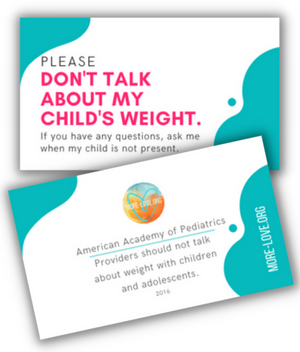
See Our Guide To Parenting A Child With An Eating Disorder

Posted on Leave a comment

Quiz: are you fatphobic or body positive? Plus, how to be a body positive parent

Quiz: are you fatphobic or body positive? Plus, how to be a body positive parent

Take this quiz to find out whether you are fatphobic or body positive. If you’re a parent, this is really important, because our feelings about our own bodies impact how our kids feel about theirs.

Eating disorders are much more complex than body image, but negative body image is a hallmark of an eating disorder. We live in a culture that is strongly weight-biased and fatphobic. Our cultural messages assert that a person is healthier, smarter, and more worthy if they live in a smaller body. Weight stigma is very harmful to all of us, but it is especially damaging to people who live in larger bodies and people who are susceptible to eating disorders.

Parents who want to prevent eating disorders or help a child who has an eating disorder to recover can learn about weight stigma and adopt a non-diet, weight-neutral, and body positive attitude.

Quiz: Are You Body Positive?

Most of us have assumptions about body size, eating behaviors and exercise patterns. To help kids avoid the worst of negative body image and eating disorders, it can be very helpful if we challenge our own assumptions about bodies, weight, and health. Take this quiz to see how you do.

FAQs: Fatphobia and Body Positivity

What is body positivity?

Body positivity is a trending hashtag, but it’s also so much more. It was started in 1967 as a movement to stop deadly weight stigma and anti-fatness. More than just “loving your body,” body positivity is a social justice, activist movement. To be body positive is about accepting that most of what we think we know about fat is wrong, and that judging people for being fat is ignorant and harmful.

What is fatphobia?

Fatphobia is a popular term for weight stigma and anti-fatness. Fatphobia is the fear of being or getting fat. It also extends to feeling deep discomfort and disgust about other people who are fat. Weight stigma by any name is deeply harmful to everybody’s health. Anti-fat bias is associated with negative physical and mental health outcomes. Paradoxically, fatphobia is also associated with weight gain.

Will this quiz help me find out if I am fatphobic?

This quiz is designed to test for anti-fat bias, weight stigma, and fatphobia.

Body positive parenting

Our society is steeped in weight stigma. Many of us make body-based, weight-stigmatizing comments without even thinking of it – it’s just a part of our culture. But if a parent can learn to stop these automatic statements, we can help our child reduce the focus on the body as a signal of “goodness” and even “health” and instead help them recognize that they are inherently worthy, and fat is not the worst thing a person can be. This approach will reduce eating disorders since fatphobia is a known contributor.

Here are some things we recommend parents stop doing to create a body positive environment for their children:

1. Do not praise/criticize individual body parts

Look at those abs! She has a tummy roll. Your legs are so long. You have such a tiny waist. She has huge thighs.
We are not objects, but whole people. Avoid picking apart human beings based on their individual body parts. Don’t do this with your own body, your child’s body, or any other person’s body. Human beings are much more than any one part of themselves. While these comments may seem positive of “factual,” they bring the focus onto the body, and one of our goals is to develop a holistic view of health and bodies rather than a parts-based perspective.

2. Do not provide feedback on weight loss/gain 

You’ve lost weight! She lost a ton of weight last year. You look great – did you lose weight? 
We need to stop assuming that weight loss is a positive thing that we can openly make comments about. It may seem normal to mention that someone has lost weight, but the assumption that weight loss is always a positive supports some of the fundamental disordered thoughts that drive eating disorders. Similarly, we want to avoid criticizing ourselves or others when they gain weight. This perpetuates fatphobic ideas about weight that are strongly associated with eating disorders and, paradoxically, weight gain.

Quiz: are you fatphobic or body positive?

3. Do not provide feedback about “flattering” clothes

That’s so slimming on you. I look fat in this. That’s really flattering. That shirt makes her look huge. That belt makes her waist look tiny.
When we comment on clothing as either “flattering” or “not flattering,” what we are really saying is that everyone should aspire to look thin. This supports the notion that thinness is best, and fuels disordered eating. If you struggle to accept body positivity, then begin by not using the words “flattering” or “slimming.” Also avoid commenting on the physical appearance of yourself, your children, and other people.

4. Avoid feedback on eating and exercise behaviors

You’re so healthy for running every day. She’s such a good/healthy eater. She eats like a pig. He’s a total slob.
Our culture has promoted many unhealthy ideas about eating and physical behavior. Basically, we believe that people who are thin eat only “healthy” foods and exercise regularly. This is not actually true, and the only information we gain by looking at someone is our own level of weight bias. We need to stop praising “health” behaviors to help our children find an intuitive way to relate to their bodies that involve eating foods that make them feel good and exercising in ways that bring happiness, not pain.

Body positive resources

Body positive parenting can help our children avoid and/or recover from an eating disorder. It’s OK if this is all new to you – there are a lot of resources available to help! The first step in becoming body positive is dropping weight stigma. Great ways to do this is to read one of these books:

When “body positive” is not body positive

Many brands and influencers have noticed that the term “body positive” has gained social traction. As a result, they are taking on the term as a marketing opportunity rather than truly understanding the purpose of the movement. Specifically, Instagram is littered with accounts that use the hashtag #bodypositive or one of its variations, but they still espouse diet culture and are decidedly not weight-neutral or fat-positive. Some signs to look for to establish whether a brand or influencer is truly body-positive include:

  • Are the models/images primarily showing white, cisgender, able-bodied, Photoshop-enhanced, conventionally attractive, thin people? Body positivity is about inclusivity, so you should see a range of skin colors, gender identities, and body sizes, shapes, and abilities.
  • If it’s a clothing brand, does the brand offer sizing above 12/14? About 60% of the population wears plus sizes, yet plus-size models are a rarity. If a brand says it is “body positive” but does not provide clothing for people living in larger bodies, then it’s co-opting the movement for marketing purposes.
  • Does the text contain messages about weight loss and/or weight maintenance as if that is a good/positive/healthy pursuit? Body positivity must operate from a weight-neutral perspective.
  • Does the messaging suggest that the pursuit of health is defined as eating a certain way or exercising? Body positivity must operate from a behavior-neutral standpoint and not place value judgments on food choices or exercise behaviors.

Ginny Jones is the founder of More-Love.org, and a Parent Coach who helps parents who have kids with eating disorders.
See Our Parent’s Guide To Body Image And Eating Disorders

Posted on Leave a comment

Useful scripts to make Thanksgiving eating disorder friendly

Family scripts for an eating disorder friendly Thanksgiving

Are you heading into Thanksgiving with a child or loved one who has an eating disorder? It’s important to make an effort to plan an eating disorder friendly Thanksgiving. Food-based holidays can be especially challenging for people in eating disorder recovery. It can really help to plan ahead for success.

Many of these Thanksgiving family scripts focus on body-based and food-oriented comments. These comments may seem benign, but when your child has an eating disorder, it’s important to put a stop to them. It may take some practice, but it’s not hard to shift once you have these new scripts in mind.

โญโญโญโญโญ

Free Guide: How Parents Can Help A Child With An Eating Disorder

Master the secrets to supporting a child with an eating disorder. Thousands of families like yours are stronger today because of these six vital lessons drawn from lived experience, best practices, andย extensive study.

Here are some examples of new Thanksgiving scripts:

Greetings for an eating disorder friendly Thanksgiving

Many people automatically comment on someone’s appearance as a greeting. However, this focus on appearance can be upsetting for someone who has/had an eating disorder.

Also, when we make appearance-based greetings, we miss the opportunity to connect with the actual person – who they are, what they mean to us, and what makes them interesting and important.

Instead of: You look great! Have you lost weight?

Try: I’m so happy to see you!


Instead of: Have you gained weight?

Try: It’s wonderful to see you!


Instead of: What have you been doing? You look great!

Try: How have you been doing? Tell me all about it!


Instead of: You look so pretty today!

Try: I’m thrilled to see you today!


Instead of: You look so skinny! Let’s fatten you up!

Try: I’m really glad you came!

Useful scripts to make Thanksgiving eating disorder friendly

Talking about food

Thanksgiving is a food-based holiday, and so, of course, it brings out many diet culture scripts, which basically assume that we are “bad” if we eat rich, delicious foods, and we are “good” if we restrict our foods to “healthy” options like salad.

This idea that how we eat determines our morality is very dangerous for someone who has/had an eating disorder, so it’s important to change the script. Here are some ideas:

Instead of: Uh-oh – I’m going to blow my diet today!

Try: This food looks delicious!


Instead of: I guess this is a cheat day!

Try: I’m looking forward to enjoying this day with you.


Instead of: I guess the diet starts tomorrow!

Try: I love being here with you.


Instead of: I’m trying to lose weight, so I’m not going to eat that.

Try: Tell me about how you’ve been doing.

โญโญโญโญโญ

Free Guide: How Parents Can Help A Child With An Eating Disorder

Master the secrets to supporting a child with an eating disorder. Thousands of families like yours are stronger today because of these six vital lessons drawn from lived experience, best practices, andย extensive study.

Talking about feasting

So many people live in some form of dietary restriction, and then “let it all hang out” at a Thanksgiving feast. There is nothing wrong with feasting, but most people talk about it as a negative or something that will need to be atoned for later. This can easily lead to descriptions of the core eating disorder behaviors of restriction, binge eating, and purging.

Instead of: I’m stuffed! I definitely ate too much

Try: That was delicious!


Instead of: Good thing I didn’t eat all week to prepare for this pie!

Try: Thank you for being here today.


Instead of: I’m “eating clean” so I can’t eat any of this food

Try: I’m so happy to see you all.


Instead of: I’m going to have to not eat for a week to make up for this!

Try: I love being with you.


Instead of: I really shouldn’t eat more but I can’t help myself!

Try: Isn’t it wonderful to be together today?


Instead of: I can’t believe I ate all these carbs. My trainer is going to be so mad at me!

Try: This is a great day!

โญโญโญโญโญ

Free Guide: How Parents Can Help A Child With An Eating Disorder

Master the secrets to supporting a child with an eating disorder. Thousands of families like yours are stronger today because of these six vital lessons drawn from lived experience, best practices, andย extensive study.

Talking about exercise

Many people think of Thanksgiving as something we need to “work up to” or “work off.” This is called compensatory exercise and is an eating disorder behavior. It’s important for families to move away from normalizing eating disorder behaviors.

Instead of: I need to take a walk so I have space in my belly for all this food.

Try: I’m going to take a walk because it feels so good to be outside.


Instead of: I’m going to have to go to the gym after this!

Try: This has been a wonderful meal.


Instead of: It’s going to take weeks to work off all the food I ate!

Try: I have been really enjoying this day and being with you.

Plan in advance for an eating disorder friendly Thanksgiving

If your family is like most, shifting the script will take effort. You can start the ball rolling by calling people who will be at the meal with you and your child and see if you can agree to gather with the intention to not perpetuate eating disorder talk.

Here’s a possible pre-Thanksgiving day script:

Hi Aunt Beatrice, I’m so excited to have you for Thanksgiving! I can’t wait to see you. This is a little awkward, but I wanted to let you know something that we’ve been working on. We’ve noticed that how we talk about bodies and food really makes a difference to our kids. So we avoid talking about bodies, diets, or saying things like “this food is so bad” or “I’m going to have to work this pie off later.” The truth is that we didn’t even notice how often we do it. But I just wanted to let you know that it’s something we’re working on, since you’ll probably notice we’re going to try not to do it this year.

Here’s some options for redirecting food and body comments on Thanksgiving day:

Redirect: Hey Aunt Beatrice, did you get that promotion at work?


Remind: Hey Aunt Beatrice, remember we aren’t talking about diets today. How was your visit with Uncle Fred?


Set a boundary: Aunt Beatrice, when you talk about my body like that. I feel bad, because it seems like you are criticizing my weight. If you continue to do that, we’ll need to leave.


Holidays with an eating disorder can be really tough, but Thanksgiving doesn’t have to be a minefield, and it will be more fun for everyone involved if we reduce the focus on food and bodies and focus instead on the many other things that make being together so meaningful.


Ginny Jones is the founder of More-Love.org, and a Parent Coach who helps parents who have kids with eating disorders.

See Our Parent’s Guide To Holidays With An Eating Disorder